

India Entry Requirements And New E Visa
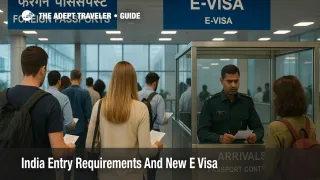
India's entry rules look simple at first sight, you need a visa, but the mix of traditional consular visas, an expanded e visa system, and a new mandatory electronic arrival card means you now have to plan your paperwork more carefully than before. This guide focuses on typical tourists and short stay business visitors, especially if you hold a passport from the United States, Canada, the United Kingdom, or a European Union or Schengen state.
You will find that India's official portals, consulate pages, and commercial visa intermediaries do not always describe the same options in the same way. Treat what follows as general information, not legal advice, and always confirm the exact rules for your citizenship and your trip with official Indian government sources before you book or board a flight.
Entry Snapshot
For most foreign travelers, including US, Canadian, UK, and European citizens, India is not a visa free destination. You must hold one of the following before you travel, and you must now also complete a separate electronic arrival card.
In practice, most short stay visitors will either:
- Use an India e visa, applied for completely online, then printed or stored for boarding and arrival.
- Use a regular paper tourist or business visa already stamped in the passport.
- Travel on an Overseas Citizen of India (OCI) card, if you qualify, plus the new electronic arrival card.
You cannot get a visa on arrival in the classic sense, and airlines generally will not let you board a flight to India without proof of a valid visa or OCI status.
Who Can Visit And For How Long
For short trips, India's rules are structured around the type of visa and your citizenship. The details vary, but there are a few core patterns you should understand.
Almost all US, Canadian, UK, and European Union citizens need either an e visa or a regular visa to enter India for tourism or business. The Ministry of Home Affairs maintains a list of nationalities that can use the e visa system, and this includes the United States, Canada, the United Kingdom, and most Schengen and European Union states, but you should still check that your specific passport is listed.
If you hold a tourist visa, India limits how long you can stay on each visit and how much time you can spend in the country in a calendar year. Official guidance states that continuous stay is normally capped at 90 days per visit, but for US, UK, Canadian, and Japanese citizens that cap is 180 days per visit. Separate consular advisories now add that the maximum total time you can spend in India on tourist status, counting both e tourist and regular tourist visas together, is 180 days in any one calendar year.
In plain terms, if you are a US, Canadian, UK, or Japanese citizen, you can usually stay up to 180 days on a single tourist visit, but your combined days in India on tourist visas in the same calendar year should not exceed 180. If you hold another European passport, you should normally expect a 90 day per visit limit, and in many cases a looser annual total, although you still must leave before your visa validity or permitted stay expires. Always read the validity and "period of stay" lines on your visa or e visa approval notice very carefully.
OCI cardholders are treated differently. If you are an OCI, you do not need a separate visa for tourism or most business trips, but you are still subject to Indian immigration law and must complete the new e arrival card before travel.
Visa Options And Common Exemptions
India's visa system gives you several different pathways. The right choice depends on your citizenship, how often you plan to visit, and how long you want to stay.
E visa for tourists and business travelers
India's e visa platform is the main route for most short stay visitors. Through the official portal, you can apply for e tourist, e business, e medical, e conference, and, under a recent expansion, new categories such as transit, mountaineering, film, and certain entry visas for people of Indian origin and their dependents.
For US, Canadian, UK, and many European travelers, the e tourist visa is usually the simplest option if you are planning one or two holidays or short business visits. The exact validity options can change, and consulates in different countries sometimes emphasize different products, for example short 30 day e tourist visas used within a fixed window, or longer validity e visas that let you make repeated trips over one or more years.
Key practical points about India e visas:
- You must apply only through the official portal at Indianvisaonline.gov.in or via the government linked e visa site, not through lookalike commercial sites.
- The passport you travel with must be the same one you used in your e visa application.
- You receive an Electronic Travel Authorization (ETA) by email, which you should print and carry, even if you also store it on your phone.
- E visas are only accepted at designated airports and seaports, not at land borders.
If you plan to spend long stretches in India, visit very frequently, or enter via land routes, you should discuss a regular paper tourist or business visa with the Indian embassy or outsourced visa center that serves your country.
Regular tourist and business visas
Regular paper visas still matter for frequent travelers and those who prefer a traditional sticker in their passport. India issues multi year tourist visas, often up to ten years for US citizens, although your permitted stay on any single visit still follows the 90 or 180 day limits discussed earlier.
Regular visas usually involve:
- Completing an online visa application form.
- Booking an appointment with an Indian consulate or its visa outsourcing partner.
- Submitting your passport and supporting documents in person or by courier.
Processing times vary and are not guaranteed, so if you are considering a regular multi year visa, build in generous lead time.
Special exemptions and neighbors
India does have special arrangements with a few neighboring states. For example, citizens of Nepal and Bhutan enjoy an exemption from normal passport and visa rules under a separate regime. These exemptions do not extend to visitors from the United States, Canada, the UK, or European Union countries, even if you are transiting those neighbors.
Documents You Should Prepare Before Travel
India's expanded e visa and e arrival systems make it tempting to assume that everything is stored electronically, but you should still travel with a robust paper and digital file.
At a minimum, prepare:
- A passport valid for at least six months beyond your intended arrival date in India, with at least two blank pages.
- A printed copy of your e visa approval (ETA) or the passport containing your regular visa.
- Proof of onward or return travel, usually a flight confirmation showing when you plan to leave India.
- Proof of accommodation for at least your first nights, for example hotel bookings or a clear invitation from a host with address details.
- Evidence that you can support yourself financially during your stay, for example recent bank statements or a letter from your employer.
From October 1, 2025, you must also complete India's new mandatory Electronic Arrival Card before entry. You can do this online through the official e arrival site or via the Su Swagatam mobile app, and you should carry proof that you have submitted the form, for example a confirmation email or screenshot.
If you are an OCI cardholder, you should bring both your passport and your OCI card, plus the e arrival confirmation. If you are a dual national, always travel on the passport and status that matches your visa or OCI registration.
Remember that this guide deliberately does not cover vaccination or detailed medication rules. If health requirements matter for your itinerary, you should check official health advisories and consider a separate health focused guide.
What To Expect At The Border
Most visitors arrive in India at large international airports, for example in Delhi, Mumbai, Bengaluru, or Hyderabad. The process usually follows a clear sequence, but it can feel intense after a long flight, so it helps to visualize it in advance.
After disembarkation, you will follow signs for "Foreigners" or "E Visa" at immigration. If you have completed the e arrival card in advance, you may see separate lanes or counter markings for travelers who have already submitted their digital form, but you should still keep that confirmation available in case an officer asks to see it.
At the immigration counter, an officer will typically:
- Scan your passport and verify your visa or OCI status in the system.
- Ask about the purpose and length of your visit.
- Review your return or onward ticket and, sometimes, accommodation details or proof of funds.
Biometrics, usually fingerprints and a photo, are common for first time visitors. Some airports also use automated kiosks or e gates for parts of the process, but manual inspection by a border officer usually remains the key decision point.
If you arrive with a regular paper visa, the officer will stamp your passport with an entry date and sometimes a "stay permitted until" date. If you hold an e visa, the officer will record your arrival against the electronic authorization and stamp the passport. In all cases, keep track of your permitted stay and plan to leave on time. Overstays can trigger fines, delays when you try to depart, and future visa problems.
If anything in your case looks unusual, for example very long intended stays, multiple back to back trips, or unclear travel funding, you may be sent to a secondary inspection area for more detailed questions. This is routine when it happens, but it underlines an important point, even with an approved visa, Indian border officers have full discretion to admit or refuse you on the day.
When Rules Are Different
Several situations lead to more complex rules, and this guide can only point you toward more careful research.
If you are planning to work, volunteer, study, or intern in India, tourist and simple business e visas are usually not appropriate. You may need an employment, student, or other specialized visa, with stricter documentation and health or police clearance requirements. You should discuss these cases with the relevant Indian embassy or consulate and, if necessary, a qualified immigration attorney.
If you have a history of visa overstays in India or elsewhere, prior deportations, or criminal convictions, your risk of refusal, delay, or additional questioning increases. You should not rely on this general guide. Instead, seek personalized advice and be prepared for a slower, more document heavy process.
Rules can also differ if you are a minor traveling without both parents, an adopted child of Indian origin, or a dual national juggling both an OCI pathway and another citizenship. In these cases, you may need notarized consent letters, extra birth or adoption records, or might be better off traveling solely as an OCI. Again, this is an area for direct consular or legal guidance.
Finally, remember that practices can vary slightly between airports and over time. If you see differences between this guide, official portals, and reports from other travelers, follow the most conservative interpretation and confirm details with the authorities before you commit money to flights or tours.
Where To Confirm The Latest Rules
Because India's e visa categories and digital arrival processes are evolving, it is essential to double check the official channels closest to your situation.
For US travelers, a good starting point is the US State Department's India country information page, combined with the nearest Indian consulate's visa and e visa guidance. Canadian, UK, and European travelers should pair their own foreign ministry travel advice with the Indian embassy or high commission site that serves their country.
Across all nationalities, the key official Indian sites are:
- The main e visa portal and its instruction pages, which spell out eligible nationalities, visa types, and technical requirements.
- The general Indianvisaonline portal, which also covers regular paper visa applications and status checks.
- The Bureau of Immigration and linked notices about the electronic arrival card and other border process changes.
Always treat this guide as general information only. Final decisions rest with Indian consular officers and border officials, and rules can change with little or no public warning.
Putting It All Together
If you are planning a trip to India as a US, Canadian, UK, or European traveler, your safest approach is to work through the process in three stages. First, decide whether an e visa or a regular multi year visa best fits your travel pattern, then apply only through official channels and wait for clear approval before you buy non refundable flights.
Second, prepare a complete document pack, including your passport, printed e visa or regular visa, return or onward ticket, accommodation details, and proof of funds, and complete the new electronic arrival card well before you fly. Keep both digital and paper copies of everything so that airline staff and border officers can review them quickly.
Third, on arrival, take the process step by step. Follow the correct lanes, have your confirmations ready, answer questions calmly, and note the length of stay granted at the border so that you can plan an orderly exit or, if needed, a formal extension through the appropriate channels. If your situation is complex, for example long stays, multiple trips in one year, or past immigration issues, you should consult a qualified attorney or appropriate authority before you rely on any general guide.
With that mindset, India's updated e visa system and digital arrival process can make your entry more predictable rather than less, provided you take the time to understand and respect the rules that apply to your passport and your trip.
Sources
- Indian e Visa portal and instructions, Government of India
- Ministry of Home Affairs, India, e Visa information and facility lists
- Bureau of Immigration and Indian consular notices on Electronic Arrival Card
- Consulate General of India in the United States, visa guidelines and e visa information
- Consulate General of India in Toronto, e visa overview
- High Commission of India London, e tourist visa guidance
- US Department of State, Country Information, India
- UK Foreign, Commonwealth and Development Office, India entry requirements