

Virgin Voyages Credits Missed Caribbean Sailings
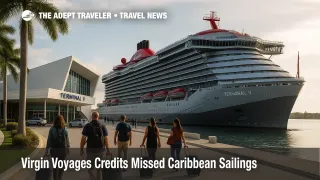
Virgin Voyages is giving cruisers from Miami a rare safety net as government shutdown fallout keeps disrupting flights. The adults only line will now issue an immediate future voyage credit to guests who miss embarkation on a Caribbean sailing because their flight was canceled, as long as they contact Sailor Services and provide proof of the airline cancellation. The offer arrives while the Federal Aviation Administration, FAA, holds emergency flight reductions at about six percent across forty major United States airports rather than stepping up to ten percent, which means same day connections into Florida cruise gateways remain fragile even after the shutdown deal.
In practical terms, this policy turns a missed sailing from a near total loss on the cruise fare into a do over credit at a later date, though it still leaves airfare and on the ground costs in the traveler's lap. It also marks a clear divergence from the stance of many rival cruise brands, which have mostly kept to standard missed ship rules even as shutdown related air cuts ripple through peak season schedules.
Virgin Voyages' New Safety Net For Missed Miami Sailings
Virgin's temporary offer is straightforward on paper. If a guest's airline cancels their flight and the guest cannot reach the ship on time, Virgin Voyages will issue a full future voyage credit, FVC, for the cruise when the guest reaches out to Sailor Services and shares the airline's cancellation confirmation. The credit can then be applied to a future sailing, subject to the usual ticket contract terms and any blackout rules that Virgin attaches to the promotion.
Travelweek and other trade outlets report that the line is also committing to help guests explore options to join a sailing late when operations allow, for example boarding at a later Caribbean port, though that depends on the itinerary, port regulations, and how far behind the guest is by the time new flights are confirmed. The important distinction is that the future voyage credit is not tied to whether the guest manages to catch up, it flows from the documented flight cancellation that prevented timely embarkation.
Crucially, the policy does not reimburse the cost of the canceled flights, new tickets, hotels, or other ground expenses. Those remain between the traveler, the airline, and any travel insurance provider, which is where this shutdown specific landscape becomes more complicated.
Shutdown Flight Cuts Still Hang Over Cruise Gateways
The United States shutdown might be formally over, but the air traffic system is still running under emergency constraints. The FAA has raised flight reductions at the nation's busiest airports from four percent to six percent and now plans to hold that six percent cut while controllers return to work and staffing stabilizes, instead of allowing the cap to climb toward eight or ten percent as earlier orders suggested.
That may sound modest, but reductions concentrated at forty large airports create cascading risk for cruise travelers funneling through hubs such as Miami International Airport, Fort Lauderdale Hollywood International Airport, Orlando International Airport, and Tampa International Airport, where even a small cut in departures can turn into missed connections on tight same day itineraries. Shutdown week data already shows thousands of cancellations and tens of thousands of delays as airlines reshuffle schedules to comply with the cuts and cope with staff fatigue, and that behavior will not disappear overnight just because a funding bill passed.
Adept Traveler's earlier coverage of the freeze that keeps shutdown flight cuts at six percent mapped how these constraints are hitting Florida and other cruise heavy markets day by day. This Virgin policy update sits on top of that aviation picture, shifting the conversation from "Will my flight operate" to "What happens if the system fails me anyway and I never reach the pier."
Eligibility Rules And How To Claim A Credit
For travelers booked on Virgin Voyages Caribbean sailings from Miami, the operational logic is simple, but timing and documentation matter.
First, the trigger is an airline initiated cancellation or possibly a significant schedule change that makes reaching embarkation impossible, not a voluntary change or a missed flight because you misjudged security lines. You will need written proof from the airline that the flight was canceled or substantially disrupted by the shutdown related environment, ideally in the form of a rebooking email, cancellation notice, or app screen capture that clearly shows flight number, date, and status.
Second, you must contact Sailor Services as soon as the cancellation lands, not after the ship has already sailed and you have gone dark for a day. Early contact gives Virgin's team a chance to see whether you can be re protected on alternative flights that still make embarkation, to explore late boarding at a subsequent port, or, if nothing workable exists, to lock in your future voyage credit while the situation is contemporaneously documented.
Third, expect the future voyage credit to cover the cruise fare and eligible taxes and fees only. Ancillary purchases, prepaid tips, and onboard packages may follow separate rules, and airfare, even when booked as a separate component on the same card, is not part of this credit. That makes this offer a strong, but narrow, protection against losing the value of your sailing itself.
Finally, remember that this is a temporary shutdown era concession, not a permanent rewrite of the ticket contract. Virgin is positioning it as a response to extraordinary, government driven flight disruptions, which implies that once shutdown pressures and FAA cuts recede, the line may retire the policy or tighten terms.
How Virgin's Stance Compares With Other Cruise Lines
What makes this move stand out is not that Virgin is helping guests problem solve missed embarkation, most lines will at least try to help you join mid cruise, but that it is offering future cruise credits when the missed departure flows from a canceled flight.
Royal Caribbean, for example, directs guests who miss boarding because of travel delays to call its Emergency Travel Team, which may help with logistics and, in some cases, boarding at a later port, but does not promise any automatic future cruise credit when flights were booked independently. Norwegian Cruise Line's terms focus on working with airlines to rebook guests and emphasize that when air is self booked, missed connections and added costs are usually the traveler's responsibility.
Carnival's public messaging during the shutdown has centered on encouraging passengers to coordinate with their airlines and arrive early rather than dangling extra compensation if the worst happens. In short, most big Caribbean operators remain close to the longstanding industry baseline, where missing the ship because your air plans collapsed is treated much like a no show, especially if you declined the line's own air package.
That context matters because many standard travel insurance policies also carve out government shutdowns as foreseeable or political events, which means they may deny claims tied directly to FAA mandated flight reductions. Virgin's credit offer therefore plugs a real gap, but only on the cruise fare side of the ledger.
Analysis
Background
Under normal conditions, cruise contracts place the risk of getting to the ship squarely on the traveler, particularly when air is purchased independently. The logic is that airlines, ground transport, and hotels fall outside the carrier's direct control, so the line limits its exposure by treating embarkation as the bright line, you are either there when the gangway closes or you are not.
Shutdown related FAA cuts scramble that logic, because the United States government is effectively ordering airlines to thin out departures from major hubs to maintain safety with reduced controller staffing. Travelers can still try to hedge by arriving early, choosing less congested routings, or even driving to Florida, but there is no way for them to control the macro constraint that a portion of flights into cruise gateways simply will not operate.
Virgin's decision recognizes that asymmetry. By offering future voyage credits when government directed air cuts wipe out the last leg of a cruise itinerary, the line is accepting that some missed ship scenarios are no longer just the traveler's problem. It is also making a calculated bet that the goodwill and long term loyalty generated by protecting guests in a very public crunch outweigh the near term revenue hit from re booking those cabins into the future.
For travelers, the rational response is still to de risk the trip up front. That means flying into Miami at least one calendar day before embarkation until the FAA lifts the six percent cap, favoring early day flights with backup options over last departures, and checking whether alternative airports like Fort Lauderdale or Orlando offer better resilience on your dates. It also means reading trip insurance fine print carefully and not assuming that "trip interruption" automatically covers shutdown driven cancellations.
At the same time, the existence of the future voyage credit should change how you think about worst case outcomes. If the shutdown era flight system strands you, you now have a clearer path to salvaging the value of your Virgin cruise, which was not the case a week ago.
Final thoughts
Virgin Voyages' decision to credit missed Caribbean sailings, rather than simply treating shutdown era no shows as traveler losses, is a rare bright spot in a disruptive period for air and cruise travel. It does not solve the deeper problem of reduced flight capacity and fragile same day connections into Florida, and it does not rescue your airfare, but it does give you a more forgiving fallback if FAA cuts and airline cancellations keep you from ever reaching the pier.
For now, the smartest play if you are booked on a Virgin Voyages Caribbean cruise is to act as if this safety net does not exist, arrive early, build buffers, and line up backup options, while taking comfort in the fact that if the shutdown's ripple effects still derail your plans, your vacation budget has a better chance of living to sail another day.
Sources
- Virgin Voyages offers future cruise credits amid widespread flight disruptions
- Virgin Voyages guarantees guests will not miss out despite flight chaos
- Miss Your Cruise Due to a Cancelled Flight? Now You Do not Lose Money... With This Line
- Key facts about airline flight cuts during the government shutdown
- Cruise passengers concerned as FAA cuts flights at major US airports
- What to do if you miss your cruise due to a flight cancellation or delay