

Cyclone Ditwah Sri Lanka India Flights And Trains
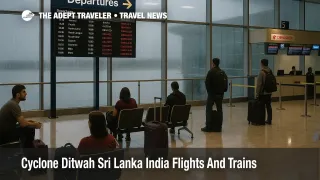
Travelers facing Cyclone Ditwah Sri Lanka India travel disruption now need to treat routes through Colombo, Sri Lanka, and southern India as high risk through at least December 2, 2025, because the storm has flooded large areas of Sri Lanka and is closing in on Tamil Nadu. As of November 29, official tallies show between about 130 and more than 150 people dead, over 170 missing, and tens of thousands displaced into state shelters after days of heavy rain triggered landslides and river flooding. For travelers, that combination of casualties, evacuations, and damaged infrastructure has already shifted key flight, rail, and road links from normal seasonal risk into a clearly defined high impact corridor.
The core change is that Cyclone Ditwah Sri Lanka India travel disruption is now undermining basic reliability through Bandaranaike International Airport (CMB), central Sri Lankan highways and rail lines, and hub airports in coastal Tamil Nadu and Puducherry, which means anyone using Colombo or Chennai for same day connections should expect cancellations, diversions, and missed links rather than normal monsoon variability.
Sri Lanka's Flood Emergency And Transport Disruption
Sri Lanka has declared a state of emergency and formally appealed for foreign assistance after the storm destroyed more than 15,000 homes, left roughly 44,000 to 78,000 people in temporary shelters, and cut electricity or running water to about a third of the country. Flooding along the Kelani River near Malwana, close to Colombo, has been described as the worst in a decade, with some homes submerged up to their roofs. Central hill country districts that normally anchor tea country itineraries have been hit by multiple landslides, which have blocked roads and made some areas temporarily inaccessible even to rescue teams.
The Disaster Management Centre reports that schools and some government offices have been closed, exams postponed, and several reservoirs and rivers are spilling over, all of which slows recovery and complicates overland travel plans. Tourists heading for Kandy, Nuwara Eliya, Ella, or other hill country towns now need to assume that certain mountain roads may be closed for days while crews clear debris and assess slope stability. Even where roads are technically open, long stretches can be reduced to single lane passage with delays and the risk of sudden closure if rainfall resumes.
Long distance rail is also affected. National reporting notes that train services on some lines have been halted outright or truncated because of landslides, flooded tracks, and damaged bridges, particularly on routes linking Colombo with the interior. Scenic services that many travelers use, such as the hill country trains between Kandy and Ella, may see last minute cancellations or temporary suspensions when maintenance inspections flag new damage. Travelers who built their itineraries around specific train days should build in at least one buffer day on either side or be ready to replace rail segments with private drivers or intercity buses.
Air Travel Through Colombo And Other Sri Lankan Gateways
At Bandaranaike International Airport (CMB), the country's main international gateway, heavy rain and crosswinds have already forced at least 15 inbound flights to divert to alternate airports such as Mattala Rajapaksa International Airport (HRI) in Sri Lanka, Trivandrum International Airport (TRV) in Kerala, and Cochin International Airport (COK) further up India's west coast. Local aviation outlets also report more than a dozen delayed departures and at least one cancelled Jaffna International Airport (JAF) service as operators wait for safer conditions.
News coverage from Colombo describes several hundred Indian and Maldivian passengers stranded for multiple days at the airport after onward flights to Chennai and other south Indian cities were cancelled, with complaints about limited food, water, and rest options as the disruption stretched on. That kind of extended stranding is a warning sign for anyone planning tight hub connections through Colombo to Gulf, Southeast Asia, or Europe routes. Until operations normalize, it is safer to route through alternative hubs such as Mumbai, Delhi, Dubai, or Doha, or to allow at least one overnight buffer in Colombo instead of assuming same day onward travel.
The U.S. Embassy in Sri Lanka has issued a weather alert for Cyclonic Storm Ditwah, warning of continued heavy showers, strong winds, and the ongoing risk of flooding and landslides as the system moves away but leaves saturated ground behind. That advisory encourages travelers to avoid non essential trips into flooded areas, monitor local media, and maintain contact with airlines, all steps that apply equally to visitors from other countries.
Red Alerts And Closures In Tamil Nadu And Puducherry
On the Indian side, the India Meteorological Department, IMD, has issued red alerts for some coastal districts of Tamil Nadu and Puducherry and orange alerts for a wider belt inland as the cyclone tracks toward a likely landfall around November 30 along the Tamil Nadu and south Andhra Pradesh coast. Forecasts call for very heavy to extremely heavy rain, winds of about 70 to 80 kilometers per hour with gusts up to 90 kilometers per hour in exposed coastal areas, and very rough sea conditions that have already triggered bans on fishing in parts of the region.
Tamil Nadu authorities have declared school and college closures across multiple districts, postponed exams at institutions such as Pondicherry Central University, and activated emergency control rooms and helplines in Chennai. That combination of closures and emergency staffing often signals that road flooding, downed trees, and power cuts are likely to increase, especially in low lying urban neighborhoods and along coastal highways. Travelers who were planning road trips along the Tamil Nadu coast, or day trips from Chennai to destinations like Mahabalipuram, should treat those plans as tentative and be ready to cancel or reschedule.
Flight Disruptions At Chennai And Regional Airports
Chennai International Airport (MAA), the main air hub for Tamil Nadu, is seeing significant disruption as airlines scale back operations while the cyclone approaches. A live tally from Indian outlets and airport officials points to at least 54 flights cancelled across the state, with 16 flights from Chennai to Thoothukudi, Madurai, and Tiruchirappalli International Airport (TRZ), and 16 returns, withdrawn, plus more services cut between secondary airports in Tamil Nadu and larger hubs like Bengaluru and Hyderabad.
IndiGo has cancelled all ATR turboprop flights to and from Chennai for at least one full day, grounding core regional links between Chennai and smaller cities such as Madurai Airport (IXM) and Trichy and warning of additional disruptions to flights serving Jaffna and Puducherry. Authorities have also signaled that operations involving small aircraft at several airports in southern Tamil Nadu will remain suspended during the most intense phases of the storm as a safety measure.
For travelers, the practical takeaway is that even if some mainline jet services continue, the regional mesh of short hops that feed Chennai will be unreliable through at least December 1 or 2, 2025. Anyone holding separate tickets, for example a regional hop into Chennai followed by an international departure on a different carrier, faces a higher than usual misconnect risk and should consolidate bookings on a single ticket where possible or advance the feeder leg by at least one full day.
Train Cancellations And Coastal Corridors In India
Southern Railway has announced a series of cancellations, partial cancellations, and short terminations, especially on the line to Rameswaram, where winds over the Pamban Bridge have already reached unsafe levels and forced multiple trains to stop short at inland stations such as Mandapam, Ramanathapuram, and Madurai. Long distance trains from as far as Ayodhya, Bhubaneswar, and Thiruvananthapuram that normally run through to Rameswaram are being turned back early or starting from alternate origins to keep them off the bridge.
This is especially important for pilgrims and tourists who had built tight itineraries around overnight trains into Rameswaram and same day onward road or ferry trips. Travelers should not assume that a train that appears on a timetable will actually run through to its advertised terminus during the storm window. Instead, check the latest Southern Railway bulletins and social feeds before departure, and if you must be in Rameswaram or other coastal towns on specific dates, consider flying into less affected airports and completing the last leg by road once high wind warnings are lifted.
Background: How Bay Of Bengal Cyclones Disrupt Travel
Bay of Bengal cyclones like Ditwah often follow a pattern where they cross Sri Lanka or skim its coast, weaken slightly over land, then re strengthen over open water before making landfall along India's southeast coast. That track means they can produce several days of heavy rain and high winds over a wide arc, from Sri Lanka's central highlands to the Cauvery Delta and up into Andhra Pradesh, even if the technical landfall point is relatively narrow.
For travel, the key is that impacts linger well beyond the headline landfall. Flooded urban neighborhoods can take days to drain, landslides may continue in steep terrain after skies clear, and rivers that have already overtopped banks can cut roads and rail lines as upstream catchments keep sending water down. Even when airports reopen, airlines may need extra time to reposition aircraft and crew, so cancellations and rolling delays can persist through several cycles of the schedule.
Practical Planning For Near Term Trips
Anyone who is due to transit Sri Lanka or southern India between now and about December 3, 2025, should first decide whether the trip is essential. The U.S. Consulate in Chennai has explicitly urged travelers to avoid non essential coastal movements during the peak of the cyclone, citing the risk of flooding, downed power lines, and blocked roads. Other foreign missions are likely to echo similar guidance as conditions evolve.
If travel cannot be postponed, build in redundancy. For flights, aim to reach Colombo or Chennai at least one calendar day before any long haul departure to Europe, the Gulf, Southeast Asia, or North America, and avoid overnight and first wave morning departures while airlines are still restoring rotations. For rail, assume that coastal and river crossing segments are the most fragile and try to schedule those legs for daylight hours, when crews can inspect damage more easily and alternative transport is simpler to arrange.
Travelers should also review insurance and fare rules now. Some airlines and rail operators may introduce weather waivers or permit free date changes, but these policies vary by carrier and fare class, so it is safer to ask explicitly or work through a travel advisor than to assume flexibility will be granted later. Where possible, choose refundable or flexible tickets for any new bookings made while the cyclone and its aftermath are still in play.
Health And Safety Considerations
Finally, remember that the biggest risks from Cyclone Ditwah are not only logistical but also safety related. Sri Lankan and Indian officials are warning about fast moving floodwaters, unstable slopes, and the possibility of extended power and water outages in hard hit districts. Travelers should avoid wading through floodwater, stay away from visibly eroded riverbanks or hillside cuttings, and respect roadblocks and local detours even when they add time.
Basic resilience steps help. Keep device batteries topped up, carry a physical list of emergency contacts and booking references in case phones are lost or networks fail, and maintain a small cash reserve in local currency in case card systems go offline. If you are staying in guesthouses or smaller hotels outside major cities, ask staff about local evacuation plans and the safest routes to higher ground or designated shelters should warnings escalate.
In the coming days, watch for further updates from national disaster centers, meteorological agencies, and foreign missions, as well as from airlines and Southern Railway. Conditions can shift quickly, but with conservative planning and generous buffers, many trips can be salvaged or reworked without exposing travelers to unnecessary risk.
Sources
- Death toll in Sri Lanka rises to 153 after Cyclone Ditwah
- Death toll from floods and mudslides in Sri Lanka rises to 132, with 176 people still missing
- Sri Lanka seeks foreign help as Cyclone Ditwah death toll rises
- Sri Lanka declares emergency as cyclone toll hits 132
- Cyclone Ditwah live: Toll in Sri Lanka rises, red alert in Tamil Nadu and Puducherry ahead of landfall
- Cyclone Ditwah: Storm intensifies over Bay of Bengal, triggers mass travel disruptions
- 54 flights cancelled, schools shut: Cyclone Ditwah affects Tamil Nadu
- Cyclone Ditwah: IndiGo cancels all ATR flights from Chennai on Saturday
- Trains cancelled, short terminated due to high winds on Pamban Bridge
- Ditwah disrupts air travel: 15 diversions, delays at BIA
- Weather Alert, U.S. Consulate General Chennai, India
- Weather Alert, Cyclonic Storm Ditwah, U.S. Embassy in Sri Lanka