

GCC One Stop Travel Pilot On UAE Bahrain Flights
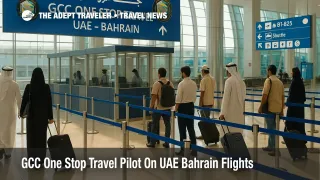
Gulf travelers who shuttle between Dubai, Abu Dhabi, and Manama are about to see border formalities change in a structural way, because Gulf Cooperation Council interior ministers have signed off on a GCC one stop travel system that will start a live trial on flights between the United Arab Emirates and Bahrain in December 2025. Instead of queuing twice, Gulf nationals will clear immigration, security, and customs at a single joint checkpoint before departure, then walk straight out on arrival. Regular travelers should benefit first on UAE Bahrain routes, but anyone planning Gulf itineraries from 2026 onward needs to think about how this model could reshape connections, buffers, and visa choices.
In practical terms, the new system will reduce friction for regional flyers by turning many cross border flights into near domestic experiences once it is fully deployed, and it is explicitly designed as the operational foundation for a unified GCC tourist visa that would let international visitors move between all six Gulf states on one permit.
How The One Stop Lanes Will Work
Under the one stop travel system, a Gulf passenger booked on an eligible flight, for example Bahrain to Dubai, will complete security screening, immigration, and customs procedures only once at Bahrain International Airport (BAH). When that traveler lands at Dubai International Airport (DXB), they should be able to leave the aircraft, walk through the terminal, and exit without any additional passport control or baggage checks, because the receiving state will treat the screening done at origin as if it happened on its own soil.
Officials describe the pilot as a joint clearance lane rather than a simple fast track. Systems and officers from both participating states will share data and coordinate risk checks at the origin airport, which means the line itself may look similar to a normal immigration channel but the underlying databases and responsibilities will be pooled.
The first phase is expected to run on selected flights between Dubai, Abu Dhabi, and Manama, and ministers have been clear that the trial will be evaluated before any wider rollout to Saudi Arabia, Qatar, Oman, or Kuwait. Public statements emphasize that the goal is to cut processing times and reduce congestion, but they stop short of promising a specific percentage reduction, which means travelers should treat claims about exact savings as indicative, not guaranteed.
Who Can Use The System At First
For now, the one stop travel system is framed as a benefit for Gulf citizens. Communiques from the 42nd GCC interior ministers meeting stress that the model allows "citizens of member states" to complete all travel procedures at one point, and most early reporting highlights Gulf nationals hopping between home markets rather than tourists or long term expatriates.
It would be surprising, however, if eligibility did not expand later. The same ministers are pushing for a common data layer and unified risk assessment tools as part of the project, which are precisely the pieces needed to support joint processing for resident expatriates and eventually international visitors once legal frameworks catch up. Travelers should assume that the December 2025 phase will be tightly scoped, with broader eligibility only after several rounds of technical and legal testing.
Background
The one stop decision is the latest step in a multi year push to turn the Gulf into a more integrated travel zone. GCC states formally approved the concept of a shared "Schengen style" tourist visa in 2023, and throughout 2024 and 2025 officials repeatedly signaled plans for a unified tourist visa covering the United Arab Emirates, Saudi Arabia, Qatar, Bahrain, Oman, and Kuwait on a single permit.
Initial announcements suggested that a pilot phase for the unified tourist visa would launch in the fourth quarter of 2025. More recent reporting from Gulf outlets now points to a revised timetable, with the main unified visa product expected to arrive in 2026 after technical work and security coordination, and some sources explicitly describe the one stop travel system as the operational backbone that needs to be proven before the visa can go live at scale.
What The Unified GCC Tourist Visa Will Do
The unified GCC tourist visa, often branded as the GCC Grand Tours Visa, is designed to let non GCC nationals visit one or several Gulf states with a single digital application and permit. Draft guidance describes a short stay visa for tourism and family visits, with online applications, electronic issuance, and options for either single country or multi country itineraries across Bahrain, Kuwait, Oman, Qatar, Saudi Arabia, and the UAE.
Most coverage suggests validity periods in the 30 to 90 day range and notes that the visa will not allow paid work or long term residence, which will remain under national systems. Expect requirements that look familiar to anyone who has applied for a European Schengen visa, such as proof of funds, hotel or sponsor details, return or onward tickets, and comprehensive travel insurance that covers all six states.
From a traveler's point of view, the key shift is that you would no longer have to sequence separate national visas or guess which country to list as your main destination. Instead, you could apply once for a multi country Gulf itinerary, then move across internal borders in a way that feels much closer to intra European travel.
How Gulf Itineraries Could Change
If the GCC one stop travel system scales beyond the UAE Bahrain corridor and the unified tourist visa launches on its updated timetable, multi stop Gulf trips will become much easier to design and sell. A visitor could, for example, fly into Dubai, route on to Muscat and Salalah in Oman for cooler coastal and mountain escapes, then finish with a Formula 1 weekend or museum heavy stop in Qatar or Saudi Arabia, all on one permit.
Travel agencies and tour operators are already modeling "grand tours" that package several cities and experiences, from desert stays and Red Sea resorts to cultural weekends in Manama or Kuwait City. Airlines will have strong incentives to cross sell partners inside the bloc, because the more sectors a traveler flies within the Gulf, the stickier the unified market becomes compared with competing hubs outside the region.
For Gulf residents, casual cross border weekend trips are likely to grow. Once one stop processing is available across multiple routes, a resident of Dubai could treat a Bahrain getaway or a quick Riyadh business trip almost like a domestic hop, provided airline schedules and prices line up. Over time, this could rebalance some traffic away from long haul connecting waves and toward regional point to point flows.
Connections, Buffers, And Airline Strategy
In the near term, travelers should not assume that one stop clearance automatically justifies very tight connections. Even if the formalities are done at origin, overall connection time will still depend on gate distances, minimum connection times set by airlines, and how quickly airports can adjust their layouts and staffing to the new flow patterns.
Airlines are likely to experiment once they see stable data from the pilot. If average processing times fall, carriers could shorten recommended check in windows for eligible passengers on intra GCC routes, or build new schedules that make it easier to connect a long haul arrival directly to a short regional leg without an overnight stay. Low cost carriers might gain an edge if the regulatory framework allows them to plug into one stop lanes without taking on the complexity of full interline agreements.
At the same time, border agencies will need to balance speed with security and revenue controls. Customs and immigration authorities have to be confident that risk scoring, data sharing, and inspection rights are robust, particularly if VAT, excise, or duty rules differ between departure and arrival states. That reality is one reason planners are starting with a limited UAE Bahrain trial before extending the model across the whole bloc.
What Travelers Should Do Now
Gulf citizens and residents who regularly fly between the UAE and Bahrain should watch for airline announcements in 2025 about which routes and fare types will be eligible for the first one stop lanes, and should be prepared for early teething problems such as lane confusion or app glitches.
International travelers planning 2026 and 2027 trips that string together several Gulf destinations should treat the unified GCC tourist visa as promising but not guaranteed until an official launch date and portal are published. Until then, it is safer to budget time and money for the current national visa mix, then simplify plans later if the unified system goes live before departure.
Corporate travel managers and advisors can begin modeling what a mature GCC one stop travel system would do to routings and costs. That includes reviewing preferred carrier lists, revisiting whether to route Middle East trips through one primary hub or several, and updating traveler education so that employees understand which borders will still require full entry checks and which will feel more domestic.
Sources
- One stop GCC air travel system explained
- GCC approves one stop travel system, UAE Bahrain pilot to start in December
- UAE and Bahrain to trial scheme to ease travel for citizens
- Middle East's Schengen style GCC tourist visa set for launch this year
- 6 Gulf countries are getting their own version of the Schengen visa
- Unified GCC Visa vs one stop travel system, what to know
- GCC Visa launch nears as UAE and Bahrain pilot new travel system