

Douglas Mawson Named In Sydney, New Expedition Ship
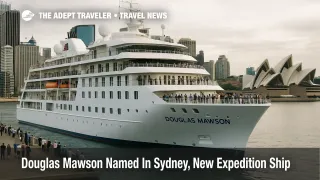
The Douglas Mawson expedition ship was formally christened in Sydney Harbour on December 1, 2025, giving Aurora Expeditions a new small ship flagship for polar and remote voyages. The naming event matters most for travelers who want science focused, low capacity expedition cruises in Antarctica, the Sub Antarctic islands, northern Europe, and the Arctic, especially those looking for Australian led options. For future passengers, the key takeaway is that a new purpose built vessel is now entering service, so it is time to compare itineraries, seasonality, and cabins before the most in demand departures sell out.
The Douglas Mawson naming marks the entry of Aurora Expeditions new X BOW equipped expedition ship into regular service from Australia, expanding small ship capacity on key Antarctic, Sub Antarctic, and later Arctic routes for travelers seeking sustainable, science forward voyages.
Ceremony In Sydney Harbour And A Different Kind Of Christening
Aurora Expeditions staged the ceremony in Sydney Harbour with the city skyline as a backdrop, underscoring the line s Australian roots and long polar history. Rather than the traditional champagne bottle, the ship was christened by breaking a block of ice across the bow, a visual nod to the company s polar heritage and its focus on environmental responsibility.
Emma McEwin, great granddaughter of explorer Sir Douglas Mawson, served as godmother and said naming the ship for her relative was a profound honor, emphasizing that the vessel carries forward his legacy of courage, science, and respect for nature. Aurora founder Greg Mortimer used the ceremony to underline that choosing ice instead of champagne was a deliberate signal of the line s identity as polar explorers and environmental advocates, and of its role as a custodian of Australia s Antarctic story.
After the Sydney event, the Douglas Mawson set course for Hobart, Tasmania, to position for its first commercial voyage, a roughly ten night circumnavigation that will blend remote coastal calls with sea days designed for lectures and citizen science work.
What The Douglas Mawson Adds To Small Ship Cruising
The Douglas Mawson is the third purpose built small ship in Aurora s fleet, joining the Greg Mortimer and Sylvia Earle, and continues the line s strategy of operating compact, ice capable vessels with strong environmental performance rather than larger cruise ships. Aurora, founded in 1991, has specialized in small group polar expeditions for more than 30 years, and the new vessel is meant to deepen that niche rather than change it.
Built in 2025, the Douglas Mawson uses the Ulstein X BOW, a reverse bow hull form that cuts through ocean swells instead of riding over them. This design can reduce pitching and slamming in rough seas, which should make long open water crossings such as the Drake Passage or the Southern Ocean more comfortable while also improving fuel efficiency. The hull is ice strengthened for polar navigation and the ship uses diesel electric propulsion, dynamic positioning to reduce anchoring on sensitive seabeds, and waste heat recovery systems that lower overall emissions compared with older tonnage.
Capacity figures vary by itinerary and regulatory cap, but Aurora and port facing materials indicate that the Douglas Mawson is designed to carry roughly 130 guests on polar voyages, even though the platform could accommodate more on paper, a choice that keeps shore operations nimble and helps deliver a more intimate expedition feel. The ship also carries a relatively high ratio of single cabins, reflecting demand from solo travelers who want to join specialist expeditions without paying for a double stateroom.
Onboard Spaces, Citizen Science, And Life At Sea
Onboard, the Douglas Mawson is laid out to keep guests looking outward. Panoramic lounges, expansive observation decks, and a two story atrium give wide views in changeable polar light, while a heated outdoor pool with Jacuzzis offers a sheltered way to spend time outside even in cold weather. Two restaurants and two bars, a wellness area with gym and sauna, and ample communal spaces are designed to absorb a full complement of guests without crowding.
A dedicated Citizen Science Center sits at the heart of the ship s educational mission. Here, passengers can join onboard scientists and guides to contribute to active research programs, such as marine mammal identification, plankton sampling, bird counts, or cloud observations that feed into larger climate and biodiversity datasets. For many travelers, this is a key differentiator from standard cruise products, because it turns days at sea into working field time rather than just transit.
Cabin layouts include a wide range of balcony staterooms, single cabins, and interconnecting rooms for groups, with most cabins offering private outdoor space. That mix supports both solo guests and small parties, which is important in an expedition market where travelers often book as individuals onto trips centered around particular interests like photography, geology, or climate science.
Early Itineraries, From Tasmania To Antarctica And Beyond
Following the Hobart positioning voyage, the Douglas Mawson will move into a season of Antarctic and Sub Antarctic journeys, including sailings that call at remote islands and coastal regions that see far fewer cruise visitors than the classic Antarctic Peninsula. Marketing materials and trade reports highlight itineraries that trace parts of Sir Douglas Mawson s own routes, as well as longer sailings that combine wildlife dense islands with ice and coastal exploration.
Looking ahead, the ship is scheduled to redeploy to northern waters, offering summer sailings in northern Europe and the Arctic. These itineraries will likely include Svalbard, Greenland, and other high latitude regions, plus some cultural and coastal calls in more temperate parts of Europe, allowing the vessel to stay busy year round while still concentrating on regions where a small, ice capable ship can reach places larger vessels cannot.
Because most departures will be seasonal and capacity is limited, travelers who want specific voyages, such as longer East Antarctic trips or combinations that include both the Antarctic Peninsula and South Georgia, should expect popular dates to sell out far in advance. That is especially true for cabins aimed at solo travelers, which tend to be in short supply across the expedition sector.
Background, Aurora Expeditions And The Mawson Legacy
Aurora Expeditions has a long history of naming ships after pioneers in exploration and science. The Greg Mortimer pays tribute to the company s co founder and his mountaineering achievements, while the Sylvia Earle honors the marine biologist and oceanographer known for her conservation work. The Douglas Mawson extends that pattern to one of Australia s key Antarctic figures, whose Australasian Antarctic Expedition mapped major sections of coastline and interior between 1911 and 1914.
For travelers, the symbolism matters because it signals that the line is aligning its ships with people who are known for field science and exploration rather than pure leisure. In practice, that shows up in high guide to guest ratios, a strong focus on getting off the ship by Zodiac whenever conditions allow, and a willingness to adjust itineraries to chase wildlife, ice, or weather windows rather than treat ports as fixed entertainment stops.
Anyone planning to sail on the Douglas Mawson should start by deciding whether a short, classic Antarctic itinerary or a longer, more remote route better matches their appetite for time at sea versus landings. From there, the main decisions are cabin type, season, and how the voyage fits around long haul flights into Australia, New Zealand, South America, or Europe, since expedition cruises require a tighter commitment to the full schedule than mainstream sailings and offer fewer back up options if a traveler arrives late.
Sources
- Douglas Mawson | Our New, Purpose-Built Small Ship
- Welcoming Our New Expedition Ship, the Douglas Mawson
- Douglas Mawson s great granddaughter christens his namesake ship
- World s Newest Expedition Ship Christened in Sydney
- Douglas Mawson named, First X BOW expedition ship in Australian waters
- Douglas Mawson enters service
- Aurora Expeditions, company background