

Melissa Cuts Jamaica Rooms, Shifts Dominican Winter Trips
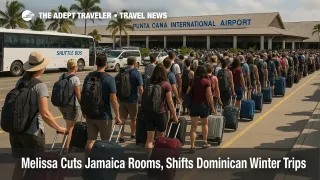
Hurricane Melissa Jamaica Dominican winter travel is now defined by a split screen recovery, because the Dominican Republic is largely open and adding flights while Jamaica is still bringing damaged hotels and infrastructure back online after the Category 5 landfall on October 28 2025. In Santo Domingo, regulators have just approved 800 additional flights over roughly eight months to scoop up visitors who were originally booked into Jamaica and other hit islands. In Jamaica, officials are racing toward a mid December relaunch with only about 60 percent of hotel rooms expected to be usable and some big all inclusive properties not due back until late 2026.
In practical terms, Hurricane Melissa Jamaica Dominican winter travel now means that capacity constrained Jamaica will behave like a premium product while the Dominican Republic takes on the role of pressure valve, absorbing displaced demand with those 800 flights and very high projected occupancy. Travelers weighing the two need to think less in terms of brand or beach alone and more in terms of dates, service levels, and how comfortable they are with active recovery work in their chosen resort area.
How The Dominican Republic Became The Pressure Valve
The Dominican Republic was brushed by Melissa but spared a direct hit on the scale of Jamaica or parts of Haiti and Cuba. That gave its tourism sector a running start when Jamaica and other islands had to pull inventory from the market. Civil aviation officials say they authorized the 800 extra flights, a mix of scheduled and charter services, almost in a single decision as it became clear that tens of thousands of winter bookings would need somewhere else to land.
New figures from Dominican authorities show more than 8 million visitors already this year, with October arrivals around 672000 and still climbing. Hotel associations now project more than 95 percent occupancy across key holiday weeks, especially in Punta Cana, Bávaro, and La Romana, as those extra flights ride on top of an already record breaking year instead of simply replacing lost demand. Punta Cana International Airport (PUJ) will carry much of that load, but some rerouted traffic is also being funneled into Las Américas International Airport (SDQ) near Santo Domingo and Gregorio Luperón International Airport (POP) at Puerto Plata to spread the pressure.
For travelers, that combination of record arrivals, 800 extra flights, and near full holiday occupancy has two main effects. First, last minute bargains into Dominican beach corridors are likely to be rare, especially around Christmas and New Year. Second, bottlenecks will not stop at hotel doors, because airport queues, transfers, and popular excursions will also run close to full, which makes advance booking essential.
Jamaica's Patchwork Recovery
Jamaica absorbed the worst of Melissa when the hurricane came ashore on the south coast then crossed the western parishes, leaving catastrophic damage to homes, power lines, and key tourism infrastructure. Government estimates now count more than 150000 homes damaged nationwide, with thousands of total losses, and power and water utilities in the west are still working through rolling restoration.
Within that disaster picture, the visitor economy is being rebuilt deliberately but unevenly. Tourism Minister Edmund Bartlett and industry groups say that about 60 percent of hotel rooms should be back in service around December 15 2025, in time for the formal start of the winter season. Many properties in Montego Bay and along the hardest hit western coastline will remain closed well into 2026 while major structural repairs are completed, though some corridors in Ocho Rios and Negril came through in better shape and are reopening faster.
Cruise traffic creates the strangest optics. Ocho Rios has already welcomed about 32000 cruise passengers since the storm, with roughly the same number expected again over a short window, and Montego Bay Cruise Port has reopened with calls like TUI Cruises Mein Schiff 1 bringing nearly 2900 guests at a time. That means travelers who see video of busy piers and downtown shops can easily assume Jamaica is "back," even while parts of the western coast still face patchy power, damaged roads, and debris clearance.
For a granular view of which resorts and brands are open when, travelers should pair this overview with detailed coverage in our Hurricane Melissa Jamaica hotel reopenings timeline and resort specific pieces, which track individual reopening dates, long term closures, and health advisories by area.
Haiti And The Northern Caribbean Gap
To the east, Haiti has effectively dropped out of mainstream tourism planning for this winter. The government has declared a three month state of emergency in multiple departments through early February 2026 after flooding and landslides from Melissa killed at least 43 people, displaced tens of thousands, and destroyed or badly damaged tens of thousands of homes. Aid agencies say access problems, disrupted markets, and damaged health facilities will stretch recovery well beyond that emergency window.
Cuba and parts of the Bahamas also face infrastructure and power repairs after Melissa, although key tourist hubs there have more mixed damage profiles than the hardest hit Jamaican and Haitian zones. The upshot is that a broad swath of the northern Caribbean has reduced capacity at the same time, which funnels a disproportionate share of demand into the Dominican Republic and the still functioning parts of Jamaica.
How Airlines And Cruise Lines Are Rebalancing
Airlines have already shifted the first wave of capacity. Carriers that previously built winter schedules around Sangster International Airport (MBJ) in Montego Bay and Norman Manley International Airport (KIN) in Kingston are now layering extra frequencies and charters into Dominican gateways, especially Punta Cana and Santo Domingo, with some equipment swaps and seasonal routes delayed or suspended on the Jamaican side.
Cruise lines began rerouting itineraries even before landfall, trimming or dropping calls in Jamaica and eastern Cuba during the peak of the storm, then gradually reintroducing Ocho Rios and Montego Bay as port facilities cleared inspections. Some Western Caribbean sailings that once paired Jamaica and Cayman with stops in the Dominican Republic are instead stringing together two Dominican ports, or swapping in Mexican and Central American calls while keeping one Jamaican call as a symbolic return. That means cruise based visitors will feel a more modest impact than land based guests, but shore excursion choice in Jamaica will still be narrower than in a normal winter and sensitive to day by day infrastructure progress.
When To Choose Jamaica Versus The Dominican Republic
For travelers already committed to Jamaica, the key distinction is corridor. Montego Bay remains the island's main air gateway and a core resort area, but it also absorbed serious damage and will carry the heaviest concentration of long running hotel closures. Ocho Rios and parts of Negril offer a more balanced picture, with a mix of reopened resorts, visible repair work, and mostly functioning utilities, although local road and excursion options can still change rapidly with weather and construction.
Travelers who are flexible and primarily chasing sun for the lowest possible fare will see the strongest short term case for the Dominican Republic. Those 800 added flights and the country's more limited direct storm damage make it the easiest plug in for winter package operators, even if that convenience shows up in the form of higher crowding and prices rather than discounts.
There is also a middle path for travelers who care more about specific resorts or communities than about which flag flies on the tail fin. A number of smaller Caribbean islands and southern destinations sat well outside Melissa's core, so their winter travel picture looks closer to normal, aside from regional airfare ripple effects, which can make them a useful release valve once Dominican hubs fill.
Practical Planning For Winter 2025 2026
Travelers booked into Jamaica between now and late spring should treat every piece of their trip as adjustable. That means verifying hotel status and amenities directly, not just through online booking engines, checking whether airport transfers will be private or shared and how long they currently take, and reviewing airline change options in case repairs drag or a preferred resort slips its reopening date.
In the Dominican Republic, the main task is to reserve early and accept that this will not be a quiet year in the big resort corridors. Lock in transfers, top choice excursions, and any special restaurant or golf bookings well before arrival, and consider using secondary airports such as Santo Domingo or Puerto Plata if schedules and budgets allow, since they can spread traffic away from the busiest Punta Cana funnels.
Date choice matters more than ever. Travelers who can push trips into mid January, late February, or early March will likely find a much more comfortable experience, because the hardest bottlenecks are expected from the week before Christmas through the first half of January when both the extra flights and early returning Jamaican capacity run at full tilt.
Finally, anyone tempted to treat the northern Caribbean as "back to normal" once the Melissa headlines fade should resist that impulse. Haiti's emergency decree, the scale of housing loss in Jamaica and parts of Cuba, and the strain on local health systems all point to a long recovery curve, even in places where beaches and pools look postcard ready again. Travelers should factor that wider context into their spending and behavior, from choosing locally owned tours where possible to leaving time and flexibility for communities that are still rebuilding around them.
Sources
- Dominican Republic authorizes more flights for tourists rerouted by Hurricane Melissa
- Dominican Republic adds 800 flights for influx of rerouted tourists following Hurricane Melissa
- Dominican Republic Prepares for Tourism Boom with New Flights Following Hurricane Melissa
- Dom Rep positions for tourists rerouted from Jamaica by Hurricane Melissa
- Bartlett, 64000 cruise passengers expected as tourism rebounds
- Haiti declares State of Emergency due to impact of Melissa
- WFP Haiti Situation Report 1, Hurricane Melissa
- Hurricane Melissa leaves dozens dead, causes widespread damage in Jamaica and Cuba
- Hurricane Melissa
- Jamaica Tourism Reopens After Hurricane Melissa
- Hurricane Melissa Jamaica Hotel Reopenings Timeline
- Montego Bay Cruise Port Reopens After Hurricane Melissa
- Hurricane Melissa, Cruise Itinerary Changes And Port Status