

Russia Saudi Arabia Visa Free Travel Deal December 2025
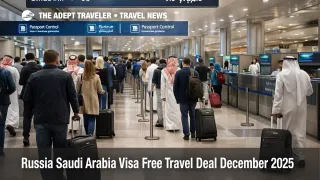
Russia Saudi Arabia visa free travel moved from plan to signed deal on December 1, 2025, giving Russian and Saudi travelers a path to short stays in each other's countries. The agreement covers tourists and business visitors using diplomatic, special, or ordinary passports and, once in force, will allow up to 90 days of visa free entry per year for trips between Russia and Saudi Arabia. Travelers planning 2026 city breaks, Red Sea resort stays, or business missions involving both countries should watch for the implementation date, new direct flights, and updated entry rules before locking in tickets.
The new Russia Saudi Arabia visa free travel regime will remove short stay visa applications for most tourism, business, and family visits between the two countries, but it will only start after both governments complete ratification and publish detailed entry conditions.
How The New Visa Free Rules Work
According to the Saudi Ministry of Foreign Affairs, the mutual visa exemption applies to all types of passports, including diplomatic, special, and ordinary documents, and allows visa free entry for tourism, business, and visits to relatives and friends. Travelers will be able to spend up to 90 days in the other country within a twelve month period, either as one extended stay or as several shorter trips that add up to the annual cap.
The fine print matters. First, this is a short stay waiver, not a free pass for every purpose. Official and regional coverage make clear that travel for work, study, residency, or the Hajj pilgrimage to Mecca will stay under separate visa tracks, even once the mutual waiver is live. Second, entry will still depend on standard border checks, which are likely to include passport validity rules, health or insurance requirements, and evidence of onward or return travel, even if no visa sticker or electronic approval is required in advance.
The deal also stands out on the Saudi side. Local business media note that Russia is the first country with which Saudi Arabia has signed a mutual visa exemption that explicitly covers ordinary passport holders as well as diplomats and officials, a sign of how much priority Riyadh places on this corridor.
When The Visa Free Regime Will Start
The signing in Riyadh does not mean Russian and Saudi citizens can board flights visa free the next day. The text approved by the Russian government and described by regional outlets says the agreement will enter into force 60 days after the two countries exchange formal diplomatic notes confirming that domestic legal procedures are complete.
Russian Deputy Prime Minister Alexander Novak has already told media that, in his view, this timeline could allow visa free travel to begin at the start of 2026, assuming both sides move quickly with ratification. Until an implementation date is officially published, travelers should treat the visa waiver as a future option rather than a current right and should continue to follow existing e visa or visa on arrival rules.
For now, that means Russian travelers planning winter or early spring 2026 trips to Saudi Arabia should build in enough lead time to secure the current electronic or consular visas, then switch to the visa free regime only once embassies and airlines clearly confirm that the new rules are active. Saudi travelers eyeing Russia for ski trips, cultural tours, or city breaks should follow the same logic, booking flexible tickets and hotels until the start date appears in official guidance.
Routes And Airlines Best Placed To Benefit
The visa waiver arrives just as air links between the two countries deepen. In October 2025, Saudia launched its first direct scheduled flights between Riyadh and Moscow, initially three times per week, with plans to increase frequencies over the winter season. Updated schedules now show Saudia ramping that Riyadh to Moscow Sheremetyevo service to five weekly flights from early December 2025 through mid February 2026.
Low cost carrier Flynas has also entered the market, adding its own direct Riyadh to Moscow flights and preparing a Jeddah to Moscow route, which will give budget travelers more choice once visa free entry takes effect. On the Russian side, Novak has said that transport officials are working with Saudi counterparts on options for two or three Russian airlines to launch or expand direct services in the near term, a move that would help balance capacity on both sides of the corridor.
These routes plug into a broader strategy. Saudi Arabia is using major carriers such as Saudia and new entrant Riyadh Air, along with a multibillion dollar expansion of King Khalid International Airport (RUH), to position Riyadh as a global hub by 2030. Russia, facing limits on air links with much of Europe, has been working to redirect tourism and business travel flows toward the Gulf, Central Asia, and friendly Asian markets.
Expected Tourism Impacts
Russian and Saudi tourism bodies are already framing the agreement as a potential step change. The Association of Tour Operators of Russia has said that mutual visa free travel could increase tourist flows between Russia and Saudi Arabia by two to three times compared with current levels, as cost and paperwork barriers fall.
On the Saudi side, the waiver gives tour operators a new pool of mid and high spending visitors for Red Sea resorts, desert and heritage trips, and giga projects under the Vision 2030 banner. Russian travelers who previously focused on the United Arab Emirates, Egypt, and Turkey for winter sun will have a simplified path into Jeddah, Riyadh, and the planned Red Sea and NEOM zones once the regime is in force. For Russians, direct flights and no visa fees make weekend or one week trips more realistic, especially when combined with competitive hotel pricing and tailored halal and Russian language services.
For Saudis, the biggest draw will be easier access to Russian city breaks in Moscow and Saint Petersburg, as well as ski and mountain trips in regions that remain open to foreign tourism. Rising Gulf visitor numbers to Russia in recent years, helped by targeted marketing and simplified visas, suggest that many Saudis are already comfortable with Russia as a destination and are likely to travel more frequently once they can skip consular queues entirely.
Trip Planning Tips For Russian Travelers
Russian citizens should treat the new visa free rules as an upgrade to, not a replacement for, normal trip preparation. Even without a visa requirement, Saudi Arabia will still enforce entry and behavior rules, including modest dress expectations in some areas, restrictions around religious sites, and regulations on photography, public conduct, and alcohol. Travelers should continue to arrange comprehensive travel insurance that covers medical care in Saudi Arabia, since the visa waiver does not change health system access.
On the logistics side, Russians planning to use the full 90 day allowance in a single trip will need to watch for overstay risks once the exact counting method is published, for example whether days are counted per calendar year or rolling 180 day period. Those considering repeated shorter stays, such as frequent business travelers or relatives visiting family in the Kingdom, should keep a simple log of entry and exit dates until electronic tracking in both countries proves reliable.
Trip Planning Tips For Saudi Travelers
Saudi citizens traveling to Russia under the visa free regime will still need to prepare for practical issues that have caught some Gulf visitors by surprise during the sanctions era. International banking restrictions can make some foreign credit cards unreliable in Russia, so travelers should expect to use local payment apps or carry a mix of cash and alternative payment methods, and should confirm what their hotel or tour operator accepts before arrival.
Weather and daylight patterns also differ sharply from the Gulf. Planning winter trips to Moscow or Saint Petersburg means packing for snow, ice, and short days, while summer visits may involve long daylight hours and crowds around major sites. Saudi travelers interested in combining Russia with Schengen or other regional stops should remember that the Russia segment will remain separate in terms of visas and borders, even if all other parts of the trip sit inside visa free zones.
Finally, while the mutual waiver simplifies entry, it does not override security screening. Both countries retain wide discretion to question travelers at the border, request proof of accommodation and funds, and refuse entry if they believe someone is trying to work or study without the correct visa. Saudis should keep printed or offline copies of hotel bookings, invitation letters when relevant, and return tickets in case mobile connectivity or roaming is unreliable on arrival.
Background: Visa Free Travel As A Wider Strategy
The Saudi Russia deal fits into a broader pattern in which both governments are using visa policy as a tool to redirect tourism and business ties. Saudi Arabia has already rolled out e visas and visa on arrival privileges for dozens of countries as part of its tourism drive, while this is its first mutual exemption that explicitly includes ordinary passports for a major partner.
Russia, for its part, has recently expanded visa free access for many categories of Chinese travelers and is launching mutual visa free travel with Jordan, using similar stay caps and purpose limits to those described in the Saudi agreement. Moscow has also been negotiating visa waivers with other Gulf and Asian states, which suggests that the Saudi corridor may be part of a wider network of alternative travel routes as Russia adapts to long term restrictions on travel with parts of Europe.
For travelers, the bottom line is that this new visa free channel will make trips between Russia and Saudi Arabia faster to plan and cheaper to execute once it is active, but only for a defined set of short stay purposes. Anyone considering work, long term study, residency, or Hajj pilgrimage should continue to treat those as separate planning problems, with their own application timelines and documentation. The opportunity here lies in flexible, well insured leisure and business travel that uses the new rules without pushing up against their edges.
Sources
- Saudi Ministry of Foreign Affairs, Mutual Visa Exemption Agreement
- Reuters, Russia and Saudi Arabia Sign Deal for Visa Free Travel
- Gulf News, Saudi Arabia and Russia Sign Mutual Visa Exemption Agreement
- Interfax and ATOR, Tourist Flow Between Russia and Saudi Arabia Could Triple After Visa Abolition
- AeroRoutes and Saudia, Saudia Boosts Riyadh - Moscow Flights From December 2025
- Arab News, Saudia Launches Direct Flights Between Riyadh and Moscow
- Financial Times, Gulf Tourists Flock to Up and Coming Holiday Destination Russia