

South Africa Storm Warnings Hit Travel December 1
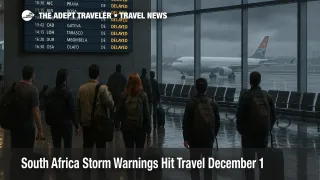
Travelers driving or flying through Gauteng, Mpumalanga, Limpopo, and KwaZulu Natal now face a high baseline risk of severe thunderstorms, hail, and local flooding, because the South African Weather Service has issued fresh impact based Yellow Level 4 and Level 2 warnings that cover large parts of the country on December 1 and into December 2. The alerts target the core Johannesburg and Pretoria corridor, key links into the Lowveld and Limpopo safari areas, and routes into Durban and the KwaZulu Natal coast, which means domestic business trips, airport transfers, and holiday drives all sit under the same unstable weather pattern. Anyone with tight connections, long evening road legs, or self made links between flights and buses should plan for slower traffic, short notice route closures, and the real possibility that a single thunderstorm cell can derail the day s schedule.
In practical terms, the new South Africa storm warnings travel alert means that road and flight plans through the eastern half of the country are more brittle than usual for at least the next 24 to 48 hours, especially across the afternoon and early evening peak storm windows.
What The New Warnings Say
SAWS impact based warnings on December 1 flag a Yellow Level 4 risk for severe thunderstorms over Gauteng, much of Mpumalanga, and the southwestern and southeastern parts of Limpopo. The warning text highlights heavy downpours leading to localized flooding of susceptible roads, low lying areas, and bridges, large amounts of small hail, and strong, damaging winds. A broader Yellow Level 2 belt adds KwaZulu Natal, the eastern and central Free State, North West, the northern Eastern Cape, central Limpopo, and the Mpumalanga Highveld, where similar hazards are possible at a somewhat lower expected impact.
These official alerts line up with a run of recent storms that have already hit Gauteng and neighboring provinces hard. Local coverage describes severe thunderstorms and hail on Sunday night turning parts of Johannesburg into an ice covered landscape, flooding streets, damaging homes and vehicles, and blocking routes as trees and debris came down. Pretoria neighborhoods, including northern suburbs, have also reported deep hail accumulations and lingering patches of ice well into the following day. For travelers, that recent damage is a warning sign that even a short cloudburst on top of saturated ground can immediately affect transport.
Adept Traveler s own coverage two days earlier in South Africa Thunderstorms To Disrupt Travel November 29 documented Yellow Level 2 alerts over many of the same provinces, focused on downpours, hail, and strong winds that slowed traffic along the N1, N3, and N4 corridors and delayed flights at major hubs such as O. R. Tambo International Airport (JNB) and King Shaka International Airport (DUR). The shift to a defined Yellow Level 4 phase for parts of Gauteng, Mpumalanga, and Limpopo marks an escalation in both the expected likelihood and the severity of storm impacts.
How This Maps Onto Key Routes And Airports
On the road network, the Level 4 area covers the core Highveld plateau around Johannesburg and Pretoria, extending east along the N12 and N4 corridors toward Mpumalanga, and north along the N1 into Limpopo. These are the same routes that carry most airport transfers to O. R. Tambo and Lanseria International Airport (HLA), plus self drive and coach traffic headed to the Kruger area, Lowveld towns such as Mbombela, and many Limpopo safari lodges.
Heavy downpours here can quickly pond water in the right lanes of multilane highways, flood low level bridges, and overwhelm drainage at busy interchanges. When hail falls hard, visibility drops to near zero, traffic slows or stops, and accidents become more likely, especially where drivers underestimate stopping distances on slippery surfaces. The same pattern applies further south and east in the Level 2 belt, where the N3 between Johannesburg and Durban, the routes into the KwaZulu Natal Midlands and Drakensberg, and links to coastal resorts can all be affected when storm cells line up along the escarpment.
At airports, thunderstorms of this type do not always force closures, but they do change how safely and efficiently aircraft can move on the ground and in the approach patterns. At O. R. Tambo International Airport (JNB), arrivals may be placed in holding stacks when a severe cell sits on the final approach path, and departures can be paused when lightning risk forces ramp workers to clear exposed areas. Lanseria, which has fewer parallel taxiways and less apron space, can take longer to work through a ground stop because there is less buffer to absorb queuing aircraft. King Shaka International Airport (DUR) faces its own constraints when storms roll in from inland valleys, including crosswinds, heavy rain, and occasional lightning that also push the airport into short, sharp delays.
For travelers, the effect often shows up first as SMS or app alerts about delayed boarding or extended arrival times, then as queues at security and check in when multiple flights shift into the same hour. Tight, self made connections, particularly those that mix domestic and regional low cost carriers on separate tickets, are most at risk in this environment.
Short Term Impacts For Different Traveler Types
Business travelers with same day trips between Johannesburg, Pretoria, and regional hubs such as Durban or Nelspruit are likely to feel the squeeze in both directions. Morning outbound legs may operate close to schedule, but return flights in the late afternoon and early evening sit squarely in the peak thunderstorm window, increasing the odds that a meeting that runs long will collide with a weather delay at the airport.
Holidaymakers on safari or beach itineraries can see their trouble start much earlier in the day. A cloudburst upstream that closes a low level bridge on a rural connector can cut off the only practical road from a lodge back to the main highway, turning what should be a comfortable transfer into a race to reroute on muddy alternatives. Tour groups in large coaches usually benefit from professional drivers who know the alternates, but they still cannot magic away delays from detours and traffic control. Self drivers who rely on mapping apps alone may struggle more, because those apps rarely understand which minor roads flood first or which passes are prone to rockfall.
Long haul travelers connecting onto or off international flights into Johannesburg and Durban face a different pattern of risk. Inbound flights that arrive during calmer morning periods often land on time, but if their onward domestic legs are scheduled in the late afternoon, a storm related ground stop can quickly eat through even a generous connection. Outbound travelers starting in regional cities and connecting to overnight flights out of O. R. Tambo or King Shaka should be wary of any itinerary that allows less than three hours between arrival and check in cut off.
How This Round Fits The Broader Storm Pattern
These warnings are not occurring in isolation. Over the past several weeks, SAWS and local media have repeatedly flagged severe thunderstorms, heavy rain, and hail episodes across Gauteng, Mpumalanga, Limpopo, KwaZulu Natal, and the Free State. Adept Traveler highlighted earlier November events, including mixed storm and heat warnings and, most recently, the November 29 thunderstorm window that already disrupted road travel and slowed airport operations.
South Africa s summer pattern on the Highveld and eastern escarpment regularly produces afternoon storms when warm, moist air from the Indian Ocean rises over high ground and interacts with passing upper level disturbances. SAWS shift to impact based warning language in recent years was meant to translate those technical patterns into concrete risk for communities, including transport links such as highways, low level bridges, and major airports, rather than just listing rainfall totals or lightning probabilities.
For travelers, the message is that this is not a one off freak storm, but part of a seasonal regime in which multiple days in a row can carry elevated disruption potential even when each individual cell is short lived.
Planning Moves For The Next 24 To 48 Hours
The goal for the next two days is not to cancel every trip through the affected provinces, but to avoid unnecessary stress and exposure to the worst storm windows. On the road, that usually means shifting long legs into the late morning wherever possible, keeping afternoon schedules flexible, and treating any flooded or hail covered road as a hard stop rather than a challenge to push through.
Anyone driving to O. R. Tambo, Lanseria, or King Shaka should add at least 60 minutes of buffer to whatever mapping apps suggest, especially on routes that cross rivers or pass through known congestion points. Travelers relying on hotel or transfer company pickups should reconfirm departure times based on the updated weather warnings and be prepared to leave earlier if storms are already building on the radar. Riders who have the choice between formal transfer providers and informal operators should favor the former, since professional services are more likely to monitor alerts and adjust routes proactively.
For flights, the safest play is to avoid tight self made connections through Johannesburg and Durban over the storm window. Where possible, keep domestic and regional legs on a single ticket with the long haul segment, because that preserves misconnect protection if a thunderstorm induced delay cascades. If you must build separate tickets, treat three hours as the minimum realistic layover and be ready to overnight if thunderstorms stack up.
Travel insurance is another lever. Comprehensive policies that explicitly cover weather related delays, road closures, and missed connections can soften the blow if SAWS warnings translate into genuine travel impossibility, while bare bones medical only policies will not. Travelers with complex, multi leg itineraries over the next week may want to review their coverage in light of the current storm pattern, not just for this specific alert.
Finally, it is worth looking one step beyond December 1. Forecasts for December 2 point to continued scattered thunderstorms across several of the same provinces, with at least some chance of renewed Level 4 or Level 2 alerts depending on how systems evolve. If you have flexibility, shifting the most critical travel, such as long rural drives or important business meetings, toward calmer midweek windows may be the lowest stress option.
Sources
- The Citizen, Weather forecast for 2 December 2025, Yellow Level 4 and Level 2 thunderstorm warnings
- The South African, Severe storms with rain, wind and hail expected in multiple parts of South Africa
- News24, Monday s weather, hail expected in some parts
- SA Weather Service via X, Severe thunderstorm Yellow Level alerts for Limpopo, Mpumalanga, and Gauteng
- African Insider, Gauteng storm mayhem, hail blitz turns Joburg into ice zone
- Adept Traveler, South Africa Thunderstorms To Disrupt Travel November 29