

Record U.S. Rail Ridership In 2025 As Vacation Demand Grows
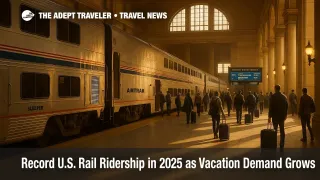
Amtrak record ridership 2025 is now official, with the national passenger railroad carrying 34.5 million customer trips in the fiscal year that ended September 30, a 5.1 percent increase over 2024 and a new all time high. Operating revenue climbed to 3.9 billion dollars, up 9.1 percent, while adjusted operating losses narrowed to about 598 million dollars, a 15 percent improvement that leaves Amtrak still short of break even but on a clearer path toward its goal of train level profitability by fiscal 2028. For travelers, the most visible change is that trains, especially scenic long distance routes used as vacations, are busier, more capacity constrained, and increasingly central to U.S. trip planning.
In plain terms, Amtrak record ridership 2025 means U.S. passenger rail is having a moment, fueled by infrastructure money, new vacation oriented routes, and mounting frustration with crowded highways and unpredictable flights. The upside for travelers is more choice and better onboard service, but the trade off is higher fares as trains fill and a network that still depends heavily on federal funding and aging cars, especially on the long distance lines.
Where the numbers are coming from
Amtrak's year end report frames FY25 as "a year of records," with 34.5 million customer trips, 2.7 billion dollars in adjusted ticket revenue, 3.9 billion dollars in total operating revenue, and 6.9 billion passenger miles traveled across more than 300 daily trains. Adjusted operating earnings improved to negative 598.4 million dollars from roughly negative 705 million in FY24, a 15.1 percent gain that Amtrak and outside analysts say keeps the railroad on track to reach operational profitability by about FY28 if demand holds and new rolling stock arrives on schedule.
Behind the top line figures is an aggressive capital program. Amtrak invested a record 5.5 billion dollars in FY25 on tracks, catenary, signals, stations, and yards, about 24 to 25 percent more than the previous year, drawing heavily on the Infrastructure Investment and Jobs Act that set aside 66 billion dollars for rail, including 22 billion directly for Amtrak over five years. Big ticket work ranges from rehabilitation of the East River Tunnel and other Northeast Corridor chokepoints to yard upgrades that will support new Airo and NextGen Acela trains from 2026 onward.
Long distance lines as rolling vacations
Within that system wide growth, the long distance division, defined as routes of 750 miles or more, remains a small share of total riders but a disproportionately important part of Amtrak's brand and its vacation appeal. Amtrak's long distance portfolio now includes roughly 14 to 15 routes, serving more than 300 stations across 39 states and providing the only intercity rail option in many rural regions and park gateways.
Travel Weekly's read of Amtrak's detailed route tables shows long distance ridership up about 4.2 percent year over year, with ticket revenue up 9.7 percent as fares rose faster than volumes. Growth was not evenly distributed. The Chicago to San Francisco corridor, marketed as the California Zephyr and known for Rocky Mountain and Sierra Nevada scenery, saw ridership jump roughly 14.8 percent after Amtrak added an extra coach and an extra sleeper to the consist in the spring.
In the Southwest, three iconic routes that double as multi day vacations posted some of the strongest gains. The Los Angeles to New Orleans line, the Chicago to San Antonio corridor, and the Chicago to Los Angeles transcontinental route all saw double digit increases in boardings, roughly 18.9, 14.3, and 12.6 percent respectively, again helped by added capacity and a willingness by travelers to pivot away from the most delay prone air corridors. For would be passengers, that combination of strong demand and limited rolling stock means a tighter booking curve, especially for sleeping car space and summer departures.
New Gulf Coast and Florida options
FY25 also marked the first real expansion of Amtrak's leisure map in years. In August, Amtrak and Gulf Coast states finally delivered twice daily Mardi Gras Service between New Orleans and Mobile via four Mississippi coast stops, restoring passenger trains to that stretch for the first time since Hurricane Katrina in 2005. Tickets starting around 15 dollars and sensible morning and late afternoon timings make the train an attractive connector for cruise departures, Saints games, and Gulf Coast weekends, although its short length means luggage and onboard space will still feel tight on peak event days.
A few months earlier, in November 2024, Amtrak launched the Floridian, a temporary through train that combines the Capitol Limited and Silver Star into a single Chicago to Miami route via Cleveland, Pittsburgh, Washington, Jacksonville, Orlando, and Tampa. For travelers this is a big practical change: instead of managing a middle of the night same station connection in Washington, vacationers can board once in Chicago and wake up in Florida two nights later, a throwback to classic streamliner era itineraries.
Both routes have clear vacation utility. The Gulf Coast train knits together beach towns and Mardi Gras hubs that can be hard to string together without a car, while the Floridian offers a flight alternative for rail fans connecting from the Midwest to cruises, Orlando theme parks, or South Florida resorts. The catch, again, is that both are capacity constrained for now, so early booking and flexible dates are the price of admission.
Amtrak Vacations and the packaged rail market
The demand surge is not limited to Amtrak's own ticket counters. Railbookers, which operates the Amtrak Vacations brand under license, says its U.S. rail packages have seen about 16 percent revenue growth this calendar year, with 2026 sales currently tracking roughly 22 percent ahead of last year. That tracks with what agents and tour operators are reporting more broadly, namely that travelers who might once have taken a single bucket list rail journey in Europe are now open to U.S. itineraries that combine national parks, big city stays, and rail segments in the same trip.
For practical planning, packaged rail vacations can sometimes beat do it yourself bookings on long distance trains because tour operators block space far in advance and bundle hotels, sightseeing, and transfers. On the other hand, they also lock you into fixed dates and hotel choices and can conceal the underlying Amtrak fare curve, so it is still worth pricing bare rail and self arranged lodging before deciding.
Funding tailwinds, political crosswinds
None of this growth happens in a vacuum. The 2021 Infrastructure Investment and Jobs Act, signed under President Biden, committed 66 billion dollars to rail and 22 billion directly to Amtrak over five years, funding exactly the tunnels, bridges, stations, and fleets that make record ridership possible. Those projects include the Hudson Tunnel Project under the Gateway Program, a roughly 16.1 billion dollar effort to add a new two track tunnel under the Hudson River and rehabilitate the existing North River tubes by the mid 2030s.
Since taking office in January 2025, President Trump has repeatedly targeted that funding, most recently in October when he publicly declared the Gateway Project "terminated" and his administration moved to pause or withhold roughly 18 billion dollars in federal support tied to New York rail and subway projects during a shutdown fight with Democratic leaders. So far, those statements have not translated into a formal cancellation. Tunnels are being dug, approach structures are rising, and federal grant agreements already signed make the project difficult to unwind without major legal and political blowback.
Transportation scholars, including retired Michigan State rail management director Nick Little, have warned that Amtrak remains exposed because its strategy depends heavily on a single lender, the federal government, even as it tries to diversify revenue and push toward operational break even. For travelers, the immediate risk is not that trains vanish overnight, but that funding freezes or political fights can slow or fragment long promised improvements, keeping bottlenecks in place longer and delaying new trains that are supposed to ease crowding.
How to plan U.S. rail trips in this environment
For now, the main reality for passengers is that Amtrak's most popular services are busier, sometimes more expensive, and often more reliable than in the recent past. Northeast Corridor frequencies have improved, regional state supported routes like Amtrak Cascades and Borealis have set their own ridership records, and long distance trains such as the California Zephyr, Sunset Limited, and Coast Starlight are seeing stronger loads despite running with limited equipment.
If you are eyeing a rail based U.S. vacation in 2026 or 2027, there are a few practical takeaways. First, book long distance sleeping car space as far ahead as you reasonably can, then work flights and hotels around your confirmed train dates, not the other way around. Second, lean into off peak departures and shoulder seasons, when load factors and fares are lower and weather is more forgiving on routes that cross deserts or mountains. Third, when you depend on a single long distance train to make a cruise embarkation, a safari style lodge stay, or an international flight, treat it like a winter hub airport connection and give yourself an overnight buffer in the gateway city.
Finally, keep an eye on the policy and funding story, especially if you are planning trips that depend on new tunnels or increased frequencies in the Northeast. Amtrak's "new era of rail" vision assumes that infrastructure funding continues to flow and that ridership keeps rising; if either shift, the network may plateau instead of expanding. Either way, FY25's record marks a turning point in which intercity rail is no longer a niche choice, but a mainstream option that more U.S. travelers are actively choosing over short haul flights and long drives.
Sources
- Amtrak, "A Year of Records" FY25 results release
- Amtrak, "FY25 Year End Ridership" fact sheet and September 2025 Monthly Performance Report
- U.S. passenger railroad Amtrak sets ridership record, cuts losses, Reuters
- Amtrak record ridership and revenue, Travel Weekly
- Introducing Amtrak Mardi Gras Service between New Orleans and Mobile, Amtrak
- Amtrak launching the Floridian, Chicago to Miami, Amtrak
- Long Distance Amtrak routes and 750 mile rule
- Infrastructure Investment and Jobs Act rail funding overview, Amtrak and FRA
- Gateway Program and Hudson Tunnel Project background
- Trump administration statements and actions on Gateway funding, multiple reports