

New Interline Links Frankfurt And Six U.S. Gateways
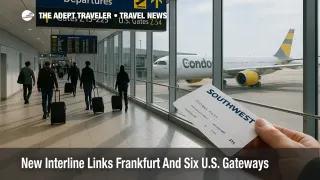
Frankfurt U.S. interline flights are about to get simpler for many North American travelers, because Condor and Southwest Airlines have agreed a new partnership that will link Frankfurt, Germany, with six U.S. gateways on single ticket itineraries starting January 19, 2026. The deal covers connections through Boston, Las Vegas, Los Angeles, Portland, San Francisco, and Seattle, where Southwest will feed Condor's long haul flights from smaller U.S. cities. For travelers this turns what used to be do it yourself connections into protected interline journeys, which means bags checked through and better support if something goes wrong on the first leg.
The new interline agreement will let passengers combine Southwest domestic segments and Condor long haul flights on one ticket, including onward connections beyond Frankfurt. In practical terms this means that a traveler can book a single itinerary from a regional Southwest city, connect at one of the six gateways, then continue to Frankfurt Airport (FRA) and on to one of nearly 70 Condor destinations across Europe, Africa, Asia, and the Americas, with their checked bags transferred automatically.
Condor and Southwest say the first day of eligible travel under the agreement will be January 19, 2026, and that bookings for the combined itineraries are already available through Condor's website, traditional travel agencies, and online travel agencies. As with Southwest's other new international tie ups, these interline itineraries will not initially be offered on Southwest.com, so travelers and advisors will need to price them through Condor or third party channels.
In the United States, the six shared gateways are Boston Logan International Airport (BOS), Harry Reid International Airport (LAS) in Las Vegas, Los Angeles International Airport (LAX), Portland International Airport (PDX) in Oregon, San Francisco International Airport (SFO), and Seattle Tacoma International Airport (SEA). At these airports, Southwest will provide domestic feed and distribution across its network, while Condor will operate nonstop flights to Frankfurt using its Airbus A330neo fleet. For many itineraries, this turns what used to be self built connections via other carriers and hubs into a relatively straightforward one stop option to Germany and beyond.
For travelers, the key distinction is that this is an interline agreement, not a full codeshare. Interline deals generally cover through ticketing, baggage transfer, and schedule coordination across two carriers, but they do not automatically provide shared flight numbers, reciprocal frequent flyer earning, or elite status benefits. Early commentary on the Condor Southwest partnership suggests that customers will get the convenience of a single ticket and through checked bags, but they should not expect to earn Southwest Rapid Rewards points on the Condor leg or use Southwest status to unlock benefits on Condor flights at launch.
The Condor announcement is part of a broader pivot in Southwest's strategy toward international connectivity. For decades the carrier avoided cross carrier partnerships and focused on its point to point domestic network, but in 2025 it began adding interline partners, first with Icelandair, then with China Airlines, EVA Air, and most recently Philippine Airlines, with those agreements largely focused on transatlantic and transpacific connections through a handful of U.S. gateways. Condor now becomes the fifth major international airline in that stable, expanding Southwest's reach deep into continental Europe from Frankfurt in a way that would be difficult to replicate with its own narrow body fleet alone.
For travelers based in smaller or mid sized U.S. cities that Southwest serves well but that lack other long haul options, the change could be particularly useful. A traveler from Kansas City, Missouri, or Nashville, Tennessee, for example, will be able to fly Southwest to a gateway like San Francisco or Seattle, then board a Condor flight to Frankfurt and connect onward, all on a single itinerary that offers some protection if the domestic leg runs late. That differs from stitching together separate tickets, where a delay on one carrier could leave the traveler stranded with no duty of care from the other airline.
The structure is also likely to matter for price sensitive Europe trips. Condor has historically priced its Frankfurt services aggressively in many U.S. markets, especially when competing against alliance carriers that funnel traffic through their own hubs. With Southwest feeding passengers into Condor's flights, there may be more fare options that undercut traditional hub itineraries from legacy U.S. airlines, especially in shoulder seasons. However, the tradeoff is that loyalty benefits are fragmented, since Southwest still does not operate its own long haul flights and Condor runs a separate frequent flyer program.
Bookings are live now on Condor's channels, so anyone planning Europe travel from late January 2026 onward can begin comparing Condor Southwest itineraries against other options. When pricing trips, it is worth checking not only simple roundtrips via Frankfurt, but also open jaw journeys, for example an arrival into Frankfurt with a return from another Condor city, because the interline structure should still allow through checked bags back to the U.S. gateway on the return. Travel advisors who rely on global distribution systems should see the new options populate as interline fares that combine Southwest and Condor segments.
To reduce stress at the six gateways, travelers should plan conservative connection times. Even with interline protection, a tight 60 or 75 minute connection between a Southwest domestic arrival and a Condor departure at a large airport like Los Angeles or San Francisco will leave very little room for delays, long security lines, or terminal changes. Two and a half hours is a more realistic target at most of these airports, especially for first time international travelers who may need extra time to navigate unfamiliar facilities. On the return, travelers should factor in U.S. Customs And Border Protection processing and possible re screening, which can stretch even an apparently generous connection.
Because Condor and Southwest have both emphasized the role of these partnerships in expanding international reach rather than building new hubs of their own, some travelers may want a refresher on how interline and codeshare tickets differ in practice. Adept Traveler's guide to airline partnerships and shared tickets breaks down how protections, mileage earning, and elite benefits typically work across the major types of agreements, which can help set expectations before you lock in a fare. Readers who have been following Southwest's international expansion can also review our earlier coverage of its Icelandair partnership, which sketched out how Reykjavik connections changed options for U.S. passengers bound for Europe.
From a planning perspective, the Condor Southwest tie up turns Frankfurt into another realistic one stop option for a wide range of European itineraries that previously would have required backtracking through other hubs. Travelers who care most about schedule, price, and a straightforward connection may find that these interline tickets offer a compelling alternative to more complex routings that mix multiple alliances. Others who prioritize elite benefits or earning in a particular global alliance may still steer toward carriers that offer full codeshares and deeper integration, especially if they hold status with those airlines. In either case, the new agreement is a clear sign that Southwest is moving steadily away from its once rigid stance against cross carrier partnerships and toward a more flexible role in the international network.
Sources
- Southwest Airlines press release on Condor partnership
- Southwest Airlines customer partnerships page
- The Points Guy coverage of Condor Southwest interline
- One Mile At A Time analysis of Condor Southwest deal
- Travel Weekly on Southwest Philippine Airlines interline
- Simple Flying summary of Southwest's Condor partnership