

Melbourne Metro Tunnel Free Weekend Travel Guide
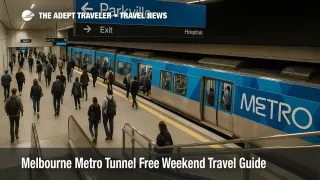
Visitors heading to Melbourne for the 2025 26 summer now get a new way to cross the city and a cheaper way to do it, because Melbourne Metro Tunnel free weekend travel kicked in when the long awaited Metro Tunnel opened on November 30, 2025 for preview services across the network. The launch connects five new underground stations beneath the central business district while keeping existing City Loop trains running, so leisure travelers can start using the tunnel for direct trips to key precincts if they plan around off peak timetables and weekend freebies.
In practical terms, the Melbourne Metro Tunnel free weekend travel program gives visitors two months of state wide zero fare public transport while a limited Summer Start timetable runs trains every 20 minutes through the new cross city tunnel between West Footscray and Westall before a full network shuffle on February 1, 2026.
How The Metro Tunnel Summer Start Works
The Metro Tunnel creates a new nine kilometre underground spine linking the Sunbury line in the west with the Cranbourne and Pakenham lines in the south east, using five new stations, Arden, Parkville, State Library, Town Hall and Anzac, under and around central Melbourne. During the Summer Start period, trains run through the tunnel between West Footscray and Westall roughly every 20 minutes on weekdays from 1000 a.m. to 300 p.m. local time, while all other trains on those lines still follow their familiar paths through the City Loop.
On weekends and public holidays, preview services stretch later, operating about every 20 minutes between West Footscray and Westall from 1000 a.m. to 700 p.m., with some trains continuing to East Pakenham every 40 minutes and to Sunbury every 60 minutes. That means visitors can treat the tunnel like a frequent core line in the middle of the day, but they still need to expect conventional patterns and crowds at peak hour, when most commuters remain on the City Loop.
Free public transport is the other half of the launch. The Victorian government has made all public transport across the state free every Saturday and Sunday from November 30, 2025 to February 1, 2026, covering metropolitan trains, trams and most buses so that residents and visitors can try the new stations without worrying about fares. Precise rules and any exclusions sit with Public Transport Victoria, but the official language is broad, so most regular services that rely on the myki ticketing system are included.
Station By Station Guide For Visitors
The five new stations have been placed to plug obvious gaps in Melbourne's rail map, which is why they matter for travelers rather than just commuters.
Arden Station sits to the north west of the existing CBD in a renewal area of North Melbourne, with easy access to developing hotel stock, creative workplaces and future event spaces. If you are staying in the inner north west or meeting locals in emerging bar and dining districts around Macaulay Road and Arden Street, this is your cross city tunnel stop.
Parkville Station finally gives the University of Melbourne and the major nearby hospitals a front door by rail, with entrances on Grattan Street, near Royal Parade and outside the Royal Melbourne Hospital and Peter MacCallum Cancer Centre. For visitors heading to conferences, medical appointments or the university precinct, Parkville will usually be the most direct option, and it will quickly become the default station for anyone staying around Carlton or the top of Swanston Street.
State Library Station runs under La Trobe Street and connects directly to Melbourne Central Station, putting you at the northern edge of the CBD shopping grid, close to RMIT, the State Library of Victoria and a dense cluster of mid range hotels. If you plan to spend most of your time in central Melbourne but want simple tunnelline access to other precincts, this is a highly flexible hub.
Town Hall Station links underground to Flinders Street Station and opens out to City Square, Federation Square and the Yarra riverfront, which makes it an obvious choice for riverfront hotels, Southbank access and the laneway restaurant districts around Degraves Street and Flinders Lane.
Anzac Station is the southern anchor on St Kilda Road, built around a tram train interchange at the former Domain tram stop, with the Shrine of Remembrance, the Royal Botanic Gardens and a long run of business and residential towers within short walking distance. If you normally rely on St Kilda Road trams to reach your hotel or office, switching to Anzac for cross city trains will often save you an extra tram hop.
For context on how major rail projects elsewhere in Australia are affecting summer travel, you can compare this relatively positive launch with our coverage of Brisbane And Gold Coast Summer Rail Shutdowns, which is almost the mirror image, more closures and buses, fewer new links for visitors.
Using The Metro Tunnel From Melbourne Airport
Melbourne Airport (MEL) still has no direct rail link, so most visitors will continue to arrive in the CBD by bus, taxi or rideshare. The main dedicated airport bus, SkyBus, runs express services between Melbourne Tullamarine Airport and Southern Cross Station, where you can connect to suburban trains, trams and regional services.
SkyBus is not part of the myki ticketing system, so its fares are separate and are not covered by the free weekend public transport offer. However, once you reach Southern Cross, switching to a Sunbury, Cranbourne or Pakenham service that uses the Metro Tunnel, or to a tram across the CBD, will be free on Saturdays and Sundays during the launch period.
A typical airport to Parkville trip on a free weekend could look like this, SkyBus to Southern Cross, a short transfer to a Sunbury line train running through the tunnel, then off at Parkville Station for the hospitals or university. For St Kilda Road hotels, you could combine SkyBus to Southern Cross with a tunnel train to Anzac Station, then walk or use a local tram for the last stretch.
Travelers arriving at Avalon Airport (AVV) can use SkyBus services to Southern Cross as well, then make the same tunnel and tram connections, although journey times are longer and services less frequent than from Tullamarine.
Example Trips That Are Now Easier
The most obvious winners from the Metro Tunnel are cross city trips that used to require a City Loop change and a tram, especially for visitors staying outside the traditional CBD hotel core.
If your hotel is near St Kilda Road and you plan to visit the University of Melbourne or the Parkville hospital precinct, you can now ride directly between Anzac and Parkville without changing modes, as long as you catch a Summer Start service that stops at both stations. That makes conference days or medical visits less stressful, because you avoid multiple transfers on the way to early appointments.
Travelers based near the Queen Victoria Market, North Melbourne or Kensington will likely use Arden and Parkville to reach St Kilda Road, Southbank and the riverfront, shifting journeys that once required a tram plus train into simple tunnel rides. For regional visitors arriving at Southern Cross on V Line trains, the new line also offers quicker access to the medical precinct and St Kilda Road than threading through the City Loop and then doubling back on trams.
Because weekend travel is free across the state, you can also treat Saturdays and Sundays as your heavy movement days. That might mean scheduling side trips to Geelong, Ballarat or Bendigo on regional trains when fares are zero, then keeping Monday to Friday for shorter, paid hops around the CBD and inner suburbs. If you want a simple way to practice the new interchange patterns before a business meeting, ride the tunnel on a Sunday first, then repeat the same route on a weekday.
Planning Around The February 2026 Network Changes
Once the Summer Start period ends, the Metro Tunnel stops being a side experiment and becomes the main path for three of Melbourne's busiest lines. From February 1, 2026, Sunbury, Cranbourne and Pakenham trains will use the tunnel exclusively, the Frankston line will return to the City Loop with dedicated use of the Caulfield tunnel, and Werribee and Williamstown services will initially terminate at Flinders Street before later through running with the Sandringham line after level crossing works.
For travelers, that means timetables and connection logic will change even if you never set foot in one of the new stations. Regulars on Frankston services will regain consistent City Loop access, while some travelers who used to treat Southern Cross as their default CBD stop may find State Library or Town Hall more convenient for particular hotels or offices.
Anyone booking trips that straddle the February changeover should build a little extra buffer into meetings, transfers and restaurant reservations, and double check departure boards for the correct platform and stopping pattern. App based journey planners, including PTV's own tools, will help, but the early days of a network shuffle often bring small delays and crowding as people adjust.
Background: From Construction Site To Operational Spine
The Metro Tunnel is the largest single change to Victoria's rail network since the original City Loop opened in 1981, with cost estimates between 11 and 15.5 billion Australian dollars depending on how associated works are counted. Construction has reshaped central streets and tram corridors over much of the last decade, and the project is closely linked to the separate West Gate Tunnel road scheme and the longer term Melbourne Airport Rail and Suburban Rail Loop concepts.
For travelers, however, the bigger story is not the engineering but the operational effect. The tunnel effectively takes three busy lines out of the City Loop, freeing capacity for others, and places new high capacity stations directly under key employment, education and health precincts. Paired with free weekend public transport, that amounts to a trial run for a more metro like, turn up and go network, even if headways will only reach that standard once the full timetable begins in February.
If you are new to Melbourne's ticketing rules, it is worth pairing this article with our evergreen Guide To Melbourne Public Transport And Myki, which explains how to buy and top up cards, use mobile wallets and navigate free tram zones alongside the Metro Tunnel changes.