

Tanzania Protests December 9 Threaten Travel
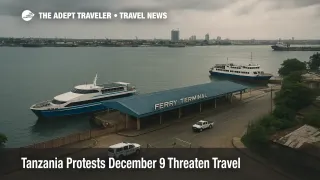
Travelers with safari or beach holidays booked in Tanzania now need to treat Tanzania protests December 9 travel disruption as a concrete planning factor, not a distant headline, after a United States security alert warned that nationwide anti government demonstrations expected to peak on 9 December could start as early as 5 December. The alert and follow on coverage highlight risks that include curfews, internet shutdowns, ferry cancellations between Dar es Salaam and Zanzibar, and disruptions to international flights and major highways. Visitors should assume that any journey could take longer than advertised, build extra buffers into airport, ferry, and safari transfers, and keep rerouting options open through Kilimanjaro, Nairobi, or other regional hubs.
In practical terms, the new warnings turn the Tanzania protests around 9 December into a system wide travel disruption risk that can affect flights, ferries, long distance buses, and even basic internet access across the country.
How We Got Here
The current alerts follow a violently disputed general election on 29 October 2025, when protests erupted in Dar es Salaam and spread to cities including Arusha and Mwanza. Security forces imposed a curfew in the commercial capital, set up roadblocks run by the army, and responded with tear gas and reported live ammunition, while a near nationwide internet shutdown cut mobile data and access to social media platforms. International coverage and embassy statements describe hundreds of alleged deaths according to opposition figures, a much lower confirmed toll from United Nations sources, and a political climate that remains tense and heavily policed.
During the post election turmoil, ferries from the mainland to Zanzibar were suspended and Emirates halted flights to Dar es Salaam, showing that transport links can be pulled suddenly when unrest escalates. Those decisions are now an important benchmark for travelers trying to imagine what a new wave of protests could do to their own itineraries.
What The New Alerts Actually Say
The latest United States security alert, as summarized in regional media, warns that calls for nationwide anti government demonstrations on 9 December could translate into unrest starting as early as 5 December. It flags several specific risks for visitors and residents, including:
- Curfews that restrict movement, potentially on short notice and with strict enforcement.
- Roadblocks and checkpoints that can stop or turn back vehicles that cannot show an acceptable reason for travel.
- Possible cancellations of ferries between Dar es Salaam and Zanzibar and interruptions to international flights.
- Internet blackouts or throttling, which have already occurred during the election period and could return around Independence Day.
The same alert notes that foreign nationals have faced increased attention from security forces since the election, including searches of phones and laptops for politically sensitive content, and stresses that the embassy's ability to assist may be limited during periods of heavy unrest or curfews.
Australia's Smartraveller service has already moved Tanzania to a "Reconsider your need to travel" level overall, citing recent civil unrest, violent protests, and the likelihood of further demonstrations and firm responses from security forces, especially around national holidays such as Independence Day on 9 December. Its advice highlights the possibility of renewed curfews, checkpoints, and road blocks, and warns that foreigners may be detained temporarily and have their devices searched if they are suspected of sharing or storing graphic protest content.
Airports And Flights
For international passengers, the biggest pinch points are likely to be Julius Nyerere International Airport (DAR) in Dar es Salaam, Kilimanjaro International Airport (JRO) near Arusha, and Abeid Amani Karume International Airport (ZNZ) in Zanzibar, which together carry most safari and beach traffic. During the first wave of unrest after the election, international flights in and out of the country were described as intermittent, and at least one major carrier suspended Dar es Salaam operations entirely until conditions improved.
In the new protest window, travelers should treat schedules as provisional rather than guaranteed. If a curfew is in force, reaching the airport in time for an early morning or late night departure may be impossible without a special exemption, and roadblocks could still cause hours of delay in normal daytime traffic. Airlines are also likely to pad block times, hold connections, or cancel less profitable rotations first, which adds further uncertainty to complex itineraries that rely on tight domestic to international transfers.
Where possible, long haul passengers might consider routing via relatively more stable regional hubs such as Jomo Kenyatta International Airport (NBO) in Nairobi, or using Kilimanjaro for safari access if Dar es Salaam traffic becomes unreliable. That may mean more time on the ground or an extra connection, but it can reduce the risk that one choke point shuts down an entire trip.
Ferries, Islands, And Coastal Trips
The ferry corridor between Dar es Salaam and Zanzibar is one of the clearest vulnerabilities in the system. Earlier unrest saw ferries suspended entirely as security officials tried to control movement between the mainland and the semi autonomous archipelago, and the new alerts explicitly warn that ferry cancellations are a realistic possibility if protests intensify again.
Travelers who plan to combine a mainland safari with beach time in Zanzibar should think through what happens if ferries are pulled on short notice or run at sharply reduced frequency. Options include:
Scheduling the island stay first, then finishing with time on the mainland so that any late trip disruption affects the end of the itinerary rather than a non refundable safari. Using flights instead of ferries where budgets allow, while still accepting that those flights could be delayed or cancelled if airports come under tighter controls. Building in buffer nights in Dar es Salaam or Zanzibar to absorb last minute changes, instead of chaining arrivals, ferry legs, and international departures in a single day.
Cruise ships and expedition vessels calling at Zanzibar or Dar es Salaam may also adjust itineraries if curfews or unrest are widespread. Passengers should monitor line specific alerts closely and expect last minute port swaps or truncated calls.
Roads, Safaris, And Overland Itineraries
Protest related roadblocks and army checkpoints are a particular concern for overland travelers. Earlier in the election crisis, Tanzania's army operated roadblocks across the country and turned back anyone who could not show they were an essential worker, a pattern that could reappear if demonstrations spread along main highways.
Safari routes that rely on main roads between Arusha, the Serengeti, Ngorongoro, and southern parks could be caught up in this, as could transfers between Kilimanjaro, Arusha, and key lodge clusters. Long distance buses linking Tanzania with Kenya, Malawi, and other neighbors were already affected by earlier protests, especially near border crossings such as Namanga and the Songwe corridor.
For the next several weeks, travelers should:
Avoid planning same day overland transfers that must arrive in time for an evening flight. Choose itineraries that keep them within a single region for at least a few days rather than criss crossing the country. Confirm with safari operators how they handled previous curfews and roadblocks and what backup vehicles, routes, or contingency nights they can offer.
If this sounds familiar, it is because similar dynamics play out in other countries when roadblocks and protest lines hit trunk roads, as we saw recently with farmer roadblocks affecting airport access in Greece. The difference here is the combination of recent lethal violence, nationwide curfews, and the possibility of renewed internet shutdowns.
Digital Risks, Searches, And Social Media
The new alerts do not just cover physical movement. Both embassy statements and government travel advisories warn that Tanzanian security forces have searched electronic devices for politically sensitive content, and that sharing graphic or violent protest imagery online can itself be an offence under local law.
That means visitors should travel with a conservative digital footprint. Bring only the devices you genuinely need, keep personal and work content separate where possible, and avoid storing protest videos, memes, or commentary that could be misinterpreted as involvement in local politics. Use secure backups so you can wipe a device if it is lost or confiscated, and keep communication with friends and family factual and low key if connectivity remains patchy or heavily monitored.
Planning, Rerouting, Or Postponing
For some travelers, the best option may simply be to move a December trip to a later date, especially if it involves complex overland segments, multiple domestic flights, or guests with limited mobility who would struggle with long detours or disruptions. Others may choose to keep plans but tighten risk management, for example by buying fully flexible tickets, working with reputable operators who have up to date local information, and giving themselves a day or two of slack at each end of the itinerary.
Anyone who decides to travel should:
Monitor official advisories daily, especially from their own government and from Tanzania focused services. Confirm every flight, ferry, and transfer directly with the airline or operator before leaving a hotel or lodge. Carry extra water, food, and medications in case a roadblock or curfew creates unexpected waits. Stay far away from demonstrations, avoid filming or photographing protests, and comply promptly with lawful instructions at checkpoints.
Finally, travelers should read broader guidance on how to interpret and act on travel advisories, since these alerts are designed to shape concrete decisions about routing, timing, and on the ground behavior rather than simply warn in the abstract. A good starting point is a general explainer on how advisories work and how they interact with insurance and tour contracts, such as Adept Traveler's planned guide on travel advisories and alerts.