

UK Border Force Strikes Snarl Christmas Airport Arrivals
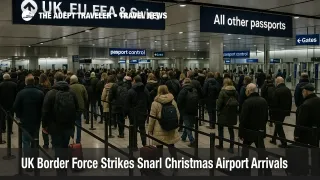
Anyone flying into the United Kingdom between December 23 and 31 now faces a serious risk of long passport queues and missed onward connections, because UK Border Force staff are planning eight days of walkouts at key airports. The strikes will hit arrivals at London Heathrow Airport (LHR), London Gatwick Airport (LGW), Manchester Airport (MAN), Birmingham Airport (BHX), Cardiff Airport (CWL), Glasgow Airport (GLA), and the Port of Newhaven, which together handle the bulk of the country's long haul holiday traffic. In response, ministers are drafting in soldiers and civil servants to cover passport booths, but even the government's own modelling assumes slower processing, longer queues, and higher misconnect risk for anyone connecting onward by air or rail.
The UK Border Force strikes will reduce arrivals capacity across major UK airports during the December 23 to 31 window, which in practice means slower passport control, greater odds of 60 to 90 minute queues at peak times, and a much higher chance of missed connections for Christmas travelers.
Where And When The Strike Hits
The Public and Commercial Services, PCS, union has confirmed that passport control staff will walk out on December 23 to 26 and again on December 28 to 31. The action covers Heathrow, Gatwick, Manchester, Birmingham, Cardiff, and Glasgow, along with Border Force teams at the Port of Newhaven, and involves roughly 1,000 front line officers who normally staff arrival booths and inspect passports.
This is not the first time Christmas has been hit. Similar eight day Border Force strikes in 2022 produced long queues and warnings that airports might have to cap flights or, in a worst case scenario, briefly close terminals if border controls became overwhelmed, even with troops drafted in. The 2025 walkouts fall on almost identical dates, creating a known high risk pattern for anyone planning festive travel into the UK.
On the strike days, the pressure will be biggest on hubs with dense long haul banks, especially Heathrow and Gatwick. Heathrow expects inbound long haul arrivals on strike days to reach about 80 percent of pre pandemic volumes, well above the 70 percent passenger threshold Border Force has indicated it can reliably handle with contingency staffing in place.
Government Contingency Plans And Expected Queues
The Home Office has authorised the deployment of up to 1,200 military personnel and 1,000 civil servants to work passport desks at the affected airports and ports for the duration of the strike window. Planning led by the Cabinet Office's Resilience Directorate will divide arrival lanes into faster "green" queues staffed mainly by trained soldiers handling straightforward cases, and "amber" lanes where remaining senior Border Force officers will deal with complex passports, visas, and secondary checks.
Internal simulations cited in those plans suggest that, even if the military deployment works as intended, total passport control throughput could fall to around 60 percent of normal capacity, with peak time queues stretching to 90 minutes or more as long haul arrivals bank up. Airlines and airport operators are privately more pessimistic, pointing to the 2022 experience when some arriving passengers saw waits of two hours or longer and some flights held at remote stands to avoid overcrowded immigration halls.
The contingency workforce will not have the same speed or experience as permanent officers, especially for passengers with non standard documentation, complex visa histories, or family groups crossing on mixed passports. That means queues are most likely to spike whenever several widebody flights arrive close together, when multiple flights are carrying high shares of non eGate eligible passengers, or when manual checks increase because of technical issues with biometric gates.
Airlines Cap Heathrow Loads To Avoid A Crunch
Heathrow has already asked airlines to "suppress demand" on strike days, arguing that if Christmas passenger volumes hit normal peaks, immigration halls will become unmanageable even with extra staff. In response, British Airways and Virgin Atlantic have stopped selling new inbound tickets to Heathrow for the eight Border Force strike days, although they will still honor existing bookings.
The capacity cap is meant to avoid last minute cancellations or forced diversions, a situation that affected thousands of passengers during the 2022 strikes when carriers had to scrub flights or hold arrivals on the tarmac because immigration lines had backed up. Travelers who have not yet booked Christmas trips into London will find it harder to secure seats directly into Heathrow on the affected dates and may need to look at Gatwick, Manchester, or continental hubs instead.
Who Is Most Exposed To Disruption
The highest risk group is long haul passengers arriving in the late morning or early evening banks with same day onward connections. This includes travelers flying from North America, the Middle East, or Asia into Heathrow or Gatwick, then connecting to domestic UK flights, short haul Europe services, or long distance rail such as the Heathrow Express, Elizabeth line, or main line trains to the Midlands and North.
Anyone traveling on separate tickets, for example a long haul flight booked with points and a low cost onward hop bought directly from a budget airline, is particularly vulnerable. If you misconnect because you are stuck in a passport queue, the second carrier normally treats you as a no show and is under no obligation to rebook you, even when the delay is clearly strike related.
Families with young children, passengers requiring manual checks, and travelers carrying visas or passports that cannot use automated eGates will tend to spend longer in the "amber" lanes staffed by remaining Border Force officers. That raises both stress and misconnect risk, particularly at Heathrow and Gatwick where several flights per hour may be carrying high shares of non UK and non EU passport holders.
How To Build Safer Buffers And Routes
For itineraries that must pass through UK airports between December 23 and 31, aim for at least four hours between scheduled arrival and any onward departure that requires clearing UK immigration, whether that is a connecting flight or a reserved train. Where possible, consider overnighting in your arrival city, then traveling on the next morning, which removes the pressure of same day misconnects entirely.
If you have flexibility on routing, look at connections via Dublin, Amsterdam, Paris, or Frankfurt for trips that simply pass through Europe rather than ending in the UK. These hubs are not immune to their own strike risks, but they are not directly affected by the UK Border Force industrial action and may offer more resilient connections for December travel.
Travelers heading to the UK itself should also factor in upcoming changes to electronic pre clearance. The UK Electronic Travel Authorisation, ETA, will become mandatory for most visa exempt visitors from February 25, 2026, and practicing good documentation habits now, including checking entry requirements before booking, will make it easier to navigate any strike related manual checks. Adept Traveler has a dedicated news explainer on UK ETA enforcement, along with a detailed guide to UK tourist entry requirements that is worth reviewing when planning 2026 and beyond.
What Happens If You Miss Your Connection
If your entire journey is on a single ticket and you miss a connection because of long passport queues, the operating airline is generally responsible for rebooking you onto the next available service. Under UK261, compensation for delays caused by third party strikes such as Border Force walkouts is unlikely, because the disruption is not considered within the airline's control, but airlines still owe duty of care in many cases, including meals and hotels when an involuntary overnight stay is required.
Travelers on separate tickets have far fewer protections. In that scenario, the second carrier is not normally obliged to assist, and you may have to buy a fresh ticket at walk up prices if you miss check in or boarding. Good travel insurance with explicit coverage for strike related delays and missed connections can soften that risk, but you should read the policy language carefully before assuming every misconnect will be covered.
To protect yourself, keep boarding passes, screenshots of scheduled times, and photos of queue conditions, and document any announcements that reference strikes or border staffing. These records can help when arguing for goodwill rebooking, claiming on insurance, or making a formal complaint if handling falls short of promised standards.
Practical Steps For The December Strike Window
Between now and mid December, travelers should audit any trips that route through UK hubs between December 23 and 31 and identify tight connections, separate ticket combinations, or late evening arrivals that could become problematic. Where possible, move trips to non strike days, adjust routings to avoid the UK, or add buffer by building in longer layovers or overnight stays.
For trips that cannot be changed, arrive at your origin airport early, keep hand luggage light so you can move quickly through terminals, and pre book flexible ground transport from the airport that can be shifted to later times if queues run long. Business travelers and expatriates returning for holidays should also coordinate with employers on contingency plans, including remote start options if arrival dates slip.
Finally, monitor strike updates through official channels, including the UK government's travel advice pages and your airline's operational alerts, as talks can sometimes narrow or reshape industrial action even when full cancellation looks unlikely. Until there is a clear change, though, anyone booking or holding Christmas trips into the UK should treat the December 23 to 31 window as a high risk period for passport queues and missed connections, and plan accordingly.
Sources
- UK Government Deploys Troops to Keep Passport Control Running During Christmas Border Force Strikes
- BA and Virgin Halt Heathrow Ticket Sales on Planned Strike Days
- Civil Service Strikes: Border Force to Strike at Six Airports over Christmas
- Arrivals to the UK Warned to Prepare for Disruption at the Border
- Border Force Strikes Detailed by Union, Including Dates Affecting Airports in December
- UK Entry Requirements For Tourists In 2026
- UK ETA Enforcement From February 25 2026 For Visitors