

Zayed National Museum Opens In Abu Dhabi Saadiyat
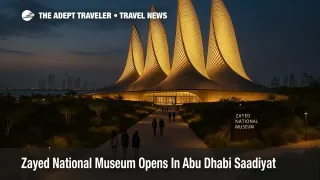
Zayed National Museum Abu Dhabi opening on December 3, 2025 has turned Saadiyat Island into a sharper cultural focal point for the Emirates and the wider Gulf. The new national museum occupies a prime position in the Saadiyat Cultural District, where its five steel towers shaped like falcon wings now rise above the coast of Abu Dhabi, United Arab Emirates. For travelers planning Gulf stopovers or longer winter stays, the museum instantly changes how to structure time in the capital, with Saadiyat now demanding at least one dedicated culture day in most itineraries.
At its core, the opening means that visitors can finally walk into a purpose built institution that traces roughly 300,000 years of human history in the territory that is now the UAE, from prehistoric tools and early maritime trade to the oil era and federation. Six permanent galleries and one temporary exhibition space present about 1,500 artefacts from more than 3,000 held in the wider collection. For families, culture focused travelers, and repeat visitors who already know the city's malls and beaches, that depth makes Abu Dhabi more compelling as a standalone destination and as a side trip from Dubai.
Background, Saadiyat Cultural District as a hub
Saadiyat Island has been positioned for more than a decade as Abu Dhabi's main cultural zone, with Louvre Abu Dhabi already open and other institutions such as the Natural History Museum Abu Dhabi and Guggenheim Abu Dhabi still under development. The island sits a short drive from downtown Abu Dhabi and is designed as a compact cluster of museums, venues, and landscaped public spaces rather than a single stand alone attraction. Zayed National Museum now acts as the national history anchor for that cluster, complementing Louvre Abu Dhabi's global art collection and making it easier for visitors to build a two or three museum loop in one day.
For travelers, this clustering matters in practical terms. It concentrates high value cultural stops in one area that is relatively simple to reach by taxi, ride share, or hotel transfer, instead of scattering them across the city. It also means that peak congestion, from tour buses to school groups, will tend to align around Saadiyat's main approach roads and parking zones rather than being spread across multiple neighborhoods.
Architecture and approach, what to expect on arrival
Designed by Foster + Partners, the museum's most visible features are its five soaring steel towers that evoke the feathers of a falcon's wing. Each tower rises to as much as about 123 meters in height and functions as a thermal chimney, drawing cooler air through the building in a contemporary adaptation of traditional Gulf barjeel wind towers. The galleries themselves are set within a partially buried mound, an arrangement that improves energy efficiency and creates a sheltered, cave like interior that contrasts with the bright desert light outside.
Visitors do not step straight from parking lot to lobby. Instead, most approaches feed into Al Masar Garden, a roughly 600 metre landscaped walkway that runs from the island's coastal edge to the museum entrance. Planted with native flora and dotted with art and interpretive installations, this garden path effectively serves as an outdoor prologue to the museum, reminding visitors that desert, oasis, and sea ecosystems shaped the country long before its modern skylines.
In practical terms, Al Masar Garden also adds walking time. Travelers who have mobility needs or who are visiting in the hottest months should factor in that gently sloping outdoor segment and check accessibility guidance in advance, especially for midday visits.
Inside the museum, galleries and themes
Once inside, the permanent galleries are organized to tell several overlapping stories. One gallery focuses entirely on the life and legacy of Sheikh Zayed bin Sultan Al Nahyan, the UAE's founding father, using photographs, documents, personal objects, and media to illustrate his role in unifying the seven emirates and his emphasis on education, conservation, and cultural identity.
Other galleries cover archaeology and early settlement, trade routes and maritime traditions, the country's varied landscapes and biodiversity, and the rapid social and economic shifts of the later twentieth century. Key pieces highlighted in advance coverage include some of the world's oldest known pearls, early Islamic manuscripts such as pages from the Blue Quran, and large objects like a reconstructed Magan boat that speaks to ancient seafaring.
The museum also reserves space for rotating temporary exhibitions and contemporary installations, which gives returning visitors a reason to come back beyond the core national narrative. As with many newer museums in the Gulf, multisensory and immersive elements are built into several rooms, from large scale media walls to touch friendly interactive displays, which should appeal to families and casual visitors who might otherwise tire quickly of traditional cases and labels.
Tickets, timing, and demand patterns
Entry tickets and annual memberships are already on sale through the museum's official channels and through regional ticketing platforms, and early reporting indicates strong interest from international travelers, especially visitors from the United States. Timings follow a standard museum pattern, with daylong opening hours that allow both morning and evening visits, but travelers should confirm exact hours and any special holiday schedules before setting firm plans.
In the first months after opening, expect weekends, UAE public holidays, and school breaks to bring heavier crowding, particularly in the Sheikh Zayed gallery and in any high profile temporary exhibitions. Group tours and school visits may also cluster in mid mornings. Independent travelers who prefer quieter galleries should target weekday mornings or late afternoons and consider booking the first or last available timeslot of the day.
Because Saadiyat Island is still building out its full roster of museums, there can be construction related detours and evolving wayfinding in some zones. Leave extra time if you are connecting a museum visit with an airport transfer out of Abu Dhabi International Airport or a same day business commitment downtown.
How Zayed National Museum changes Abu Dhabi itineraries
For first time visitors on a tight schedule, the new national museum, Louvre Abu Dhabi, and at least one heritage site or mosque tour now form a strong cultural core that justifies choosing Abu Dhabi as a base over, or in addition to, Dubai. Cruise passengers with calls at Abu Dhabi Port can realistically fit a focused Saadiyat cultural loop and a city orientation in one day, as long as port transfer times are carefully managed and advance tickets are in hand.
Returning visitors, regional residents, and art travelers can use the museum as a hub for slower trips that link Saadiyat with Al Ain's archaeological and oasis sites, the new Natural History Museum Abu Dhabi once it opens, and emerging projects like Guggenheim Abu Dhabi. In this sense the Zayed National Museum is not only a single new attraction, but a sign that the broader Saadiyat Cultural District build out is resuming momentum after years of delay.
What travelers should do now
Anyone planning a trip to the UAE in late 2025 or 2026 should treat the Zayed National Museum as a default item on an Abu Dhabi day plan, especially if they care about history, architecture, or Gulf culture. The immediate practical steps are to factor at least half a day on Saadiyat into itineraries, pre book tickets or membership online, and choose accommodation and transport options that make reaching the island straightforward.
Travelers who have already booked trips built entirely around Dubai can still fold in the museum as a day trip, using intercity buses, private transfers, or rental cars, and anchoring the visit with timed entries at Zayed National Museum and Louvre Abu Dhabi in one loop. Advisors and tour planners should also watch for evolving guided package products that combine Saadiyat's institutions with neighborhood food, heritage, or waterfront experiences as the district matures.