

Air Transat Pilot Strike To Disrupt Canada Flights
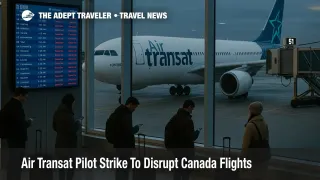
Air Transat passengers with winter flights between Canada, Europe, and southern sun destinations are now facing an Air Transat pilot strike, after the airline confirmed it has received a 72 hour strike notice and will gradually suspend most flights between December 8 and 9, 2025 from its hubs in Montreal and Toronto. The notice means a walkout could start as early as the morning of December 10, affecting holiday travellers on both flight only tickets and packages. Anyone booked on Air Transat in the next two weeks should start checking flight status, reviewing options, and deciding whether to move dates or switch carriers.
At its core, this Air Transat pilot strike notice triggers a phased shutdown plan that will wind down most flights from Montréal Trudeau International Airport (YUL) and Toronto Pearson International Airport (YYZ) in the days before a possible December 10 walkout, forcing travellers to rethink their winter itineraries or secure backup airlines if negotiations fail.
What the strike notice actually means
According to Air Transat's own statement, the Air Line Pilots Association (ALPA), which represents roughly 700 pilots at the carrier, delivered a formal 72 hour strike notice on December 7, 2025. That notice obliges the airline to begin an "orderly suspension" of operations over the next three days, including cancelling flights and repositioning crews and aircraft so they are not stranded overseas if pilots walk off the job.
Industry and union briefings indicate the strike could legally begin as early as 3 a.m. Eastern Time on Wednesday, December 10, once the cooling off period under the Canada Labour Code expires. Earlier in the week, ALPA reported that 99 percent of participating pilots had voted to authorize strike action after nearly a year of talks to replace a 2015 contract.
Air Transat and its parent, Transat A.T. Inc., maintain that a negotiated deal is still possible and say they are "working around the clock" to reach an agreement, but they are also very clear that operations will be disrupted until a settlement is signed if pilots do strike.
How the gradual shutdown will unfold
Unlike a one day strike where flights simply stop on a single date, Air Transat is planning a phased shutdown. In its strike notice release, the airline says flight cancellations will "begin progressively on December 8" with a complete suspension by December 9, so aircraft and crews can be brought back to their points of origin and positioned for any repatriation flights.
In practice, that means three overlapping phases for travellers:
First, flights on December 8 and 9 are at the highest risk of last minute cancellation or consolidation as the carrier winds down its schedule. Some services may still operate, but they will be chosen based on where aircraft and crews need to end the day, not on which routes are most commercially attractive.
Second, if pilots walk out on December 10, the airline expects to focus on a reduced number of flights dedicated to repatriating customers back to Canada or onward to their original points of origin. These flights may not match the timing or routing of the original booking, and some passengers may be moved onto partner airlines where interline agreements exist.
Third, for departures scheduled several days after any strike begins, the more likely outcome is outright cancellation and refund or rebooking to another airline, rather than a simple schedule change. Air Transat has already warned that operations will remain disrupted "until an agreement is reached," which suggests no quick snap back to normal service.
Routes and travellers most exposed
Air Transat's program centres on Montréal Trudeau and Toronto Pearson, offering more than 70 destinations in Europe, the Caribbean, Mexico, Central and South America, Florida, and within Canada. Winter 2025 to 2026 schedules heavily feature so called sun destinations such as Cancun and Punta Cana, plus European city breaks and long stays that use those Canadian hubs as gateways.
That means the most affected customers are likely to be:
Travellers flying between Montreal or Toronto and major European cities like Paris, London, and Spanish coastal destinations, including those using Air Transat as a bridge between the United States and Europe via Canadian hubs.
Holiday makers on Canada to Caribbean, Mexico, Central America, and South America routes, including travellers on all inclusive packages sold under Transat branding.
Canadians booked on winter flights within Canada that rely on Air Transat's smaller domestic network to connect into long haul services.
Because these itineraries often involve connections, especially for travellers starting in secondary Canadian cities or in U.S. markets connecting through Montreal or Toronto, a partial shutdown can snowball into missed onward flights and broken round trips even before the formal strike date.
What Air Transat is offering right now
To manage the transition, Air Transat has opened a strike information centre on its website and introduced a temporary flexibility policy for customers travelling in the first five days after the notice. The airline says customers scheduled to travel within that window can change or postpone their trip at no extra cost, and separate guidance to travel advisors specifies that bookings through December 12 may be cancelled for a credit valid for 12 months, with standard fare rules applying for travel on or after December 13.
For flight only tickets, Air Transat indicates that if a flight is cancelled due to the strike, passengers will either be rebooked on the next available service within 48 hours or receive a refund of the unused portion of the itinerary if no reasonable alternative exists. Where passengers find an alternative flight themselves within 48 hours, the airline says it will refund the unused portion and, on presentation of receipts, the fare difference up to the original ticket value.
For package holidays, Transat pledges to cover additional hotel nights for customers stranded at destination if their stay is extended by the strike, to refund unused hotel nights if guests return early, and to refund packages in full if the trip has not started and is cancelled because flights are pulled. However, add ons purchased directly from third party providers, such as independent excursions or attraction tickets, are generally excluded from reimbursement.
Background, passenger rights, and compensation
Under Canada's Air Passenger Protection Regulations, labour disruptions within an airline, including strikes by its own staff, are treated as situations outside the airline's control in terms of delay compensation, although the carrier still has clear obligations to complete the itinerary or refund tickets. In broad terms, that means Air Transat is expected to either get you to your final destination on its own flights or partners within specific time frames or, failing that, return you to your point of origin and refund any unused portion of the fare.
The airline's own disruption policy echoes those rules, spelling out that when a cancellation is outside its control and it cannot provide alternative transport within 48 hours, customers can choose later travel or a refund and transport back to their starting point, and that hotel stays and meal vouchers are provided when delays are within the carrier's control.
Given that classification, travellers caught by an Air Transat pilot strike should not assume entitlement to cash compensation for delay or cancellation, but they can and should insist on clear rebooking or refund options and on the standards of care that apply while they wait, including accommodation for overnight delays.
How the timing of your flight changes your risk
If you are due to fly between now and December 9, your main exposure is to last minute changes as the gradual shutdown unfolds. Expect rolling cancellations, aircraft swaps, and re routings aimed at getting aircraft and crews home rather than perfectly maintaining the original schedule. Seat availability to move trips earlier will shrink quickly, especially on popular sun and transatlantic routes.
If you are booked between December 10 and roughly December 15, you are in the high risk band, because these dates sit directly inside the earliest strike window and the period where repatriation flights would be concentrated. In this phase, many passengers will simply see their flights cancelled with offers of refunds or rebooking on later dates or other carriers, and package holidaymakers may see entire trips cancelled or restructured.
For departures later in December or early January, the picture is less clear and depends on whether a deal is reached quickly. If negotiations resolve and the strike is lifted, Air Transat will likely rebuild its schedule in stages, with some routes resuming before others. If talks drag on, more of the winter program could be cut outright, which would push more travellers into refunds and force them onto alternative airlines for the season.
Strategies for backup plans and rerouting
If you are travelling in the next 5 to 7 days, the most conservative strategy is to use Air Transat's flexibility window to move your trip or accept a credit, then rebook on another carrier that has confirmed operations. Look first at non stop options from Air Canada, WestJet, and major European or U.S. airlines serving your route or nearby hubs, even if that means slightly different airports or dates.
Travellers connecting between the United States and Europe via Montreal or Toronto may be able to reconstruct their itinerary by booking separate tickets on other transatlantic carriers from those hubs or by building routings through larger gateways such as New York, Boston, or Chicago, then onward on European airlines. This increases misconnect risk and baggage complexity, so allow longer connection times and keep critical items in carry on luggage.
For package customers, it is usually best to wait for direct communication from Transat or your travel advisor, because the tour operator controls both the flights and the hotel contract. When packages are cancelled, refunds might be automatic, and in some cases the operator may offer alternative dates or move guests onto other airlines at no extra cost, but do not assume this until you see written terms.
How this compares with other strike disruptions
A phased shutdown like Air Transat's is more controlled than some past airline strikes that produced sudden, chaotic cancellations, but it can be more confusing for customers because some flights operate during the wind down and repatriation phase while others vanish from schedules. Recent European rail and airline strikes, including ongoing action in Italy that has disrupted Rome transit and national rail services, show how quickly rolling labour disputes can ripple across connecting journeys and holiday plans when operators are forced to thin their schedules.
If your trip crosses multiple systems, for example Air Transat to Europe followed by rail or low cost carriers, protect yourself by building bigger buffers between segments, buying fully flexible or refundable tickets where possible, and documenting every cancellation and communication in case you need to make insurance claims or pursue further remedies later.
What travellers should watch next
In the coming days, the key variables are whether Air Transat and ALPA resume productive talks with federal mediators, and whether the airline adjusts its flexibility window beyond December 12 as the scale of the shutdown becomes clear. Any extension of rebooking waivers, expansion of repatriation schedules, or new interline deals with other carriers will directly shape how easily stranded passengers can get home.
Travellers should monitor the strike information page on Air Transat's website, sign up for flight status alerts in the airline app, and keep a running shortlist of alternative flights on other airlines in case they need to pivot quickly when their own departure is cancelled. For now, the risk is real enough that anyone with an essential trip in the affected period should have a plan B ready, even as both sides insist they still hope to avoid a full walkout.
Sources
- Pilot union strike notice: Air Transat will have to implement gradual and orderly shutdown plan
- Air Transat begins gradual shutdown as pilots issue 72 hour strike notice
- Air Transat Pilots Poised to Strike, Issue 72 Hour Notice
- Air Passenger Protection Regulations Highlights and Flight disruption, delay and cancellation, Air Transat
- Transat 2025 2026 winter season program and destinations and supporting route coverage from TravelPress and AirlineGeeks