

Türkiye South Africa Codeshare Flights From March 2026
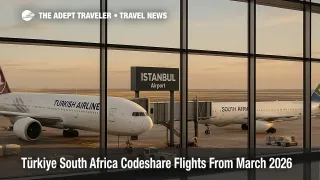
Türkiye South Africa codeshare flights will come into focus from March 1, 2026, after Turkish Airlines and South African Airways agreed to share flight numbers on key routes linking Istanbul with Johannesburg, Cape Town, and Durban. The deal, signed in Geneva by Turkish Airlines chair Ahmet Bolat and South African Airways CEO John Lamola, pairs the two Star Alliance carriers to open cleaner one ticket options for travelers moving between Türkiye and southern Africa. For passengers, that means simpler connections, single check in, and more backup routings when things go wrong.
In plain language, the new codeshare agreement turns Istanbul Airport (IST) into a more powerful hub for travelers who want one ticket itineraries between southern Africa and Turkish Airlines' wider network, while giving South African Airways customers structured access to more than 300 destinations across Europe, Asia, and the Middle East.
What The Codeshare Actually Covers
Under the deal, Turkish Airlines will place its TK code on South African Airways services that connect Johannesburg with Cape Town, Durban, Port Elizabeth, Windhoek, Harare, Victoria Falls, and Mauritius. In the other direction, South African Airways will place its SA code on Turkish Airlines operated flights from Istanbul to Johannesburg, Cape Town, Durban, and key European gateways including Frankfurt, Paris, and London. In practice that means a traveler could buy a single ticket from Windhoek or Victoria Falls to Istanbul, or even onward to cities across Europe or Asia, using a mix of SAA and Turkish legs under one reservation.
Both carriers are long standing members of Star Alliance, which already gives eligible passengers reciprocal lounge access, priority services, and mileage earning. A formal codeshare goes further by aligning flight numbers and back end processes, so that minimum connection times, baggage handling, and rebooking in case of disruption can be handled as a single journey instead of separate contracts. For South African Airways, the partnership plugs its recovering network more neatly into a global hub, while Turkish Airlines gains structured feed from southern Africa into its Istanbul bank.
How Istanbul And Southern African Hubs Fit Together
Istanbul Airport is already one of the busiest intercontinental hubs in the world, with Turkish Airlines selling flights to 355 destinations across 131 countries. In Africa alone, the carrier now promotes links to 65 destinations in 41 countries, a spread that makes it the largest non African airline on the continent. The new Türkiye South Africa codeshare flights build on that footprint by formalizing a southern Africa spoke anchored by O. R. Tambo International Airport (JNB) in Johannesburg, Cape Town International Airport (CPT), and King Shaka International Airport (DUR) near Durban.
On the regional side, South African Airways brings its own pattern of flights from Johannesburg and Cape Town into Chief Dawid Stuurman International Airport (PLZ) serving Port Elizabeth, Hosea Kutako International Airport (WDH) near Windhoek, Robert Gabriel Mugabe International Airport (HRE) in Harare, Victoria Falls Airport (VFA), and Sir Seewoosagur Ramgoolam International Airport (MRU) in Mauritius. When those legs carry a TK flight number as part of a through ticket, they become building blocks in itineraries that stretch from smaller southern African cities to Istanbul and beyond without passengers needing to assemble separate bookings.
For travelers who regularly use African hubs like Johannesburg or Nairobi, this kind of structured connectivity is increasingly important. Recent Adept Traveler coverage has already highlighted how uneven regional operations and scattered cancellations can turn tight independent connections into risky bets. A well designed codeshare does not remove that risk entirely, but it does shift more responsibility for missed connections onto the airlines instead of the passenger.
What Changes For Booking, Baggage, And Loyalty
From March 1, 2026, most of the practical benefits will show up at the time of booking. Travelers searching multi city or point to point routes that span southern Africa and Türkiye should begin to see more one stop options that combine South African Airways and Turkish Airlines on a single ticket, often with a choice of whether the first marketing code on the itinerary is SA or TK. Because both airlines sit inside Star Alliance, most passengers will be able to credit flights under either code to a preferred frequent flyer program, whether that is Miles and Smiles, Voyager, or another alliance member.
Baggage handling is another key advantage. Under a typical codeshare, bags are tagged through to the final destination, and internal interline agreements let baggage teams work from the same record if something goes wrong in Johannesburg or Istanbul. That does not eliminate the chance of delays or misrouting, particularly during peak seasons or during disruptions linked to weather, strikes, or airspace constraints. However, it concentrates the duty to recover and reroute on a single airline group instead of leaving passengers to negotiate with two separate carriers.
The new partnership also dovetails with a wider wave of airline cooperation stories that Adept Traveler has been tracking in 2025, from Iberia and Pegasus codeshares linking Spain with Türkiye to Qatar Airways and Kenya Airways expanding reciprocal routes across East Africa. For travelers, the pattern is clear, alliances and bilateral codeshares are increasingly the way smaller regional flights are stitched into big intercontinental networks.
Planning Trips Around The March 2026 Start
Because the codeshare does not go live until March 1, 2026, travelers planning shoulder season or winter 2025 2026 trips should treat current schedules as a preview rather than a guarantee of how the timetable will look at launch. In many past deals, airlines have opened sales weeks or months before the effective date, then refined exact flight times as they finalize seasonal schedules and slot allocations. Here, it is reasonable to expect Turkish Airlines and South African Airways to load at least some of the joint inventory into their respective systems during the first half of 2026 booking windows, but fine details on flight numbers and timing will likely evolve.
For travelers, a conservative approach is to use the codeshare where it clearly reduces stress, but still leave room for contingencies. That means favoring itineraries with at least one robust connection window, particularly at busy hubs like Istanbul and O. R. Tambo, and avoiding intricate self built connections that splice separate tickets around the codeshare legs. It also means watching for schedule change emails in the months before departure and checking reservations periodically to make sure seat assignments, special meals, and frequent flyer numbers remain correctly attached to both the SA and TK sectors.
Who Benefits Most From The New Link
The clearest winners are travelers who live in, or route through, southern African cities like Windhoek, Harare, Victoria Falls, Port Elizabeth, and Mauritius, and who want to reach Türkiye, Europe, or Asia without an additional stop in the Gulf or a second African hub. For them, the Türkiye South Africa codeshare flights effectively turn a domestic or regional hop into part of a long haul journey under one ticket, with aligned support if a delay in Harare threatens a connection in Johannesburg.
Business travelers who shuttle between South African corporate centers and markets in Europe, the Middle East, or Central Asia will also see new itinerary options, especially on city pairs that are already well covered by Turkish Airlines from Istanbul, such as Frankfurt, Paris, and London. Leisure travelers headed in the other direction, from Türkiye or Europe into safari circuits, wine regions, or Indian Ocean resorts, can use the same framework to package Johannesburg or Cape Town with side trips to Victoria Falls, Namibia, or Mauritius.
Frequent flyers inside Star Alliance should look carefully at earning charts once they are published for the new codes, since some programs award more status credits or redeemable miles when a flight is marketed under one partner's code rather than another. In many cases, it makes sense to book the version of the itinerary that maximizes credits in a single preferred program, rather than splitting travel across several marginal accounts.
Practical Tips For Using The Codeshare
Once tickets become available, travelers who want to use the new partnership should keep a few simple rules in mind. First, prioritize itineraries sold on a single ticket by either Turkish Airlines or South African Airways, rather than bolt on low cost or separate regional flights that fall outside the codeshare framework. Second, allow at least 90 minutes at Istanbul and a similar buffer at O. R. Tambo for international to regional connections, since real world queues for security, transit immigration, and bus gates can erode shorter layovers.
Third, double check that checked bags are tagged all the way through to the final destination, especially when traveling from smaller regional airports where ground staff may be less familiar with the new flows. Finally, use airline apps and alliance tools to monitor flights and rebooking options during disruptions, since Star Alliance integration typically makes same day alternatives visible even when front line desks are busy.
Taken together, the Turkish Airlines and South African Airways codeshare is not just another press release headline. It is a concrete shift that gives travelers a fresh, structured way to move between southern Africa, Türkiye, and the wider Star Alliance network, with more one ticket options and fewer do it yourself connection risks once the first flights roll under shared codes on March 1, 2026.
Sources
- Turkish Airlines inks codeshare agreement with South African Airways, Anadolu Agency
- Turkish Airlines and South African Airways Sign Codeshare Agreement, Breaking Travel News
- Star Alliance member airlines overview
- Airport information for O. R. Tambo, Cape Town, Durban, Port Elizabeth, Windhoek, Harare, Victoria Falls, and Mauritius, multiple official and aviation data sources