

Cyclone Ditwah In Sri Lanka Disrupts Travel Routes
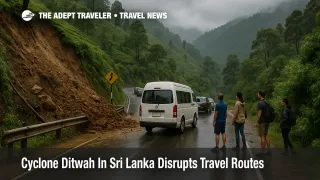
Sri Lanka travel after Cyclone Ditwah has become a route by route exercise, as the late November 2025 storm unleashed record floods and landslides that left some districts cut off while Colombo, Galle, Kandy city, and many west and south coast beaches continued hosting visitors. Official figures now point to more than 480, and in some counts over 600, deaths and around 10 percent of the island's 22 million residents affected, with thousands of homes destroyed and whole communities displaced. For travelers, the main change is a sharp line between corridors where roads and services are functioning, and inland, hill country, and eastern routes where damage and instability make overland itineraries difficult or unsafe for the foreseeable future.
The practical bottom line is that Sri Lanka travel after Cyclone Ditwah now hinges on choosing routes that sit on still functioning road and power networks, and treating central highlands, some river valleys, and parts of the east as advanced or off limits trips until reconstruction and safety checks catch up.
What Cyclone Ditwah Changed For Travelers
Cyclonic Storm Ditwah made landfall on Sri Lanka's eastern coast on November 28, 2025, then drove heavy rain across all nine provinces, turning the event into the country's worst flood and landslide emergency in more than two decades. Government and humanitarian assessments estimate that roughly 1.1 to 1.4 million people, across all 25 districts, have been affected by flooding, landslides, and washouts, with tens of thousands in shelters and many still unable to return home. International agencies describe widespread damage to homes, schools, health facilities, roads, irrigation systems, and farmland, and warn that safe water, sanitation, and basic supplies remain a concern in many districts.
Tourism sits inside this larger humanitarian picture. A Reuters assessment of the tourism sector reports that Cyclone Ditwah has killed at least 486 people, affected about 10 percent of Sri Lanka's population, and destroyed thousands of homes, but that major hotels remain open, cancellations have stayed near 1 percent, and arrivals passed two million by mid November with a target of 2.6 million for the year. That mix of national scale damage and a still functioning tourist core is what creates the split reality visitors now need to navigate.
Where Sri Lanka Is Still Travel Ready
For most short itineraries, the west and south coast corridor anchored on Colombo, Negombo, Galle, and popular beach towns such as Hikkaduwa and Mirissa remains the most resilient. While low lying neighborhoods in and around Colombo, including suburbs along the Kelani River, saw significant flooding, national authorities and the World Food Programme describe a response focused on clearing main roads and restoring access from the capital outward, and Bandaranaike International Airport (CMB) is operating again after the worst weather passed.
Large hotels on these corridors report only minimal cancellations and are still accepting new bookings, a trend echoed in industry coverage that stresses the importance of continued tourism for Sri Lanka's economic recovery. Day trips from Colombo to nearby cultural sites and coastal areas are still realistic, provided travelers keep drive times generous and avoid detours into harder hit river valleys.
Within the so called cultural triangle, access to major sites such as Sigiriya and Dambulla depends on current local road conditions rather than nationwide closures. Most main A class highways in the north central region are open, but flash flooding and localized washouts can still close connecting roads with little notice, so travelers should ask hotels and drivers for the latest district level information before setting off each morning. For comparative context on how sudden weather changes can affect road based itineraries, Adept Traveler's recent coverage of New Zealand Summer Storms Put Road Trips On Alert walks through similar buffer strategies for self drive routes.
Hill Country, Eastern Routes, And Other Hard To Reach Areas
The most serious access problems lie in Sri Lanka's central highlands and some inland and eastern districts. Landslides in the tea growing regions of Kandy District, Nuwara Eliya, Badulla, and nearby hill country have buried homes and villages, left steep slopes unstable, and cut key roads that connect popular hill destinations such as Kandy, Ella, and Nuwara Eliya. New Zealand's SafeTravel and other foreign advisories now warn that roads in parts of the central region, including around Ella and Nuwara Eliya, are impassable or at high risk of further landslides, and that some communities remain accessible only to rescue teams.
Sri Lanka's Road Development Authority and local media have published lists of highways and secondary roads closed by floods, landslides, and rockfalls, with dozens of national and regional routes either fully blocked or restricted to essential traffic. These include segments that link hill country towns with Colombo and the coast, and feeder roads into river valleys where overland tour loops typically run. In practice, this means that classic circular itineraries such as Colombo to Kandy, then to Ella and Yala, then back to Galle, may be impossible to complete as originally planned or may involve long detours over damaged roads.
Further east, river flooding and bridge damage have also affected access to some beach and surf areas, with humanitarian and media briefings mentioning disrupted infrastructure across more than 20 districts and large parts of the rail network. Where trains are suspended in mountainous terrain, buses and vans often cannot substitute safely because the same landslides and washouts affect both modes. Independent drivers and self drive visitors should be particularly cautious about following map apps into steep or unpaved shortcuts that may now cross unstable slopes or partially collapsed bridges.
Flights, Visas, And Entry Points
International air access is more stable than the road picture, but not unchanged. During the height of the storm, at least 15 inbound flights to Bandaranaike International Airport (CMB) were diverted to other airports, including Mattala Rajapaksa International Airport (HRI) in southern Sri Lanka and nearby hubs in India such as Thiruvananthapuram and Cochin, due to unsafe landing conditions. Those diversions have eased, and CMB is now operating close to normal, but travelers should still expect occasional weather related delays, especially during heavy rain bands, and should avoid tight same day connections out of Sri Lanka.
To keep visitors from being penalized by the disruption, Sri Lanka has announced free of charge visa extensions and grace periods for tourists and business travelers who were unable to depart on time, and has formally asked airlines and tour operators to offer more flexible rebooking options. The Sri Lanka Tourism Development Authority has said roughly 269 tourists were directly affected, many of whom were airlifted or assisted out of badly hit areas, and the government is keen to reassure future visitors while it manages the response.
The U.S. Embassy, Australian High Commission, and other missions have issued alerts highlighting severe flooding, landslides, damaged road and bridge infrastructure, and intermittent power and water, and urge travelers to avoid nonessential movements and to check conditions with airlines and tour operators before heading to airports. That advice effectively means building more time into any airport transfer and keeping departure day free of long detours or sightseeing stops.
Background, Why Some Routes Failed First
Sri Lanka's hill country and river valleys are particularly vulnerable because heavy monsoon rains saturate steep slopes, then landslides collapse onto narrow mountain roads that serve both local communities and tourist traffic. Dams, canals, and reservoirs, many already stressed by years of extreme weather, were pushed hard by Ditwah's rainfall, and in some cases delayed water releases may have worsened downstream flooding. When such infrastructure fails or is overwhelmed, roads, bridges, and rail tracks in valley floors tend to be submerged or washed out first, which is why itineraries that rely on cross island drives or train rides into tea country now face the largest and longest lasting disruptions.
How To Rebuild Or Rebook Sri Lanka Itineraries
For trips in December 2025 and January 2026, the simplest strategy is to treat Sri Lanka as a set of partially linked travel zones. One zone covers Colombo and nearby coastal areas, one covers the relatively less damaged stretches of the west and south coasts, and a third, more complex zone covers the hill country and internal routes that now require careful case by case checking. Visitors who already have bookings should talk with local tour operators or drivers about switching to out and back day trips from Colombo or a beach base instead of multi day loops through the interior, at least until landslide warnings ease and more roads re open.
New bookings should prioritize refundable or changeable internal segments and avoid locking in nonrefundable pre paid circuits that depend on a chain of specific road transfers. For example, it may be wiser to book a flexible Colombo plus Galle plus south coast stay, with an optional hill country add on, than to assume that an ambitious coast tea country east coast triangle will be feasible in a few weeks. Travelers considering comprehensive coverage might find it helpful to review an evergreen explainer such as Adept Traveler's planned Guide To Travel Insurance For Weather Disruptions before committing to higher risk dates or routes.
On the insurance side, foreign office advisories currently emphasize infrastructure damage and ongoing weather risks rather than a blanket do not travel order, which means coverage triggers will hinge on specific policy wording. Standard policies may cover delays, missed connections, or unusable accommodation due to documented road closures or evacuation orders, but not simple fear of travel. Cancel for any reason upgrades, where available, offer more flexibility but still require advance cancellation and often only reimburse a percentage of costs.
On The Ground Practicalities
Anyone traveling into Sri Lanka in the coming weeks should assume that conditions can vary sharply over short distances. A resort area may have clear skies and functioning services while, two hours inland, communities are still digging out from landslides or waiting for road crews to rebuild washed out bridges. Humanitarian agencies and the health ministry warn about the risk of water borne disease and the need for safe drinking water, sanitation, and hygiene supplies in affected areas, and indicate that some communities are shuttling between damaged homes and relief centers because terrain remains unstable.
For independent travelers, this translates into a few hard rules. Do not drive into areas under active landslide or flood warnings, even if a local driver says they know a way through. Avoid night driving on secondary roads, when landslide debris and washouts are hardest to see. Expect intermittent fuel, cash, and mobile coverage in badly hit districts, and carry enough water, snacks, and medication for longer than planned journeys. Above all, respect local instructions about no go areas, since rescue and reconstruction teams are still operating at scale and may need clear road access.
Sri Lanka remains a compelling destination, and many of its best known sights and hotels are open, but Sri Lanka travel after Cyclone Ditwah demands more flexibility, more buffer time, and a willingness to focus on the zones that are genuinely ready, while leaving high risk routes and communities the space they need to recover.
Sources
- Cyclone Ditwah Devastates Sri Lanka, Leaves Trail Of Destruction
- Sri Lanka, Floods And Landslides November 2025, Situation Updates
- Sri Lanka Disaster Management Centre, Cyclone Ditwah Updates
- IFRC Launches Emergency Appeal As Sri Lanka Faces Worst Floods In Decades
- UNICEF, Over 275000 Children Affected In Sri Lanka Following Devastating Cyclone
- WFP, Cyclone Ditwah Updates, Government Of Sri Lanka Leads Response
- U.S. Embassy Sri Lanka, Severe Flooding, Landslides, And Infrastructure Disruptions Alert
- SafeTravel New Zealand, Cyclonic Storm Ditwah
- Smartraveller, Sri Lanka Travel Advice
- Reuters, Deadly Cyclone Dents Sri Lanka's Peak Tourism Season
- Reuters, Sri Lankans Sift Mud To Unearth Victims Four Days After Deadly Cyclone
- Save The Children, Deaths In Sri Lanka From Landslides And Flooding Triggered By Cyclone Ditwah Pass 600
- Sri Lanka RDA And Local Media, Road Closures And Damage Lists
- Gulf News, Cyclone Ditwah Death Toll Crosses 350, Sri Lanka Eases Tourist Visa Rules
- Economic Times, Sri Lanka Offers Flexible Visa And Travel Relief For Tourists Hit By Cyclone Ditwah
- Condé Nast Traveller Middle East, Cyclone Ditwah, Why You Should Still Visit And How To Help
- The Independent, Sri Lanka's Tourism Season Hit As Locals Count The Cost Of Floods
- Adept Traveler, New Zealand Summer Storms Put Road Trips On Alert