

Mexico Farmer Protests Block Border Crossings December 2025
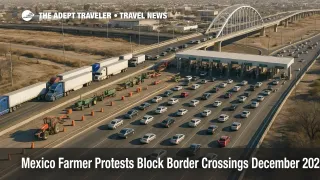
Mexico farmer protest border crossings have turned what used to be routine drives between Ciudad Juárez, Mexico, and El Paso, Texas, into a high risk bet since November 25, 2025, as tractors and trucks periodically shut down key bridges and highways. Over the past two weeks, nationwide actions by farmers and truckers against a new General Water Law have brought megabloqueos to at least 20 states, from Chihuahua on the border to Zacatecas and Guanajuato in the interior. For travelers, the new risk is not isolated rallies but sudden hard closures at ports of entry that can trap road trippers, shoppers, and bus passengers in multi hour or even multi day queues.
The protests around the General Water Law have escalated into intermittent blockades that can close or severely slow Mexico, United States border crossings, so anyone planning to drive or ride buses between the two countries in December needs flexible routing, bigger time buffers, and reliable real time information before committing to an overland itinerary.
Why Farmers And Truckers Are Blocking Roads
Mexico's new General Water Law, promoted by President Claudia Sheinbaum, seeks to update how the country manages water, treat it explicitly as a human right, and pull tighter federal control over concessions that have long allowed private actors to sell or transfer extraction rights. Government communications stress that the law is meant to curb speculation, prioritize domestic and public use, and push more efficient irrigation through state backed investment.
Critics in farm and trucking groups see something different. Organizations representing producers in at least 22 states argue that restrictions on transferring concessions will strip value from land, undercut small and medium farms that used water rights as collateral, and hand too much discretion back to federal agencies. They have paired those water concerns with long standing complaints about highway security, cargo theft, and low farm gate crop prices, channeling everything into one rolling campaign of highway and customs blockades.
After weeks of pressure, the Chamber of Deputies approved the law in general on December 3 with 328 votes in favor and later adopted 18 reservations negotiated by ruling party leaders, then sent the package on to the Senate, which passed it in a fast tracked session and forwarded it to the presidency for promulgation. That legislative sprint hardened farmer anger. Leaders of national campesino fronts now describe the text as the last nail in the coffin for Mexico's countryside and have called for permanent mobilizations until the government reopens negotiations.
Which Border Crossings Have Been Hit
For cross border travelers, the sharpest impacts have clustered around Ciudad Juárez and El Paso, where multiple commercial and passenger bridges sit within a short drive of one another. On November 25, farmers and truckers occupied customs facilities at the Córdova Las Américas International Bridge and blocked access to several ports of entry, including the Ysleta-Zaragoza International Bridge and the Santa Teresa crossing to New Mexico, initially preventing around 1,500 northbound tractor trailers from reaching the United States.
Local coverage in El Paso and Chihuahua shows that blockades and slowdowns have since rotated across the Bridge of the Americas, the Zaragoza-Ysleta complex, the Tornillo, Marcelino Serna, port of entry, and at times the Santa Teresa crossing, as different protest groups arrive or leave. While passenger lanes are often reopened sooner than commercial ones, there have been periods when private vehicles and buses could not cross or faced multi hour waits in daytime heat and overnight cold. That is a serious comfort and safety issue on exposed desert bridges with limited services.
Beyond Juárez, reports of blockades have emerged at other border points and feeder routes. Some farm groups briefly slowed traffic toward crossings in Coahuila and Tamaulipas, and trucking associations have warned that closures on Highway 57 and other trucking corridors disrupt flows toward major ports like Laredo, Pharr, and Reynosa even when the bridges themselves are not directly blocked. The net effect is a more fragile northern road network, where a single new protest can ripple through freight and passenger traffic far from the original blockade.
Interior Highways And Airports Also Affected
The protests are not only a border story. National outlets describe a megabloqueo that has brought tractors and trailers onto federal highways in more than half of Mexico's 32 states on some days, including key north south and east west routes through Zacatecas, Guanajuato, Jalisco, and other central regions. These actions have periodically cut off access to cities, industrial zones, and tourism hubs, and have slowed long distance buses that many domestic and budget travelers rely on.
In Zacatecas, for example, farmers have staged blockades near toll booths and along approaches used by traffic heading toward General Leobardo C. Ruiz International Airport (ZCL), the main air gateway for the state. Media in the Bajío region report similar disruptions on highways that connect industrial corridors and colonial city destinations in Guanajuato and Querétaro, where detours can add several hours to otherwise routine drives.
Travelers are also feeling the pinch indirectly. When freight queues stretch for kilometers at border bridges, distribution centers on both sides of the line can run short of goods, affecting everything from rental car fleets and auto parts to supermarket stocks in popular tourist cities. Long haul truckers stuck in queues may miss scheduled drop offs, which can cascade into late deliveries to resorts and tour operators across northern and central Mexico.
How Long Could Disruption Last
The legislative piece is moving faster than the protests. With the General Water Law now fully approved by Congress and on the way to promulgation, farmer and trucker groups are recalibrating their tactics, but they have not declared victory or defeat. Instead, large coalitions representing producers in 25 of 32 states say they are shifting into a mode of permanent mobilization, ready to reopen road and bridge blockades at short notice if promised consultation forums do not materialize or if implementing regulations ignore their demands.
For travelers, that means the most intense wave of closures may come in pulses. Bridges like Zaragoza-Ysleta and Córdova Las Américas may operate normally for days at a time, then suddenly face lane reductions or full closures as new convoys arrive. Even peacefully managed blockades can take hours to unwind once authorities and organizers negotiate partial reopening, since hundreds or thousands of delayed vehicles must clear.
In short, the risk profile for northern Mexico's highways and border crossings in December 2025 is one of intermittent, sometimes severe disruption rather than a continuous shutdown. That is harder to plan for, because it rewards travelers who stay closely tuned to live conditions rather than those who assume that past days are a reliable guide to the next one.
Planning Cross Border Trips While Blockades Continue
Anyone planning a winter road trip, shopping run, or bus journey involving the Mexico, United States land border should now treat route planning as a two step process. First, pick a primary crossing and at least one realistic backup, especially if you normally use the Juárez, El Paso area bridges. Second, build in enough slack that a forced detour adds inconvenience rather than wrecking a tightly timed itinerary.
For the Paso del Norte region, tools have improved. CBP's Border Wait Times site and app provide official updates for passenger and cargo lanes at ports such as Bridge of the Americas and Ysleta-Zaragoza, while regional portals like PDN Uno and PuentesJuárez aggregate live data, traffic camera feeds, and local reports for all six crossings in the El Paso, Juárez area. On the Mexican side, the Fideicomiso de Puentes Fronterizos de Chihuahua and allied sites publish concise bridge reports that can flag unusual closures even before they show up in national media.
If conditions around Juárez look unstable, travelers with flexible plans can favor alternative corridors. For example, westbound trips might route through Nogales instead of Juárez, while some Texas bound travelers can pivot to Pharr, Laredo, or Eagle Pass, which have so far been less directly affected by water law protests even as they contend with normal seasonal congestion. These detours often add hours of driving, but they can still be preferable to sitting in a queue that may not move at all if a blockade hardens.
Basic road trip resilience also matters more. Vehicles should carry extra water, snacks, and fuel when approaching known protest zones or long bridges, especially in the high desert where daytime sun and night time cold can be harsh. Travelers should avoid confrontations with protesters or attempting to bypass barricades through side roads or shoulders, which can be unsafe and illegal. Keeping valuables out of sight, letting friends or family know expected arrival windows, and choosing secure fuel and rest stops are sensible precautions whenever long queues are likely.
Finally, anyone connecting to flights or onward trains and buses should widen buffers. For departures from airports like El Paso, Ciudad Juárez, or General Leobardo C. Ruiz, a same day border crossing immediately before an international flight is now a gamble. Where possible, crossing the border the day before a long haul departure and overnighting near the airport provides a margin of safety that blockades cannot easily erase.
Sources
- Farmers occupy Ciudad Juárez customs facility, halting border trade in protest of water law
- Mexican farmers block border bridge with US in protest against agriculture policy
- La Cámara de Diputados aprobó, en lo general, expedir Ley General de Aguas y modificar la Ley de Aguas Nacionales
- Cámara de Diputados aprobó, con cambios en lo particular, dictamen que expide la Ley General de Aguas y modifica la Ley de Aguas Nacionales
- Sheinbaum defiende su proyecto de Ley de Aguas ante las protestas
- Los campesinos retoman las protestas en rechazo a la Ley de Aguas de Sheinbaum
- Avanza Ley General de Aguas: Comisión aprueba dictamen y pasa al Pleno de la Cámara de Diputados
- Border Wait Times, El Paso area ports of entry
- PuentesJuárez, tiempos de cruce en puentes internacionales Ciudad Juárez, El Paso
- PDN Uno, El Paso, Juárez border crossings wait times