

Storm Bram Hits Ireland Flights, Ferries, Coastal Roads
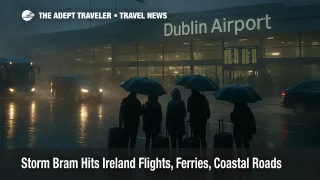
Storm Bram Ireland flights cancellations are now a live operational problem rather than a forecast, as Status Orange and Yellow wind warnings spread across the country on December 9, 2025, and strong southerly gusts shut down key transport links. Dublin Airport (DUB) has seen more than 40 flights cancelled so far, with additional cancellations and diversions at Shannon Airport (SNN) and Cork Airport (ORK), plus rail suspensions, road closures, and tens of thousands of homes losing power. Anyone planning Ireland to United Kingdom or transatlantic trips through the storm window now has to assume that some flights, ferries, and coastal routes simply will not run today, and should build in extra buffer, look at alternative routings, or, where possible, push travel to December 10.
The core shift for trip planning is that Storm Bram is actively cancelling flights and ferries across Ireland and the Irish Sea on December 9, not just threatening to do so, which means travelers can no longer rely on late adjustments and must rework today's connections, especially via Dublin, coastal roads, and cross channel sailings.
Where Storm Bram Is Hitting Hardest
Met Éireann's latest commentary describes a belt of very strong to gale force southerly winds tracking across Ireland on December 9, with the strongest gusts along south and west coasts and elevated Status Orange wind warnings layered over a nationwide Status Yellow alert. Expected impacts include difficult travel conditions, fallen trees, and coastal flooding, all of which are now being reported in various counties.
By mid afternoon, Irish outlets and regional authorities were reporting tens of thousands of homes and businesses without power as lines went down under the strain of high winds. One Independent.ie live update put that figure above 50,000 customers at one point, concentrated in western and southern counties, with repair crews warning that access could be slowed where roads are blocked or conditions remain unsafe.
Urban transport is also feeling the strain. In Dublin, local radio stations and transit updates report DART services suspended on some coastal stretches due to the risk of wind and debris, while other commuter rail lines are running with delays or temporary halts. Municipal warnings along parts of the west and south coast urge people to stay away from promenades, piers, and cliff paths as waves overtop sea walls and spray crosses roads.
Flight Cancellations At Dublin, Shannon, And Cork
Dublin Airport, Ireland's main international gateway, is bearing the brunt of the aviation disruption. The airport's social media updates and multiple news reports say 42 flights had already been cancelled by around 7:45 a.m., split evenly between inbound and outbound, with further cancellations signalled as winds strengthen through the day. Later tabulations from Irish media describe figures rising toward 70 to 73 cancellations by midday as airlines pruned schedules and consolidated services, reinforcing that this is not a handful of isolated changes but a heavy hit across the timetable.
Shannon and Cork are also affected, even if the raw numbers are smaller. One national outlet cites airport data showing at least four cancelled flights and one diversion at Cork, plus a pair of cancelled departing flights at Shannon in the morning, with more schedule adjustments possible as winds stay high. Low cloud, wind shear, and crosswinds on exposed runways can force delays even where arrivals are not formally cancelled, for example by extending spacing between aircraft or requiring go arounds.
Airlines are beginning to codify their response. Aer Lingus has posted a weather disruption notice for Storm Bram, warning that services across Ireland, Northern Ireland, and the United Kingdom on December 9 could be affected and urging passengers to monitor app or email updates for their specific flights. Low cost carriers such as Ryanair are similarly cancelling selected departures and advising passengers to check online before travelling to the airport.
The Irish Aviation Authority, which oversees passenger rights information, has issued a same day reminder that travelers whose flights are cancelled or heavily delayed should first confirm their status with the airline, then review their entitlements under European Union Regulation 261, which covers rebooking and care obligations when flights are disrupted. Because storms are usually treated as extraordinary circumstances, compensation payments may not apply, but re routing or refunds often still do.
Irish Sea Ferries And Coastal Routes
Storm Bram is not just an aviation problem. It is also closing down parts of the Irish Sea ferry network that many travelers use as part of Ireland to United Kingdom itineraries or as a back up when flights are full.
Travel advisories and regional media in Northern Ireland report that all P&O Ferries sailings between Larne and Cairnryan on December 9 have been cancelled, with passengers told to check for rebooking options once conditions ease. The same updates note further cancellations on routes such as Dublin to Holyhead, where Stena Line is cutting several sailings on both the Irish and Welsh ends, leaving only a reduced skeleton service to operate in the gaps between the heaviest gusts.
For travelers, this means that cross channel backup plans are less reliable than usual. Someone trying to salvage a cancelled Dublin flight with a same day Dublin Holyhead ferry and train combination may find that both arms of the journey are disrupted, especially if they were counting on late evening sailings. Coastal roads that feed the ports are also exposed to spray, debris, and temporary closures, increasing the risk that passengers who do reach the terminal will do so late.
Road, Rail, And Power Impacts
On land, the storm is turning into a broad transport and infrastructure test. National and regional outlets describe blocked roads from fallen trees, surface water, and minor landslides in exposed hills, with emergency services asking drivers to avoid unnecessary travel during the peak warning windows, especially in southern, western, and coastal counties.
In and around Dublin, DART suspensions and reduced services on certain rail corridors are already creating longer journey times for commuters and travelers heading to or from the airport, with bus services also reporting delays. As wind and rain move north and east, similar patterns are appearing in parts of Northern Ireland, where local authorities warn of impassable rural roads and tree damage, and where ferry links into Scotland have already been removed from the timetable.
The power situation adds another layer. ESB Networks reports tens of thousands of customers without electricity at various times during the day, with worst hit clusters in coastal counties and upland zones. For travelers, that translates into fuel stations, small hotels, and guest houses operating on backup or manual systems, which can slow check in, payment processing, and even the ability to recharge devices that carry boarding passes and e tickets.
Background, How The Warnings And Rights Work
Met Éireann's warning system uses three main color codes to signal storm severity. Status Yellow indicates weather that could cause some disruption, Status Orange is reserved for conditions likely to lead to more significant impacts such as damage and power cuts, and Status Red is used for rare, dangerous events that pose a serious threat to life and property. Storm Bram has pushed much of Ireland into overlapping Status Yellow and Status Orange wind warnings on December 9, with start and end times that differ by county but collectively cover most of the day.
On the passenger rights side, flights departing from Irish airports sit under European Union Regulation 261, which sets common rules for re routing, refunds, and care when flights are cancelled or delayed. The Irish Aviation Authority's Storm Bram advisory tells passengers to verify their flights directly with the airline, then use its guidance pages to understand what level of assistance they can request in terms of meals, hotels, and alternative transport. Because severe weather is generally classed as an extraordinary circumstance, airlines are rarely liable for cash compensation, but they still have obligations to rebook or refund tickets and to provide reasonable care while travelers wait.
Ferry passengers operate under different regimes, including European passenger rights regulations for sea transport on many routes and specific carrier terms on others. In practice, operators such as P&O and Stena Line usually offer free moves to later sailings when weather forces cancellations, but availability depends on how long the disruption lasts and how quickly backlogs clear once the storm passes.
How To Plan Ireland And UK Trips Around Storm Bram
For travelers already in motion on December 9, the most important step is to treat any plan that relies on tight timing across multiple modes as high risk. Short connections at Dublin, especially those that link European feeder flights to long haul departures, are vulnerable both to upstream delays and to ground handling challenges when winds limit which runways or stands can be used. Where possible, rebook to later long haul departures, use through tickets on one airline rather than self connecting, and carry at least one overnight option in case you need to stay in Dublin or another European hub.
For trips between Ireland and the United Kingdom, today is not the day to experiment with tight ferry plus rail combinations or unprotected separate tickets. If your Irish Sea sailing is cancelled, most operators will move you to the next available departure, but that may slip into the early hours of December 10 or later, and onward rail tickets may not be changeable. Where your schedule allows, moving the entire journey to December 10, or using a more robust air connection once airlines have had time to reposition aircraft, will usually be the less stressful choice.
Travelers who have not yet left home and who are facing non essential trips have the most flexibility. If you can alter your plans without heavy penalties, shifting departures to December 10 or 11, after the wind warnings expire and operators clear backlogs, will make it easier to secure seats and reduce the chance of being stranded mid journey. Those with fixed events, such as cruises or tours that depart from the United Kingdom, should talk to their airline or agent today about re routing through continental hubs that sit outside the storm's core impact zone, such as Paris, Amsterdam, or Frankfurt, even if that adds a connection.
Finally, anyone who must drive today should treat the weather warnings as operational guidance, not background noise. Avoid unnecessary coastal and upland routes during peak gusts, watch for fallen branches and surface water on regional roads, and keep fuel, food, and warm clothing in the vehicle in case diversions or closures add unexpected time. Once winds ease later on December 9 and through December 10, authorities and operators should be able to clear debris, restore power, and gradually rebuild normal transport patterns, but residual delays and a short term backlog of rebooked passengers are likely to linger.
Sources
- Strong winds and heavy rain will affect Ireland on the night of Monday 8th December and during Tuesday 9th December
- Storm Bram live: 54,000 without power as high winds persist, trains suspended in parts of Dublin and major disruption to road and air travel
- Live: 22,000 without power as dozens of flights cancelled
- Nearly 100 flights cancelled at Dublin Airport as Storm Bram hits
- Storm Bram is forcing multiple flights diversions as severe winds hit Ireland
- Storm Bram, your rights if flights are cancelled or delayed
- Latest travel updates, potential weather disruption, Storm Bram, Tuesday 9th December
- Trains, flights, and Christmas markets, the cancellations and closures due to Storm Bram
- This is what is being cancelled today in Northern Ireland with Storm Bram
- Storm Bram leaves thousands without power and roads impassable in Northern Ireland