

Ben Gurion Baggage System Failure Delays Flights
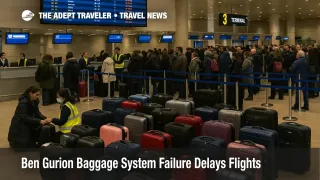
Departing passengers at Ben Gurion International Airport (TLV) are facing an additional chokepoint on top of winter weather and security checks after a baggage system failure in Terminal 3 on December 10, 2025 forced ground crews to cap check in and move luggage by hand. The problem has produced long queues at counters, visible piles of suitcases, and slower loading for flights departing Israel's main international gateway. For travelers with near term departures, this means longer pre departure waits, stricter check in cut offs, and a higher risk of checked bags arriving late or missing.
The Ben Gurion baggage system failure is a technical malfunction in the automated sorting and conveyor network that normally carries checked bags from Terminal 3 counters through screening to the aircraft holds, and until the system is fully restored travelers will have to plan around slower processing and more fragile connections through Tel Aviv.
How The Ben Gurion Baggage System Failure Unfolded
According to the Israel Airports Authority, a fault in the Terminal 3 baggage sorting system early on December 10 prevented suitcases from being transferred automatically to aircraft, which forced staff to restrict new check ins and switch to manual loading procedures. Local reports and passenger video show luggage backed up behind airline counters and lines snaking through the main hall even as flights continued to depart, sometimes with delays while ramp crews caught up.
Officials have emphasized that the outage is not connected to Storm Byron, which has separately brought flooding and weather disruption to Israel and the wider region, including at times diverted flights into and out of Ben Gurion. The Airports Authority says contingency plans are in place and that technicians are working to restore full capacity, but it has not published a firm end time for repairs, leaving travelers to assume that at least the coming days will see some level of disruption in the terminal.
At present, arrivals and departures continue to operate, and there is no blanket shutdown of Terminal 3. The strain is concentrated on outbound check in and baggage handling, where any manual workaround is naturally slower and more error prone than the automated system that normally moves thousands of bags per hour.
How Terminal 3's Baggage System Normally Works
Terminal 3 serves as the main international terminal at Ben Gurion, handling the majority of long haul and regional traffic, with passengers funneled through a central check in hall before security and the star shaped duty free and gate rotunda. Behind the scenes, a hold baggage screening system carries suitcases on conveyors from the counters through security scans and into sorting areas that route each item to the correct aircraft.
When that hold baggage screening system is working normally, bags are tagged at the desk or self service kiosk, scanned for security threats without additional passenger involvement, then sent to carousels where ground handlers load them into containers or baggage carts for each flight. The system is designed with some fallback ability to revert to older screening methods during breakdowns, but those manual approaches involve more people, slower throughput, and a higher risk that a bag will miss its intended departure, especially at busy times.
In the current situation, many airlines are reportedly prioritizing aircraft departures over baggage, which means a flight can leave only slightly delayed while some checked bags follow later on subsequent services. That tradeoff keeps seat capacity moving but increases the probability that passengers will arrive in their destination without their suitcases, particularly on itineraries with tight onward connections.
Intersection With Storm Byron And Security Procedures
The timing of the Ben Gurion baggage system failure is particularly awkward for winter travelers because it overlaps with the impact of Storm Byron, which has already triggered severe flooding, road closures, and weather related disruption across Israel, Gaza, and the wider region. Even though the Airports Authority has stressed that the baggage breakdown is technically separate from the storm, the net effect is that passengers heading to or from Tel Aviv now face a layered risk profile of difficult access roads, busier security screening, and slower baggage processing inside the terminal.
Ben Gurion also operates under some of the strictest aviation security measures in the world, and those protocols are not easily relaxed in the name of throughput. Guarded perimeter approaches, detailed questioning at check in for certain itineraries, and multiple screening layers all add friction that can turn a baggage system slowdown into a much more visible airport wide bottleneck, especially at peak times when several long haul departures are scheduled within the same hour.
For travelers, the combination of a mechanical failure and heavy security procedures means that any margin for error inside Terminal 3 is slimmer than usual. Late arrivals for check in windows that might previously have been forgiving are more likely to lead to denied boarding or bags that are checked but do not make the flight, and queues can move unevenly as some airlines adjust staffing or switch to more aggressive cut off policies.
Expansion Projects Add Pressure
The baggage failure has also landed just days after national planning authorities approved a major expansion project for Terminal 3, including a new hold baggage screening structure on the eastern side of the building, estimated at around one billion shekels. The new facility will add upgraded baggage handling systems, more check in counters, and additional unloading areas, and will eventually support a hotel built over the terminal's eastern wing to give travelers direct airside access.
Construction is expected to take roughly 30 months and will be carried out while the airport continues operating, which means an already complex environment will add contractors, worksites, and phased equipment changes. Industry observers have long warned that Ben Gurion, which now handles well over the 12 million passengers per year it was originally designed for, functions as a single point of failure for most international travel into and out of Israel, so any strain on key systems such as baggage has outsized effects.
To be clear, there is no public evidence that the December 10 baggage breakdown was caused by the expansion project itself, which is only just entering its build phase. The coincidence in timing, however, underlines how little slack exists in the system and why travelers should expect occasional teething issues around baggage and passenger flow as Ben Gurion's modernization program ramps up.
Practical Advice For Departing Passengers
For anyone flying out of Ben Gurion in the coming days, the most important step is to add extra time. Where you might normally arrive two to three hours before an international departure, it is prudent to increase that buffer by at least an hour, especially at morning and evening peaks, so long check in lines, secondary security questioning, or baggage re tagging do not put your flight at risk.
If your itinerary involves a same day connection beyond the first arrival city, consider how much slack you have. Connections on a single ticket with a major airline or alliance partner are safer because the carrier is responsible for rebooking you if outbound delays cause a misconnect, while separate tickets, especially on low cost or regional carriers, are best avoided until the baggage system is clearly back at full strength.
Packing strategy matters as well. Whenever possible, shift critical items into carry on, including medications, chargers, important documents, at least one change of clothes, and anything that would be hard or expensive to replace quickly at your destination. If your fare allows a cabin only setup, this is a good time to travel with hand luggage alone, even if that means more careful curation of what you bring.
Family travelers and tour groups should pay particular attention to check in windows printed on their tickets or tour documentation. Arriving at the terminal as a group but queuing in the wrong line can be costly, so identify the correct desks in advance and do not assume that ground staff will be able to reopen bag drop for latecomers once a flight moves into final security stages under current constraints.
If Your Bags Are Delayed Or Lost
If your checked bag does not arrive at your destination, go straight to the airline or ground handling desk in the baggage hall before you leave customs. File a Property Irregularity Report or equivalent written claim that lists the bag tag number, description, and contents, and keep a copy or digital photo of the paperwork. Airline rights around baggage are generally framed by the Montreal Convention and carrier specific conditions of carriage, which set limits on compensation but require carriers to make reasonable efforts to trace and deliver delayed luggage.
Keep all receipts for essential purchases such as basic clothing, toiletries, and chargers while your bag is missing. Many full service airlines offer a modest daily allowance for necessary items during a baggage delay, and comprehensive travel insurance policies often top up that coverage within defined caps, especially when you are on a longer trip or a cruise where replacement costs are higher. If you bought your ticket with a premium credit card, check whether it includes secondary baggage delay coverage and how to claim it.
When bags eventually arrive, airlines typically arrange delivery to a local address or hotel, but in some cases you may be asked to return to the airport. Given the ongoing pressure at Ben Gurion, it is worth clarifying whether you can authorize a local contact or hotel concierge to receive your bag on your behalf so you do not have to re enter the terminal during busy periods.
For travelers with imminent trips, one way to reduce downside risk is to reroute via alternative hubs if you already expect complex connections or are traveling for an immovable event. Airports in nearby countries may still feel the impact of Storm Byron and broader regional tensions, but spreading demand across multiple gateways can give some itineraries more resilience than relying solely on one infrastructure constrained terminal.
Sources
- Ben Gurion baggage system malfunction causes delays, suitcases pile up
- Baggage breakdown at Israel's Ben-Gurion Airport disrupts check-in, slows flights
- Malfunction in baggage sorting system at Ben Gurion Airport causes delays and check-in lines
- Long lines at Ben Gurion Airport amid baggage system malfunction
- Israel Planning Administration approves construction permit for Ben Gurion Airport expansion
- Ben Gurion's Terminal 3 To Be Upgraded for 1 Billion Shekels
- Ben Gurion Airport