

Brazil Cyclone Blackout Cuts Sao Paulo Flights
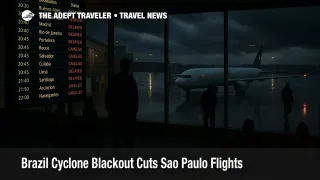
Brazil cyclone blackout cuts Sao Paulo flights and basic utilities after an extratropical storm swept across São Paulo on December 10, 2025, knocking out power and water across much of the metro area. The outage has hit air travel hard, with hundreds of flights cancelled at both São Paulo Congonhas Airport (CGH) and São Paulo Guarulhos International Airport (GRU), and has left more than one million homes and businesses in the dark while water company Sabesp struggles to keep pumps running. For travelers, that combination means fragile schedules, patchy hotel services, and a higher risk that even a routine connection through São Paulo could turn into an unplanned overnight stay.
The Brazil cyclone Sao Paulo flights disruption is turning Latin America's busiest aviation hub into a weather sensitive chokepoint, where rolling power cuts, fallen trees, and flooded streets can upend both long haul itineraries and regional hops on short notice.
Power and water utilities describe a fast moving event that escalated over a few hours into one of the largest blackouts of the year. Forecasters and officials say an extratropical cyclone drove wind gusts close to 100 kilometres per hour across São Paulo state, toppling at least 200 trees and damaging overhead lines, with utility Enel reporting that up to about 2.2 million customers lost electricity at the peak on December 10. By December 11, roughly 1.4 to 1.5 million customers were still without power, and Sabesp warned that pump failures were interrupting water supplies to neighbourhoods across the city.
Those outages quickly translated into flight disruption at both major São Paulo airports. Airport and aviation authorities report that Congonhas cancelled around 192 flights on December 10 alone, with additional cancellations and long delays continuing into December 11, while Guarulhos has cancelled at least 100 to 120 arrivals and departures over the same window, bringing the total number of scrapped flights close to 400. Some services are now operating, but airlines are still working through backlogs, aircraft and crew are out of position, and any further storms over the next few days could trigger fresh waves of cancellations.
For travelers, the immediate takeaway is that same day São Paulo connections are far more fragile than a normal early summer thunderstorm pattern would suggest. Anyone who previously booked one to two hour domestic connections through Congonhas or Guarulhos, especially on separate tickets or on tight transatlantic or North American inbound links, should treat these as at risk and, where possible, move to longer layovers or overnight stops until flight operations stabilise. Travelers whose trips touch multiple Brazilian cities should also remember that São Paulo is a key hub for onward flights to Rio de Janeiro, Brasília, Belo Horizonte, and southern cities, so a blackout there can ripple across the wider network even if local weather elsewhere looks calm.
On the ground, the blackout is complicating both everyday life and visitor logistics. Without reliable electricity, some hotels and short term rentals are losing elevator service, lighting, and air conditioning, and may have only intermittent Wi Fi and phone charging capacity unless they have backup generators. Sabesp's warnings about disrupted pumping mean that high rise buildings and hillside neighbourhoods could see low water pressure or no water at times, which affects showers, toilets, and restaurant operations as well as fire safety systems.
City and state authorities are also dealing with blocked streets, traffic lights that are out in multiple districts, and local flooding in low lying areas, particularly where heavy rain has combined with clogged drains. That is a serious consideration for self drive visitors picking up rental cars at the airports, because some expressways and arterial roads may be partially flooded or narrowed by debris, and side streets in suburban areas can become impassable when large trees come down. Where road conditions are uncertain, taxis and app based cars with local drivers are usually safer than attempting unfamiliar routes alone, especially at night.
Background: Southern Brazil Cyclones And Travel
Extratropical cyclones of this kind form when cold fronts interact with warm, humid air in southern Brazil, often producing bands of intense thunderstorms, squally winds, and short lived but damaging gusts. Earlier this week, Adept Traveler's Brazil Storms, São Paulo Travel At Risk From Floods piece flagged that a December 9 to 11 cyclone peak could coincide with holiday traffic, raising the risk of repeated airport and road disruption along a corridor from Rio Grande do Sul through Santa Catarina into São Paulo. The current blackout is essentially that forecast realised in one of the country's most critical urban and aviation hubs.
Regulators are already pressing Enel for answers, and this is not the first time the company has faced scrutiny over storm response in São Paulo. Brazil's national electricity regulator Aneel has demanded a detailed explanation of the scale and duration of the current outages, echoing political pressure that followed earlier blackouts linked to storms in 2023 and 2024. For travelers, the regulatory process mainly matters because it signals that restoration may take days rather than hours in some areas, and that additional sudden cuts are possible while crews repair heavily damaged segments of the grid.
How To Plan Flights Through São Paulo Now
Anyone who absolutely must connect through São Paulo in the next several days should plan as if disruptions will continue. For long haul arrivals from North America or Europe, the safest option is often to schedule an overnight stay in the city, then continue by domestic flight, bus, or car the following day, rather than trying to push a tight same day connection through either airport while crews are still restoring power and airlines are working through backlogs. Travelers already holding separate tickets for onward domestic legs should contact their airlines and travel advisors to see whether those can be consolidated or moved to later departures under current disruption policies.
For domestic Brazilian itineraries, consider routing through alternative hubs, such as Rio de Janeiro or Brasília, if schedules allow and if local weather looks more stable. When that is not realistic, build at least three hours for domestic to domestic connections at Congonhas or Guarulhos and four hours or more for domestic to international links, and avoid the last flight of the day onto a cruise departure or major tour start whenever you can. Airlines are more likely to offer hotel vouchers or easier rebooking when failure to complete a connection is clearly linked to weather disruption, but capacity will still be limited when hundreds of flights are cancelled.
Hotels, Water, And Staying On The Ground
For travelers already checked in, or about to arrive in São Paulo, confirming utilities is now as important as checking room type. Before arrival, contact your hotel to ask whether it currently has full power, whether it has automatic backup generation, and whether there have been any water pressure issues in recent days. If a property cannot give clear answers, consider switching to a hotel in a district where power has already been restored or where larger properties with backup systems cluster, even if that means a longer ride from the airport.
During any stay under blackout conditions, keep batteries topped up whenever power is available, maintain a small reserve of bottled water, and have a simple backup plan for meals in case nearby restaurants close early because of outages or staff transport problems. Travelers with medical needs that depend on electricity should strongly consider postponing trips or relocating to areas with stable power, since even high end hotels cannot guarantee uninterrupted supply during severe grid incidents.
Wider Trip Planning For Brazil's Storm Season
Looking beyond this specific event, the blackout underscores how sensitive São Paulo's infrastructure can be to high wind events in the early summer storm season. Travelers considering December and January trips that rely heavily on São Paulo's airports and urban transport should build more resilience into their plans than they might for drier months, including flexible tickets, travel insurance that covers weather disruption, and a preference for hotels with clear backup power policies. Adept's evergreen Brazil Weather And Storm Season Travel Guide can help set expectations about how often such systems develop and how they typically affect intercity routes and coastal trips.
Over the next week, São Paulo will still function as Brazil's main aviation hub, but with utilities, roads, and schedules under unusual strain. Travelers who accept that reality, add time, and choose routes and lodging that assume intermittent disruption will be better placed to complete their trips with manageable delays rather than full scale cancellations.
Sources
- Strong winds leave millions in Brazil's Sao Paulo without power, cutting water and flights
- Sao Paulo blackout leaves 1.4M without power, hundreds of flights canceled
- Strong winds leave millions in Sao Paulo without power, cutting water and flights
- São Paulo Power Outage Affects Over 1.4 Million Residents After Strong Winds
- Power outage crisis in São Paulo intensifies
- Extratropical cyclone knocks out power to millions in Brazil
- Brazil Storms, São Paulo Travel At Risk From Floods