

Brazil Crime And Kidnapping Travel Advisory Changes
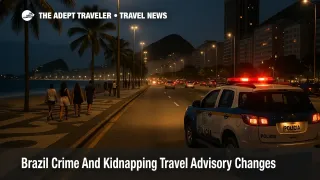
Travellers heading to Brazil in 2026 now have to read the fine print of official advisories much more carefully, because several governments have sharpened how they talk about crime and kidnapping risks. The United States still rates Brazil at Level 2, exercise increased caution, but a May 29 2025 update added an explicit kidnapping indicator alongside long standing crime warnings. Canada tells its citizens to exercise a high degree of caution due to high crime and urban gang violence, while Australia has elevated Brazil into its high degree of caution tier and now highlights violent crime, drink spiking, and disease outbreaks. All of this lands just as storms, blackouts, and flight disruption around Sao Paulo expose how fragile local infrastructure can be during bad weather.
The Brazil travel advisory crime and kidnapping language now pushes 2026 itineraries toward tighter neighborhood choices, safer arrival timings, and more conservative assumptions about connections and nightlife, especially in São Paulo, Rio de Janeiro, Salvador, and key border corridors.
What Actually Changed In The Advisories
On the United States side, the Brazil country page on Travel.State.Gov is still set at Level 2, exercise increased caution, but the header now spells that out as "due to crime and kidnapping," and the detailed text underlines violent crime, carjacking, and kidnapping for ransom as active risks in urban areas. The May 29 2025 update explicitly notes that the advisory was revised to add the kidnapping risk indicator, which puts Brazil in the same coded bucket as a growing list of countries where hostage taking or abduction is a recognised concern, even if most incidents still involve local residents rather than visitors.
A separate message issued by the United States Embassy in Brazil ahead of COP30 in Belém repeats that the advisory stands at Level 2 due to crime and kidnapping and urges visitors to review the full text, stay in safer neighborhoods, and avoid displaying valuables. For travellers, that is a clear signal that the crime language is not background boilerplate but a live constraint that American officials expect them to plan around.
Canada's travel advice page for Brazil now sits at "exercise a high degree of caution," citing high crime rates and "regular incidents of gang related and other violence in urban areas," particularly in big cities where many tourists begin or end their trips. Advisory roundups in Canadian media also group Brazil with other destinations where authorities see elevated security risks and potential for sudden border or airport disruption, which matters for snowbird travellers stitching Brazil into multi stop South American itineraries.
Australia's Smartraveller service has moved in the same direction. Brazil is now listed at exercise a high degree of caution, with the overview highlighting violent crime, mugging, carjacking, and a documented rise in methanol poisoning cases and drink spiking in beach and nightlife zones. The November 24 2025 update and related social posts spell out that visitors should be alert to drink spiking, should avoid favelas even on guided tours, and should not walk alone at night in many urban districts. Visa and passport warnings sit right alongside those safety lines, making it harder for travellers to skim past the risk section when they check entry rules.
Behind those headline pages, the United States Overseas Security Advisory Council country report for Brazil, and similar security briefs prepared for corporate travellers, paint the same picture. They emphasise high levels of street robbery and opportunistic theft, carjacking at red lights or on access roads to airports, and a pattern of short term "express kidnappings," where victims are forced to withdraw cash or hand over cards rather than being held for extended ransom negotiations. While Brazilians are most frequently targeted, foreign visitors appear in the case studies often enough that business risk managers have started treating kidnapping and robbery as concrete, not theoretical, when they approve trips.
How Crime And Kidnapping Risks Show Up On The Ground
For most holidaymakers and business travellers, the highest risks sit in specific combinations of place, time, and behaviour. The big coastal cities, such as Rio de Janeiro and São Paulo, have long dealt with street robbery, armed hold ups, and car theft, and the refreshed advisories essentially tell visitors to plan as if those problems are not going away. That means avoiding hillside favelas altogether unless there is a compelling, vetted reason to go, being very cautious in nightlife strips where intoxicated tourists are easy targets, and understanding that some seemingly ordinary peripheral neighborhoods can be under de facto gang control.
Nightlife and dating app scams have drawn particular attention from British and Brazilian media, which have covered "Goodnight Cinderella" cases in Rio in which tourists are drugged and robbed after accepting drinks or invitations from new acquaintances. Australian and British advice now explicitly warns travellers to buy and hold their own drinks, to treat unsolicited invitations with suspicion, and to have a known safe fallback, such as returning to a hotel bar rather than continuing the night with strangers. These problems are not universal, but they are common enough in city nightlife that travellers who want to explore bars and samba clubs should see sober, two way check ins and strict drink control as basic safety, not overreaction.
Kidnapping risk is more diffuse but still real. Short term express kidnappings can begin with a street robbery, an unlicensed taxi, or a fake delivery encounter. In some parts of Brazil, especially in states with strong organised crime groups, kidnapping for ransom can target business figures, dual nationals, or people perceived to have access to funds. The updated U.S. K indicator does not mean that most tourists will suddenly face kidnapping threats, but it does formalise the idea that this is a risk worth screening for when deciding which routes and vendors to use. Avoiding unofficial taxis, limiting cash carried, using ride hailing apps from inside hotel lobbies, and keeping hotel and embassy contact information handy are all simple, concrete ways to cut exposure.
Border areas and certain highways also figure into the risk picture. Canadian and Australian notes reference armed robbery and criminal activity along some overland routes, and corporate security teams frequently recommend that staff avoid overnight intercity buses on higher risk corridors or choose daytime departures with reputable operators instead. Independent road trips can still work well in more stable regions, but travellers should map their planned routes against current advisories and news reports, rather than relying on older forum posts or generic guidebooks.
Crime On Top Of Storms And Infrastructure Stress
The advisory tightening is not happening in a vacuum. Recent storms and blackouts have exposed how quickly Brazil's infrastructure can strain under severe weather, especially in and around São Paulo, where many international trips begin. On December 11 2025, an extratropical cyclone swept across the São Paulo metropolitan area, toppling trees and power lines, leaving about 1.5 million homes and businesses without electricity at one point, and disrupting the water supply as pumps failed. Airport operator statements and news reports show that São Paulo/Guarulhos-Governor André Franco Montoro International Airport (GRU) and São Paulo/Congonhas-Deputado Freitas Nobre Airport (CGH) together cancelled well over one hundred flights across two days as winds near 100 kilometres per hour made operations unsafe and forced crews into reset mode.
These storms follow a pattern of damaging wind events and a nationwide blackout in October 2025 that briefly cut power across all 26 states and the Federal District, interrupting transport systems and water supply in multiple major cities. For travellers, the key point is not that Brazil is uniquely fragile, but that crime and kidnapping risk now sit on top of a network where bad weather can suddenly degrade lighting, CCTV coverage, and transport options. Getting stranded at night outside a darkened terminal, or being forced to reroute by road through unfamiliar districts after a storm shuts down an airport, can increase exposure to the very street crime and opportunistic targeting that the advisories describe.
This is where cross referencing safety and disruption coverage becomes useful. Our separate storm coverage for Brazil, including São Paulo blackout and cyclone pieces that track how often Congonhas and Guarulhos have had to cancel or delay large numbers of flights, provides a baseline for how often travellers might expect to face cascading delays. When you layer that on top of rising violent crime alerts, it becomes clear that 2026 itineraries need more slack and more structured arrival plans than pre pandemic city hop trips.
Planning Safer 2026 Itineraries
For visitors who still want to travel to Brazil, the new advisory language does not amount to a blanket "do not go." It does, however, reward more conservative planning. Start by choosing neighborhoods with a track record of hosting international visitors, good lighting, and 24 hour staffed hotels or serviced apartments. In Rio, that often means parts of Copacabana, Ipanema, and Leblon, chosen carefully street by street. In São Paulo, many visitors pair business districts such as Paulista and Faria Lima with well regarded hotels that can coordinate transfers and offer practical local do and do not lists.
Arrival timing matters more than it used to. Try to schedule long haul flights so that you land during daylight or early evening, when airport ground transport and hotel staffing are fully up to speed. Where you cannot avoid late night arrivals at Guarulhos or Congonhas, pre book a trusted car through your hotel or a vetted provider, and confirm in writing how to identify the driver without broadcasting your name in the arrivals hall. Build in buffer between international and domestic flights so that you are not forced into risky sprints through crowded terminals or last minute overnight stays far from your planned base if a storm or power issue delays one leg.
Think about how much street exposure your plans require. Big, open air events, such as Carnival, football matches, or major concerts, can be memorable, but they also concentrate crowds, pickpockets, and sometimes heavier criminal activity in fairly tight areas. The updated advisories do not tell people to avoid festivals outright, but they do imply that you should balance high intensity nights out with quiet days and early evenings, minimise cash and valuables, and move as part of a group rather than alone. For solo travellers, particularly those less confident in Portuguese, choosing centrally located accommodation, using vetted guides, and sticking to better lit, busier streets are sensible baselines.
Independent favela tours, unguided nightlife crawls into peripheral neighborhoods, and very cheap short term rentals in poorly documented areas all look different in this new advisory environment. They were always higher risk. Now, with kidnapping and violent crime spelled out as official constraints, travellers need to ask whether the experience justifies the extra exposure and whether better documented alternatives, such as cultural centres, official samba schools, or museum led community projects, can deliver some of the same insight with less downside.
Insurance, Corporate Travel, And Money Questions
The shift in risk language also affects insurance and corporate travel policy. Australian coverage of the Smartraveller update notes that moving a country into an exercise a high degree of caution tier can trigger higher premiums or tighter wording on what is covered, especially for medical evacuation and kidnap and ransom related benefits. Some corporate travel programs automatically require additional approvals or security briefings when a destination reaches that level, which can affect how quickly staff can be dispatched to Brazil for meetings, site visits, or events.
Individual travellers should read policy documents carefully and check whether kidnapping, carjacking, and robbery are explicitly covered, partially excluded, or treated as insured events only under certain conditions, such as using licensed transport and avoiding known high risk areas. This is not about scaring people off. It is about making sure that, if something does go wrong, you are not caught between an advisory that clearly flagged a risk and a policy that quietly used that same advisory as a reason to deny or reduce a claim.
Carrying smaller daily cash amounts, splitting cards between different bags, and ensuring strong multi factor authentication on banking apps will not remove risk, but they can limit the damage if someone does manage to steal a phone or force withdrawals. Travellers with significant public profiles or business roles should talk to their security advisers before travel, rather than assuming that general tourist guidance is enough.
How To Monitor And Adjust In Real Time
Once a trip is booked, staying informed is as important as initial planning. U.S. nationals can enrol in the Smart Traveler Enrollment Program to receive updates when the Brazil advisory changes or when embassy messages flag new crime or protest patterns. Citizens of other countries should sign up for their foreign ministry or consular alert services, many of which now issue app notifications when violence, storms, or major infrastructure outages affect Brazilian cities. Checking Brazilian news outlets and local weather services in the days before travel can also highlight whether a fresh storm cycle is about to strain the grid, airports, or road network again.
On the ground, treat advice from hotel staff and reputable local partners as part of your risk picture, but cross check it against official advisories and your own government's guidance. If a neighbourhood that once felt lively now shows signs of heavier gang presence or recent incidents, pivot rather than pushing ahead for the sake of a plan. The new crime and kidnapping wording does not mean Brazil is uniquely unsafe, but it does mean that smart 2026 travellers will weave security thinking into their routing, timing, and nightlife in a way that would have felt optional a decade ago.
Sources
- Brazil International Travel Information, U.S. Department of State
- Travel Advisory, Brazil, U.S. Embassy and Consulates in Brazil
- Message for U.S. Citizens, Travel to Brazil During COP30
- Travel Advice and Advisories for Brazil, Government of Canada
- Brazil Travel Advice and Safety, Smartraveller
- Brazil Country Security Report, OSAC
- Strong Winds Leave Millions in Sao Paulo Without Power, Cutting Water and Flights, Reuters
- Sao Paulo Blackout Leaves 1.4M Without Power, Hundreds of Flights Canceled, AP News
- State Department Updates Brazil Travel Advisory With Kidnapping Risk Indicator, Travel Noire
- Australia Upgrades Travel Advisory for Brazil, Citing Crime and Health Risks, VisaHQ