

Radar Backup In Costa Rica Cuts Airspace Shutdown Risk
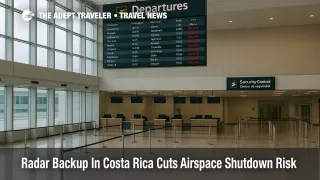
Costa Rica radar power backup work is reducing the odds of a repeat nationwide airspace stoppage like the one on September 24, 2025, when an electrical surge knocked out the main radar system and forced air traffic control to pause flights for more than five hours. The travelers most exposed are anyone transiting Juan Santamaría International Airport (SJO) for domestic to international connections, plus peak season flyers using Daniel Oduber Quirós International Airport (LIR) for resort corridors in Guanacaste. If Costa Rica is on the calendar this winter, the practical move is still to add buffer, avoid tight separate ticket connections, and keep an overnight fallback in mind for days when ATC systems degrade.
The Costa Rica radar power backup upgrades matter because the September failure was a classic single point breakdown, one component failed, the redundancy did not catch it, and the safest option was to stop moving aircraft until controllers had reliable surveillance again. The new information now is that corrective electrical work and monitoring changes are in place, alongside broader airport operational preparations for high season traffic.
What Failed In September
On September 24, 2025, Costa Rica's civil aviation authorities suspended flights after a high intensity electrical surge damaged a battery inside the uninterruptible power supply (UPS) that supports the primary radar system. Local reporting on the official review said the surge caused a short circuit that prevented the redundant line from taking over, which meant the backup architecture did not behave the way travelers assume it will in a modern ATC system.
The shutdown was not just a San José airport problem. Because the radar feeds national airspace surveillance, the stoppage froze departures and arrivals across the country, including at Liberia, and triggered diversions, long ground holds, cancellations, and rolled crews. Reported totals from the disruption included 138 affected operations and roughly 4,580 stranded passengers, with airspace reopening later that morning once systems stabilized.
If you covered that day on Adept Traveler, this update is the follow through travelers actually care about, whether the weak link was identified, and whether fixes reduce the chance of a repeat. For background on the original event and how it propagated across airports, see the prior Adept Traveler coverage: Costa Rica Radar Outage Halts Flights.
What Changed Operationally
Costa Rica's Ministry of Public Works and Transport, along with civil aviation leadership, pushed for a fast technical explanation after the outage, and the subsequent review focused heavily on power resilience and the handoff between primary and backup systems. Reporting on the corrective plan described isolating backup circuits, adding continuous monitoring, verifying generator readiness, and procuring replacement UPS equipment to remove the specific failure mode tied to the September surge.
In parallel, airport operator communications have emphasized high season readiness and contingency planning at Juan Santamaría, which is relevant because crowded departure peaks turn even short ATC pauses into long queues at check in, security, and gates. None of this guarantees seeing zero disruptions, but it does shift the risk profile from "known exposed weak spot" toward "managed infrastructure risk with stronger detection and fallback."
How Airspace Shutdowns Cascade For Travelers
How It Works: Air traffic control uses radar and other surveillance feeds to separate aircraft safely. When controllers lose reliable surveillance, they can reduce traffic dramatically, or stop it entirely, until they can confirm aircraft positions and restore safe separation standards. That is why a radar power issue can shut down flights even when the weather is fine and runways are available.
For travelers, the cascade is predictable. First, departures stop, which strands people in terminals and creates missed check in cutoffs for later flights. Next, inbound aircraft divert or arrive late, which then breaks the next rotation of flights because the aircraft and crews are out of position. Finally, recovery is uneven, airlines prioritize long haul and high load flights, and smaller domestic segments can be the last to return to schedule.
A Practical Reliability Playbook For SJO And LIR Trips
The upgrades make it reasonable to treat the September event as less likely to repeat in the exact same way, but not reasonable to book Costa Rica with "no disruption margin" thinking. The safest booking logic is built around recovery options.
For connections through Juan Santamaría, the highest leverage change is padding domestic to international transfers and avoiding the day's final narrow connection if a missed flight forces an overnight. Travelers on separate tickets should be especially conservative, because a nationwide ATC pause can make airlines more willing to reroute their own protected itineraries than to rescue self connected plans.
For Liberia itineraries, the key exposure is that many travelers are chasing same day resort transfers and fixed check in times. A short ATC pause earlier in the day can still translate into a late evening arrival, limited ground transport options, and hotel or shuttle friction. The practical fix is to keep your first night flexible, confirm whether your transfer provider has a late arrival cutoff, and consider arriving a day earlier when the trip includes a hard start such as a tour departure, a wedding, or a live aboard connection.
For monitoring, rely on airline app alerts first, then watch airport channels when disruption rumors start. If the airport posts operational notices, treat them as a signal to stop making tight downstream plans, for example, a same day domestic hop, a long drive immediately after landing, or a paid activity that will not refund late arrivals.
To put this story in the broader context of how disruptions ripple, Adept Traveler's evergreen hub on the structural issue is here: Flight Disruptions. For travelers continuing overland after flying into the Central Valley, also keep an eye on in country road reliability, because a flight delay plus a major highway constraint is how "minor" problems become a lost day, for example this recent Costa Rica road closure coverage: Route 32 Closure Threatens Airport Transfers.
Costa Rica radar power backup upgrades are a meaningful step toward preventing one specific kind of nationwide shutdown, but the traveler takeaway stays simple. Build your itinerary so one disrupted morning does not wreck the whole trip, prioritize earlier flights when you have hard commitments, and treat tight connections through Juan Santamaría as an avoidable risk, not bad luck.
Sources
- Costa Rica's Main Airport Updates Radar Power Systems Post-September Failure
- Teletica: MOPT Detalla Medidas Tras Fallo De Radar En Aeropuerto
- AERIS: Plan Maestro Expansion And Modernization Works, Nov 27, 2025
- AERIS: High Season Operations Plan, Nov 25, 2025
- AP: Radar Failure Shuts Costa Rica Airspace, Sep 24, 2025
- Aviacionline: Costa Rica Airspace Closed Due To Radar Failure, Sep 24, 2025