

TSA Shares U.S. Flyer Names With ICE, December 2025
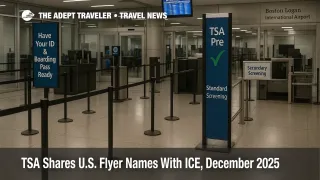
U.S. TSA ICE traveler lists are now being sent from the Transportation Security Administration (TSA) to U.S. Immigration and Customs Enforcement (ICE) so ICE can check upcoming domestic flyers against databases tied to deportation actions. The change most directly affects travelers who are undocumented, are in active immigration proceedings, or may be flagged due to database matches, and it can also affect mixed status families planning domestic trips. If you think you could be impacted, plan for more airport time, avoid tight connections, and carry any documentation that supports your lawful status or travel eligibility.
The U.S. TSA ICE traveler lists program expands how passenger information is used around domestic flying, shifting some risk from a behind the scenes prescreening step into real world airport disruptions for certain travelers.
What The Reporting Says About The TSA, ICE Program
Multiple outlets, citing a New York Times report and Department of Homeland Security (DHS) statements, say TSA has been providing ICE with lists of upcoming air travelers multiple times per week so ICE can run names through its systems for people it considers deportable. DHS has framed the intent bluntly, with a spokesperson quoted saying the goal is that undocumented immigrants "can no longer fly unless it is out of our country to self deport," language that signals an operational focus on domestic air travel as an enforcement pressure point.
There is also a timeline discrepancy you should note because it affects how "new" this feels on the ground. DHS said the program began in February 2025, while the New York Times reported it began in March 2025. Either way, by mid December 2025, it is no longer a theoretical pilot, it is an active workflow that can affect airport outcomes for travelers who get flagged.
What remains unclear in public reporting is the scale of enforcement outcomes tied specifically to this data sharing, including how many people have been arrested, detained, or removed as a direct result of the TSA provided lists. A People report described individual cases, including an arrest at Boston Logan International Airport (BOS) and another in Salt Lake City, Utah, tied to ICE enforcement activity after identification through the program, but there is no public aggregate count.
Background, How Secure Flight Data Usually Works
Background For years, TSA has used the Secure Flight program to prescreen passengers before they reach the checkpoint. Airlines collect required Secure Flight Passenger Data, including a passenger's full name, date of birth, and sex, then transmit it for watch list matching so TSA can return a boarding result, such as cleared, selectee, or no fly. That framework is rooted in federal regulation and long standing TSA security screening policy, and it has historically been positioned as aviation security rather than immigration enforcement.
The traveler facing point is simple. Your booking data, especially your legal name, is already being used for a federal prescreening step, and inaccuracies can trigger friction even for travelers with no immigration exposure, including repetitive secondary screening, boarding pass issues, or identity verification delays. TSA's Traveler Redress Inquiry Program exists for travelers who experience repeated screening problems, but redress is not a fast fix for day of travel disruption.
What Changes For Travelers Now
For most U.S. citizens and lawful permanent residents, the practical travel experience will usually look the same, arrive, show ID, clear screening, and fly. The difference is that the same upstream identity data that already flows through Secure Flight can now be used to trigger a second downstream action for immigration enforcement, with the most obvious traveler impact being an increased risk of questioning, detention, or missed flights for people ICE flags.
That matters even if you are not the target of enforcement, because disruptions propagate. A detained traveler can miss a flight, a family can be split across different rebooking options, and gate agents and airport staff can become the point of friction for a situation they cannot resolve. For travel advisors and planners, this shifts "documentation readiness" from an international travel concept into a domestic flight planning variable for certain clients.
It also lands in a broader environment where identity checks at airports are already becoming faster and more automated, not less. TSA has expanded pilots that use biometric matching in certain lanes and airports, and it has signaled continued modernization of checkpoint throughput. That modernization trend does not prove anything about enforcement intent, but it does mean more travel moments are becoming identity centric. For related context on TSA's expanding ID tech at checkpoints, see Denver Adds TSA PreCheck Touchless ID Lanes and TSA Invites Private Tech to Reinvent Checkpoints.
Practical Planning Guidance If You Could Be Flagged
Adept Traveler cannot provide legal advice, but the travel logistics are straightforward. If you believe you could be affected because of immigration status, an outstanding removal order, a prior overstay, or active proceedings, treat domestic flying as higher risk than it was a year ago. Build extra time, avoid itineraries where missing one segment collapses the whole trip, and consider whether alternate ground transport is safer for your specific situation.
Documentation and identity consistency matter more than ever. Make sure the name on your reservation matches your ID exactly, including spacing, middle names, and compound surnames, because mismatches can trigger additional checks even before any ICE step occurs. If you have lawful status documentation, carry what you reasonably need for identification and verification, and keep it accessible in case you are questioned, since scrambling for documents at the checkpoint or gate is how missed flights happen.
Finally, plan your money and contingencies like you would for a high friction travel day. Avoid the last flight of the day, avoid separate tickets, and keep a backup plan for lodging or alternate transport if you are delayed. If you regularly use trusted traveler programs to reduce line time, remember that TSA PreCheck changes the physical screening experience, but it does not prevent a separate enforcement action triggered upstream by passenger data. For a plain language overview of how PreCheck works in practice, see Does Montego Bay Airport Have TSA PreCheck? What You Need to Know.
In the bigger picture, U.S. TSA ICE traveler lists are a reminder that domestic air travel is not just a transportation service, it is a tightly regulated identity pipeline. If you are in a category that could be flagged, the safest travel plan is the one that assumes friction, prices it in with time and backups, and avoids itineraries where one unexpected stop at the airport becomes a cascading failure across the whole trip.
Sources
- Trump Administration Instructs U.S. Airports to Feed ICE the Name of Every Passenger: Report, People
- NY Times report: TSA sharing passenger lists with ICE, Travel Weekly
- 49 CFR Part 1560, Secure Flight Program, eCFR
- Security Screening, Transportation Security Administration
- Secure Flight Program Final Rule, Federal Register