

Delhi Smog, Fog Delay Flights And Trains Dec 15, 2025
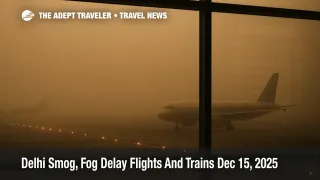
Delhi fog flight delays hit New Delhi on Dec 15, 2025, and the same low visibility pattern is also slowing trains across the capital region. Travelers flying via Indira Gandhi International Airport (DEL) or using New Delhi's major rail stations should expect rolling delays, cancellations, and last minute platform or gate changes. The practical move is to add time, shift to later departures when you can, and avoid tight onward connections that assume everything runs normally.
The Delhi fog flight delays problem is now being amplified by severe smog, creating a compound risk window where visibility drops sharply in the early hours and operational knock on effects can linger well after sunrise.
Reports on Dec 15 show widespread disruption at DEL, including significant cancellation counts, hundreds of delays, and some diversions as the morning bank struggled to move in very low visibility. Delhi's air quality also deteriorated into severe territory, with major outlets reporting readings in the high 400s, which adds a second layer of friction for travelers who end up waiting curbside, on platforms, or in crowded terminals.
The most disruption prone time band is typically pre dawn through mid morning, when fog is thickest and visibility is at its worst. On Dec 15, multiple reports described near zero visibility conditions around the region in the morning hours, with flight operations at DEL forced into low visibility procedures, and airlines issuing advisories to passengers. If you are choosing between a 600 a.m. and a 200 p.m. departure for the next couple of mornings, the later flight is usually the safer bet, even if it arrives later, because it is less exposed to the worst visibility and less likely to be trapped behind a wall of delayed inbound aircraft and crews.
Why Fog At DEL Causes Cascading Delays
DEL can keep operating in low visibility, but not every flight, crew, and aircraft is equally capable of maintaining the same pace when fog is dense. When the airport shifts into low visibility procedures, arrival and departure rates often drop because aircraft need greater spacing, taxi speeds slow, and runway occupancy times increase. Even when your specific aircraft can land in CAT III conditions, you can still be delayed if the inbound rotation is late, if ramp movements slow, or if air traffic flow restrictions build up. Delhi Airport issued an advisory noting operations under CAT III conditions and warning passengers to expect delays and cancellations, which is a strong signal that the morning wave is operating under constraint rather than routine conditions.
Smog makes this worse in two practical ways. First, it increases the likelihood that what begins as a "standard" fog morning turns into a longer low visibility window. Second, it raises the comfort and health cost of disruption, especially for travelers stuck outside terminals, on open platforms, or in long taxi queues. Major reporting on Dec 15 described toxic smog conditions alongside travel disruption, including large scale flight and train delays.
What To Do If You Are Flying Through DEL
Start with waivers and advisories. IndiGo and Air India issued passenger advisories tied to the visibility and smog conditions, and those messages often precede or accompany fee free changes, same day switches, or flexible rebooking options during a disruption window. Check your airline's travel advisory page and your booking in the airline app before you leave for the airport, then check again before you clear security, because the "real" departure time can move several times during a fog morning.
Next, treat airport arrival time as a buffer problem, not just a security line problem. Road approaches can slow when visibility is poor, and terminals can clog when multiple flights slip at once and passengers stack up. If you normally arrive two hours before a domestic departure, consider adding at least another hour during the morning risk band, especially if you need to check bags or if you are traveling on a fare class that requires counter service.
Connections are the hidden trap. A 60 to 90 minute domestic connection that might work on a clear day can unravel quickly when the first leg is delayed and gate changes proliferate. If you must connect same day within India, aim for a longer cushion, and favor single ticket itineraries where the airline is responsible for protection and rebooking. If you built your trip on separate tickets, this is the moment to proactively rework it, because fog disruption can force you into expensive walk up fares if you miss the second check in cutoff.
Finally, be realistic about reroutes. When fog is the binding constraint at DEL, a later departure can be smarter than a complicated same day self transfer. If you have flexibility and the trip is urgent, you can also look at alternative North India gateways, for example Jaipur International Airport (JAI) or Chandigarh International Airport (IXC), but only when you can confirm surface transport is feasible and safe in low visibility, and when the onward flight options actually protect your itinerary rather than create a second fragile connection.
What To Do If You Are Taking Trains In Or Out Of Delhi
Rail disruption in winter fog is often less about cancellations and more about extended running times as trains slow for safety. On Dec 15, reporting described more than 50 trains delayed as fog and smog reduced visibility in the region. The practical move is to assume your arrival time is a range, not a point, and to avoid tight train to flight plans, especially if you were planning to step off a delayed train and head straight to an airport check in deadline.
If you are meeting a driver, booking a hotel check in, or timing a tour pickup, proactively message that your arrival could slip by hours. If your plan includes a same day flight out of DEL after a long distance train arrival, strongly consider shifting the flight later, or building an overnight in Delhi, because winter fog delays can quietly erase the buffer you thought you had.
Looking Ahead For Dec 16 To 18
Forecast messaging from India's weather authorities and major outlets suggests fog risk persists for the next couple of mornings across the broader region, which means travelers should plan for a repeat pattern rather than a one off event. The key is not to guess which specific flight or train will be hit, but to assume the system will be operating below peak efficiency in the early hours, and to buy yourself time, flexibility, and fewer tight dependencies.
For broader India travel context and local planning basics, see Adept Traveler's New Delhi destination guide, and for a recent example of how India aviation disruptions can ripple through hub connections, see our coverage of ash cloud reroutes affecting India and Gulf flights.
Sources
- Toxic smog blankets New Delhi, disrupting travel and plunging air quality to hazardous levels
- Dense fog disrupts ops at Delhi Airport: 61 flights cancelled, 5 diverted
- Dense fog reduces visibility around Delhi airport; Over 60 flights cancelled, 250 delayed
- Delhi Airport issues advisory as dense fog disrupts flight schedule
- Delhi-NCR wakes up to dense fog with near-zero visibility, here's what IMD says
- India Meteorological Department fog update post
- Air quality worsens: IndiGo, Air India issue advisory
- Travel to New Delhi destination guide
- Ethiopia ash cloud reroutes India, Gulf flights