

Goma Airport Closed, DR Congo Security Alerts Rise
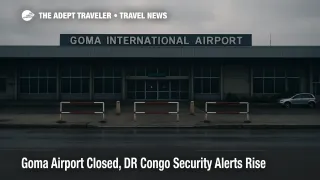
The Goma airport closure is still reshaping travel in the Democratic Republic of the Congo on December 15, 2025, with eastern routes facing severe limits and sudden changes. Travelers headed for North Kivu or South Kivu, including anyone planning to connect through Goma or Bukavu, face a realistic risk of being stranded, rerouted, or unable to move overland safely. In Kinshasa, even travelers far from the conflict zone should plan for volatility, including demonstrations and checkpoints that can slow or block airport access, so buffers and flexible plans matter.
The Goma airport closure is no longer just a regional inconvenience, it is a structural constraint that forces different routings, different insurance assumptions, and a more conservative evacuation plan.
What Changed And Why Travelers Should Care
Canadian travel guidance flags an unpredictable security environment nationwide, with prior violent demonstrations in Kinshasa, and the risk of roadblocks and road closures, including on roads leading to airports, during unrest. The same advisory also says there are currently no flights to or from Goma and Kavumu, Bukavu international airports, which removes two common air access points for eastern itineraries.
Separately, the UN peacekeeping mission reports that Goma airport remains closed, complicating movement and humanitarian access in and around Goma, Democratic Republic of the Congo. For travelers, that translates into fewer viable extraction options, fewer reliable rebooking paths, and more situations where the only remaining choices are to defer travel or to shift the whole trip to a different hub country.
Airports Affected, What Is Still Working, And What Is Not
For Kinshasa arrivals and departures, Kinshasa, N Djili International Airport (FIH) is the primary air gateway, but UK guidance notes enhanced security measures, including vehicle checks and searches, plus the possibility that roads may be blocked and airports could be suspended during heightened tension. Canada also warns that roadblocks may increase, particularly at night, and it explicitly calls out roadblocks and closures affecting airport approaches during unrest.
In the east, Goma International Airport (GOM) is flagged as closed in UN reporting, and Canadian guidance says flights to and from Goma are not operating in the current situation. Bukavu Kavumu Airport (BKY) is also included in the same Canadian note as having no flights to or from the airport. If your itinerary depends on a domestic hop into Goma or Bukavu, assume it can fail at short notice, even if a ticket looks bookable through third party channels.
Overland Alternatives, And Why They Are Not A Simple Fix
When Goma flights are not an option, many travelers look to route through Kigali, Rwanda, then cross overland toward Goma. The problem is that border operations can change quickly: Canada's Rwanda advisory warns that the Goma, Gisenyi crossings could close without notice due to intensifying combat around Goma. UK guidance for the Democratic Republic of the Congo also notes that borders may be closed, and it specifically references the Rwanda land borders at Gisenyi, Goma and Cyangugu, Bukavu.
That means the practical overland alternative is not a guaranteed backup, it is a conditional option that can disappear mid trip. For travelers who cannot avoid the region, the safest planning posture is to treat any land crossing as time sensitive, reconfirm close in, and avoid building itineraries where a single crossing or a single road corridor is the only way out.
How It Works, Why Cities Far Apart Can Share The Same Travel Risk
A common mistake is to treat Kinshasa and the eastern provinces as separate travel stories. In reality, the risks intersect through transportation chokepoints and abrupt security measures. Demonstrations can disrupt traffic and public transport in Kinshasa, and curfews can be imposed without notice. In that environment, the distance between your hotel and the airport can matter more than the flight time, because a single blocked road, an intensified checkpoint pattern, or a sudden restriction can break an otherwise normal departure plan.
For additional context on how to interpret shifting advisory language, and how "reconsider travel" style guidance should change your buffers and contingencies, see Adept Traveler's overview of the travel advisory.
Practical Trigger Points To Defer, Reroute, Or Exit
Travelers should treat several conditions as decision triggers, not just "monitor and see" moments. If advisories start emphasizing airport access disruption, roadblocks, or potential airport suspensions, that is a sign to move flights earlier in the day, avoid same day connections, or postpone entirely. If your routing depends on Goma air service, or a single border crossing near Goma, a closure notice or an escalation report should be treated as an immediate reroute requirement, not a minor delay risk.
Insurance and evacuation assumptions should also be updated before you move. The U.S. State Department notes limitations on the U.S. government's ability to provide emergency services in parts of the country and frames travel to certain areas as a do not travel scenario due to crime, civil unrest, kidnapping, and armed conflict. That is a practical warning that even well resourced travelers may not be able to count on rapid consular help, so medical evacuation coverage, exclusions for conflict zones, and "proof of safe exit routes" become planning essentials.
If you want a nearby example of how protest risk and security operations can translate into rolling disruptions for travelers, Adept Traveler covered planning tactics in Tanzania Unrest, What Travelers Should Do Now. For a reminder that the Democratic Republic of the Congo can also see non security shocks that affect movement and medical assumptions, see DRC Ebola Outbreak In Kasai Ends.
Sources
- Travel advice and advisories for Democratic Republic of Congo (Kinshasa).
- UN peacekeeping update referencing continued closure of Goma airport.
- UK Foreign travel advice, Democratic Republic of the Congo.
- U.S. State Department travel advisory, Democratic Republic of the Congo.
- Travel advice and advisories for Rwanda.
- SKYbrary, Kinshasa, N Djili International Airport (FIH).
- SKYbrary, Goma International Airport (GOM).
- SKYbrary, Bukavu Kavumu Airport (BKY).