

Hurricane Melissa, Jamaica Tourism Reopens December 2025
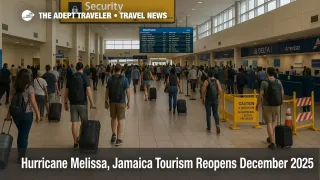
Hurricane Melissa Jamaica tourism reopening is now framed around a clear return to operations message for Jamaica, with December 15, 2025, serving as the key line travelers have been waiting for. This matters most for winter sun travelers, holiday period visitors, cruise planners, and anyone with nonrefundable flight and resort packages who needed something firmer than informal reopening chatter. The practical play is to keep trips on the calendar if core suppliers confirm they are operating, but to add buffer to flights and transfers, and to reconfirm every moving part before leaving home.
The Hurricane Melissa Jamaica tourism reopening shift is that "open" is being communicated at the destination level, which reduces broad cancellation risk, but does not eliminate neighborhood level friction for specific hotels, roads, and tours.
Air access is the easiest piece to verify, and Jamaica's official travel alerts page says full operations have been restored at the island's three international gateways, Sangster International Airport (MBJ) in Montego Bay, Norman Manley International Airport (KIN) in Kingston, and Ian Fleming International Airport (OCJ) near Ocho Rios. Jamaica's transport ministry has also said the airports managed by the Airports Authority of Jamaica have returned to normal operations, while noting that Sangster sustained the most damage and that full restoration work there is expected to run into February or March 2026. For travelers, that combination usually means flights are moving again, but some areas of the terminal complex may still be behind temporary walls, operating with shifted passenger flows, or running with construction related pinch points.
Getting around the island is the second decision layer, because "roads are open" and "your transfer will be smooth" are not the same thing. Jamaica's travel alerts guidance says most main roads used by tourists experienced limited damage, and that agencies and private companies are working to restore utilities in resort areas. That is a positive signal for Montego Bay, Ocho Rios, and Kingston itineraries, but travelers should still treat longer intercity transfers as higher variance than normal, especially if plans rely on night driving, tight check in times, or same day excursions stacked back to back.
Hotels and attractions are where travelers need the most disciplined reconfirmation loop. The country can be open while a specific property is still in a phased restart, running a limited room inventory, or holding back some amenities. The official guidance is blunt about this, it encourages travelers to work directly with their hotel, booking channel, or travel advisor for the specifics of reservations and changes. That aligns with what typically happens after major storms, the headline reopening date stabilizes air access and broad visitor services, but the on the ground reality can still vary by parish, by corridor, and by brand.
Background
A "tourism reopening" after a hurricane is rarely a single switch flip. Airports can reopen quickly once runways, navigational aids, fueling, and staffing are stable, but the visitor experience depends on a wider chain, power and water reliability, road access, staff housing and transportation, supply deliveries, and whether tour operators can safely run routes. This is why a traveler's best indicator is not one announcement, it is a set of confirmations across flights, lodging, and ground services, all tied to the same travel dates.
Health and safety also deserve a sober check, even when resorts are operating. Jamaica's official travel alerts page notes heightened surveillance tied to suspected leptospirosis reports following the storm, and it advises visitors to avoid floodwaters and seek care if they develop flu like symptoms after exposure. Independent reporting has also flagged leptospirosis concerns in the post hurricane environment, which is consistent with the general risk profile after flooding events. The traveler takeaway is not panic, it is basic risk control, do not wade in floodwater, do not treat pooled water as a novelty, and do not ignore symptoms after exposure.
A simple reconfirmation checklist usually prevents the most common December travel failures. Travelers should confirm flight status and baggage policies with the airline, confirm the hotel's reopening phase and what amenities are actually running, confirm airport pickup instructions and transfer timing with the ground operator, and confirm whether top priority excursions are operating on the exact day of the booking. If any one of those suppliers cannot confirm, travelers should shift the plan rather than hoping the missing piece resolves on arrival.
Travel insurance documentation matters more than usual in the reopening window, because partial service can create gray areas in claims and supplier refunds. The clean approach is to save supplier emails that confirm closures or service limits, keep itemized receipts for extra nights, meals, and replacement transport, and take timestamped photos of posted notices if a service is unavailable on arrival. Travelers who booked with a card that includes trip coverage should also pull the benefits guide before travel, because the documentation requirements are often strict, and missing paperwork is the fastest way to lose a valid claim.
For Adept Traveler readers who have been tracking Hurricane Melissa coverage already, this update is best understood as a planning green light, not an all clear. Jamaica is telling the market it is ready to host visitors again, airports and seaports are operating, and the government is communicating forward momentum. The right traveler posture is to proceed, but to keep itineraries modular, avoid tight same day connections, and verify each supplier in writing so a single weak link does not break the trip.
Related coverage on Adept Traveler includes Flights Resume In Jamaica After Hurricane Melissa, Dec 2025 and Jamaica Tours Reopen After Hurricane Melissa Dec 2025. For the structural issue behind many post storm booking disputes, see the Travel Insurance guide.
Sources
- Jamaica Travel Alerts, Information for Travellers
- Transport Sectors Back to Normal Operations After Hurricane (Jamaica Information Service)
- Minister Bartlett Targets Full Tourism Restart by December 15, 2025 (Jamaica Information Service)
- Airports Authority of Jamaica, Airports Overview
- AP, Dominican Republic authorizes more flights for tourists rerouted by Hurricane Melissa