

Social Media Handles in U.S. ESTA Proposal
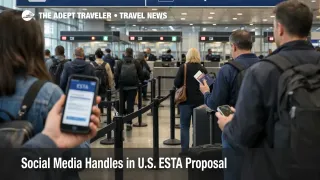
U.S. Customs and Border Protection is proposing changes to the Electronic System for Travel Authorization (ESTA) application that would make social media history from the last five years a mandatory data element for Visa Waiver Program travelers. The proposal was published as a public comment notice and is not yet a live requirement for applicants. Travelers with United States trips in early 2026 should plan for longer application time, apply earlier than usual, and keep trip components flexible until authorization is approved.
In plain language, the ESTA social media handles proposal would add another pre departure failure point, because an ESTA is a gating item for travel under the Visa Waiver Program, and more required fields create more chances for mismatches, omissions, or delays. That friction tends to show up first as slower pre trip paperwork, then as airline call center volume, then as airport counter escalations when a traveler shows up without a clean authorization on file.
The same notice also describes a wider set of "high value data fields" that CBP says it may add to ESTA when feasible, including phone numbers used in the last five years, email addresses used in the last ten years, and expanded family and business contact information. CBP also discusses a shift toward a mobile only ESTA system, which matters for travelers who currently rely on desktop workflows, third party assistance, or shared family devices.
The public comment deadline in the notice is February 9, 2026. Until a final decision is made, travelers should treat this as a proposed expansion, not a rule that changes what they must enter today.
Who Is Affected
This proposal primarily affects citizens of Visa Waiver Program countries who need ESTA approval before boarding for tourism or business visits, including travelers who plan to transit through United States airports on a single ticket. It also affects families and group itineraries, because one incomplete application can break a shared departure plan and force expensive last minute changes across flights, hotels, tours, and ground transfers.
Travelers who are most exposed to friction are those who have used multiple usernames over time, travelers who have changed phones, emails, or identity details across accounts, and travelers who book close to departure, where there is little buffer for a pending authorization. Business travelers can feel the impact quickly as well, because the cost of a missed meeting is often larger than the cost of a new ticket.
Industry groups are already signaling concern about inbound demand and traveler confidence. U.S. Travel Association warned that requiring social media history from Visa Waiver Program travelers could create unanswered questions about what information is needed and could have a "chilling effect" on travel to the United States.
What Travelers Should Do
Travelers with upcoming Visa Waiver Program trips should treat ESTA as an early task, not a day before departure chore. If a traveler does not already have an approved authorization, they should build in more lead time than they think they need, because decisions can take up to 72 hours, and any added data fields could stretch completion time and increase error risk.
For trips that fall near early 2026 milestones, travelers should decide how much uncertainty they can tolerate before locking in nonrefundable components. If the itinerary has a tight window, a complex self transfer, or a high penalty fare, it is smarter to switch to flexible fares or refundable hotel rates until the traveler has an approval in hand, rather than betting the entire trip on a smooth authorization path.
Over the next 24 to 72 hours, travelers and advisors should watch for clarifying guidance about what "social media" means in practice, for example whether it is limited to identifiers, which platforms are in scope, and how the data will be validated. The most practical monitoring sources are official updates tied to the Federal Register notice, plus reputable travel industry briefings that translate changes into check in and rebooking realities. For a broader view of how electronic permission systems can shift from soft friction to hard denied boarding, see UK ETA Enforcement From February 25 2026 For Visitors.
How It Works
ESTA is the advance screening and travel authorization used for Visa Waiver Program travel, and it is a front end control that can stop a trip before it starts if an application is missing, incomplete, or not approved in time. USA.gov advises that it may take up to 72 hours to learn whether a traveler is authorized under ESTA, and that an approved ESTA is generally valid for two years, or until the passport expires, whichever comes first.
The current change is moving through the Paperwork Reduction Act process, which requires public notice and submission to the Office of Management and Budget for review and approval. In this case, CBP published the notice to obtain comments, set a deadline for submissions, and described the specific data elements it wants to add, including mandatory social media history for the last five years and other expanded biographic fields.
Operationally, the disruption risk is less about what happens at the border booth and more about what happens upstream in the travel system. A longer authorization form can compress booking timelines, push more travelers into pending status near departure, and increase airline check in exceptions, which then cascades into missed connections, rebooking queues, and unplanned hotel nights. The effect is amplified during peak travel waves, when seats are scarce, and one missed flight can unravel an entire itinerary. Travelers who want context on the broader trend toward higher friction entry paperwork for the United States can also review Las Vegas Visitor Slump As New Visa Fee Starts.
Sources
- Federal Register, "Agency Information Collection Activities, Revision, Arrival and Departure Record (Form I 94) and Electronic System for Travel Authorization," December 10, 2025 (PDF)
- U.S. Travel on New Foreign Traveler Social Media Proposal (December 15, 2025)
- Visa Waiver Program and ESTA application, USA.gov (last updated November 13, 2025)
- Visa Waiver Program, Travel.State.Gov