

Seychelles Heavy Rain Alert Hits Mahe, Praslin, La Digue
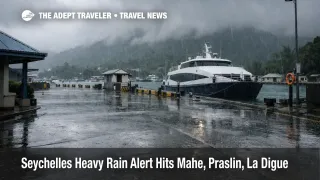
A Seychelles heavy rain alert is in effect after the Seychelles Meteorological Authority updated a yellow level bulletin on December 16, 2025, for Mahe, Praslin, and La Digue. The advisory warns of moderate to heavy showers with thunderstorms, with temporary flooding in low lying areas, landslides, and poor visibility over mountainous zones, and it was valid until 10:00 p.m. Seychelles time on December 16.
The operational change for travelers is not just the rain, it is the timetable risk. When downpours hit fast, Mahe's coastal access roads can pond, hillside runoffs can deposit debris, and visibility on ridge routes can drop quickly. That combination is what turns a normal 20 minute transfer into a missed ferry check in, a lost tour slot, or a rushed airport run, especially for travelers trying to string Mahe, Praslin, and La Digue together in a single day.
This update matters because the alert headline references Mahe plus inner and outer islands, and the posted coverage list explicitly includes Mahe, Praslin, and La Digue. For itinerary planning, that broad framing raises the odds that disruptions are not isolated to one island, which is exactly when inter island plans fail first.
Who Is Affected
Travelers currently on Mahe, Praslin, or La Digue are the primary audience, especially anyone with a same day sequence of hotel checkout, ferry departure, and onward transfer. Day trippers headed for La Digue from Mahe or Praslin are exposed because the trip is both time sensitive and weather sensitive, and missed sailings can push you into a later departure or an unplanned overnight.
Arriving international passengers who plan to connect quickly from Seychelles International Airport (SEZ) to the Mahe ferry jetty are also exposed. A widely used planning baseline is 45 to 60 minutes for immigration and baggage, then roughly 15 to 20 minutes by taxi to the port, and you are expected at the jetty at least 30 minutes before departure, with check in ending 15 minutes before departure. Heavy rain breaks that baseline by slowing road traffic, reducing visibility, and increasing localized bottlenecks, which is why short connections that feel "fine on paper" become unreliable during alert conditions.
Guests staying in low drainage districts on Mahe, including parts of Pointe Larue near the airport corridor, should take the flooding warning literally. Past heavy rain reporting from Pointe Larue describes locations where flooding is common during intense rainfall, and it also documents flooding issues in areas opposite the international airport. You do not need a dramatic "storm headline" for those patterns to reappear, you just need sustained heavy showers.
What Travelers Should Do
If you are moving today between islands, treat every transfer like it can slip by one full departure cycle. Build your plan around the next available ferry or the next workable flight, not the one you hope to catch. That means checking the latest meteorological updates before you leave your accommodation, and departing earlier than usual for the port or the airport whenever you see thunderstorms building over the hills.
If you are deciding whether to rebook versus wait, use a simple threshold. If missing your ferry would cause you to miss an international flight, a wedding, a liveaboard, or a prepaid tour you cannot shift, do not gamble on a tight connection, move to an earlier departure, or add an overnight buffer on the island you are currently on. If your only consequence is a later hotel check in, waiting can be reasonable, but only if you have flexible check in terms and a backup plan for dinner, transport, and luggage storage.
Over the next 24 to 72 hours, monitor three things, the next alert update from the Seychelles Meteorological Authority, the road reality on your specific corridor, and the status of your inter island transport. Heavy rain and flooding are a known seasonal risk during the monsoon period, and they can damage roads and trigger landslides, so do not treat this as a brief inconvenience if the pattern persists. Also, reschedule ridge hikes, waterfall routes, and exposed viewpoints first, those are the activities most directly affected by poor visibility, runoff, and slope instability.
For related weather disruption playbooks, see Oman Heavy Rain Alert, Flash Flood Risk Dec 16 and UAE Rain, Rough Seas Raise Dubai Airport Delay Risk.
Background
Seychelles weather disruptions propagate through the travel system faster than many visitors expect because the "connectors" are shared and time boxed. On Mahe, the same main corridors carry airport traffic, port traffic, tours, staff commuting, and hotel supply runs, so a localized flood pocket or a reduced speed section quickly becomes a queue that affects multiple layers at once. When that happens, taxis and private transfers get scarce, tours retime or cancel, and the first domino is usually a missed departure cutoff rather than a full shutdown.
Inter island itineraries amplify the impact. Ferries are scheduled assets with fixed boarding windows, and travelers commonly plan them immediately after arrival or immediately before departure. When rain slows road access into Victoria and increases variability on the drive from SEZ, the stress concentrates at the jetty check in cutoffs described in common planning guidance. Once one ferry leg slips, your second leg, for example Praslin to La Digue, is now exposed to knock on timing issues, and your hotel inventory and excursion schedule can collapse into a rebooking cascade.
The alert's mention of landslides and poor visibility is not theoretical for Seychelles. Recent experience discussed by UNDP notes that heavy rainfall events have caused road damage, flooding, and landslides in the country, which is why authorities emphasize vigilance during intense rain periods. That is the practical reason travelers should avoid late day ridge crossings, keep buffers between activities, and prioritize safety over "salvaging" an itinerary that depends on perfect timing.
Sources
- Moderate to heavy showers with thunderstorms expected over Mahe, Inner and Outer Islands valid till 2200LT 16th December 2025
- Seychelles Travel Advice & Safety | Smartraveller
- FAQ - Tickets, Luggage & Travel Tips | SeyFerry
- Minister Meriton visits areas affected by heavy rains at Pointe Larue -Archive -Seychelles Nation
- And then the rains came... | United Nations Development Programme