

Tarifa Tangier Ferries Canceled in Gibraltar Winds
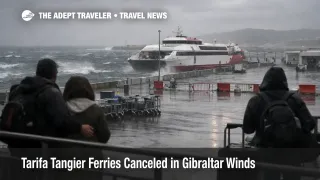
Tarifa Tangier ferries canceled after strong westerly winds roughened the Strait of Gibraltar, halting December 16, 2025 sailings between the Port of Tarifa, Spain, and Tangier, Morocco. Foot passengers, vehicle travelers, and day trippers relying on the fast Tarifa corridor faced the highest disruption risk, and tight onward plans such as Morocco rail, tours, and hotel check ins were most likely to break. Treat Tarifa as closed until operators restart service, and pivot early to Algeciras routes or flights only if you can still protect your connection buffers.
The Tarifa Tangier ferries canceled disruption matters because when Tarifa shuts down, demand compresses into fewer crossings, queues grow quickly, and delays ripple into transfers and connections on both sides of the strait.
Tarifa Tangier ferries canceled: What Changed
Operators suspended Tarifa to Tangier Ville departures on December 16 as a poniente wind event drove rough seas in the Strait of Gibraltar, and local reporting also flagged delays on some Algeciras to Tangier Med departures while Algeciras to Ceuta service continued operating. The Port of Tarifa also warned that all departures on the Tarifa to Tangier City line were canceled for the day.
The practical takeaway is that Tarifa and Algeciras do not fail the same way. The Tarifa route is popular because it can deliver passengers into central Tangier quickly, but it is also more sensitive to wind driven sea state and port safety limits. Algeciras has more berth capacity and multiple routes, which can keep some services running, but "running" can still mean late departures, early boarding closure, and missed onward plans if you treat the timetable as firm. If you need a reality check beyond social posts, the Algeciras Bay Port Authority's live passenger departures board is one of the quickest ways to spot "boarding closed" status or rolling delays.
For refunds and rebooking, rules and workflows differ by operator and by where you bought the ticket. Baleària's published guidance says that when a trip is canceled due to adverse weather or force majeure without a travel alternative, it offers a free ticket change or a full refund, and it stresses that you should provide a mobile number for disruption messaging. If you booked through an agency, expect the agency to handle changes, and if you booked direct, use the operator's manage booking tools or customer service channels rather than showing up hoping to standby onto a different port.
Who Is Affected
Most directly affected are travelers holding Tarifa to Tangier Ville tickets for December 16, particularly foot passengers who planned to arrive at Tangier Ville and continue immediately into the city. Many itineraries use Tarifa precisely because it avoids a long post arrival transfer, so even a single day suspension can collapse a carefully timed day trip, a hotel check in window, or a rail connection that only runs a few times per day.
Vehicle travelers and overlanders are also exposed because Tarifa cancellations push cars and motorcycles into Algeciras sailings, and vehicle handling is where the system clogs first. A port that is "operating" can still strand you if check in closes early, if the sailing you need reaches capacity, or if a late crossing pushes you past Morocco side customs and comfortable daytime driving limits.
A third group is travelers connecting beyond Tangier, including those heading toward Rabat, Morocco, Casablanca, Morocco, or Marrakech, Morocco, or meeting a private driver or a guided tour pickup. Even when Algeciras to Tangier Med runs, Tangier Med is not central Tangier, so the itinerary becomes ferry plus transfer plus onward travel, and each added leg increases variance when weather forces late running departures.
The ripple also reaches travelers going the opposite direction, Morocco to Spain, because late or canceled inbound sailings can push return trips into the next available departure window, which is exactly when terminals get crowded and standby inventory gets tightest.
What Travelers Should Do
If you are crossing within the next 24 hours and you are already in Tarifa or Algeciras, treat the first update you see as provisional and keep checking until your boarding status is confirmed. If Tarifa is canceled, pivot early, because the longer you wait the more likely Algeciras departures will be oversubscribed, and build at least several hours of buffer for border formalities and last mile transfers on arrival.
If you have a hard deadline in Morocco, your decision threshold should be your remaining buffer before your next fixed commitment. Once the buffer drops below what you would normally allocate for a late ferry plus border processing plus ground transfer, it is safer to move the rail ticket or the hotel night rather than gamble on a same day recovery, and if flying is feasible, lock the seat before you cancel the ferry, because short haul inventories can disappear quickly in a weather event.
Over the next 24 to 72 hours, monitor wind and coastal warnings for the Strait region, and watch for a pattern of multiple sailings operating on time, not just a single restart. If you rebook, keep receipts for meals, taxis, and lodging, and save screenshots of the cancellation notice, because that documentation is what you will need for insurance reimbursement or a refund dispute.
How It Works
Strait of Gibraltar disruptions propagate through a tight, capacity constrained system. The first order effect is cancellation or metered departures at the origin port, which immediately creates a queueing problem, passengers rebook into fewer slots, vehicles stack up, and boarding control can close earlier than travelers expect when staff prioritize safe throughput.
The second order ripple shows up on connections and transfers, not just on the water. When sailings depart late, arrivals cluster, which spikes demand for taxis, shuttles, and hired drivers in a short time window, and it can overwhelm the practical capacity of passenger processing. On the Morocco side, a Tangier Med arrival adds a transfer leg that can break timed rail plans and scheduled tour departures, while on the Spain side, port area hotels in Tarifa and Algeciras can tighten overnight as stranded travelers stop waiting for "one more update" and decide to stay put.
The third order ripple is substitution. Some travelers switch to flights, often routing via larger Moroccan gateways such as Casablanca, which can compress seats and raise prices on the next available bank, and it can change ground transport demand as passengers arrive outside their original schedule. This substitution effect is why early decisions matter, the longer you wait to pivot, the more you are competing with everyone else who has just been forced into the same choice.
Sources
- El temporal obliga a suspender las conexiones con Tánger desde el puerto de Tarifa | Cadena SER
- Las navieras suspenden sus conexiones con Tánger desde el puerto de Tarifa por el temporal | Europa Press
- Passenger Information | Algeciras Bay Port Authority
- Puerto de Tarifa (@puertotarifa) | X
- What happens if my trip is cancelled for reasons beyond my control? | Baleària
- El tiempo hoy 16 de diciembre: avisos amarillos en 16 provincias y Ceuta | RTVE