

25N51E Doha Stadium 974 Festival Tickets January 30 2026
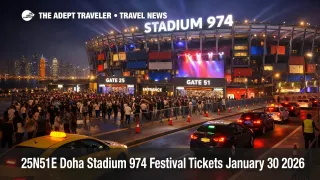
25N51E Music Festival Doha is scheduled to return at Stadium 974 in Doha, Qatar, on January 30, 2026, with Visit Qatar listing a 500 p.m. to 100 a.m. run time and an 18 years and above entry rule. The announcement matters most for international fans flying in for a single night event, where ticket availability, hotel pricing, and late night transport can tighten quickly. If you are planning a festival weekend around the show, the practical next step is to lock in tickets early, then build a conservative plan for getting to Stadium 974 and leaving after closing.
The 25N51E Music Festival Doha update is that the 2026 edition is now on sale for a fixed date and venue, with a published time window and initial artist bill that travelers can plan around.
Visit Qatar's event listing highlights headliners Calvin Harris, Alesso, and Afrojack. Local reporting around the announcement also describes a two stage setup that adds NTO and Ben Böhmer as part of the curated electronic program, and Platinumlist's ticket page likewise lists those names in the event lineup. Travelers should expect additional artist announcements to change crowd patterns, because later adds often shift arrival times and create bigger peak surges for specific sets.
Who Is Affected
International visitors with flights into Hamad International Airport (DOH) are the most exposed to timing risk, especially if they are trying to arrive and attend the same night, or leave Doha the morning after. A one night festival concentrates demand into a narrow window, so delays on arrival, slow immigration lines, or a late hotel check in can translate directly into missed entry windows or rushed transfers.
Travelers staying near Doha's waterfront, the Ras Abu Aboud area, and central districts should also plan for localized traffic management and ride hail surge pricing around the stadium precinct. Stadium 974 is designed for major crowd flow, but the surrounding road network can still bottleneck when many attendees arrive at once, then depart in the same 20 to 30 minute band after the final set.
Residents and connecting passengers are indirectly affected through second order ripples. If a large share of festival attendees rely on late evening arrivals and post show rides, taxis and app based cars can get pulled toward the stadium area, which reduces availability for routine trips across the city. Hotels can see a short, sharp spike in weekend demand, which can raise rates for travelers who are not attending the festival but are visiting Doha for business, a cruise turnaround, or a stopover.
What Travelers Should Do
Secure tickets first, then plan your transfers around the venue's access points rather than assuming you can decide on the day. Visit Qatar routes ticket purchases through Platinumlist, and the ticketing page lists doors opening at 5:00 p.m., which is useful for deciding how early you need to leave your hotel, and for setting a realistic meetup plan if your group is arriving on different flights.
Use a buffer based decision threshold for rebooking versus waiting if you are flying in on January 30, 2026. If your scheduled arrival into Hamad International is less than about five hours before you want to be at the stadium, the risk of a stressful chain of small delays rises quickly, especially if you have checked bags, or if you are relying on rideshare at peak road periods. In that scenario, an earlier flight, an overnight arrival the day before, or a hotel closer to central Doha is often the smarter trade than trying to thread a tight same day timeline.
Over the 24 to 72 hours before the festival, monitor three things that tend to drive real world outcomes: any updated entry rules or set time guidance, any announced transport arrangements around Stadium 974, and road and weather conditions that could slow surface transfers. If rain is in the forecast, road pooling can slow airport and city transfers, and Qatar Rain Watch, Extra Time For Doha Airport Transfers is a useful checklist for buffers and the metro fallback.
How It Works
A single night, high demand event creates operational pressure in predictable layers. At the source, Stadium 974 concentrates arrivals into a short pre show window, where security screening, ticket scanning, and crowd control are the main throughput constraints. That first layer then pushes demand outward into transport, because each attendee still has to arrive from a hotel, a restaurant, or the airport, and most of those trips converge on the same set of approach roads and drop off points.
The next layer is network effects across Doha's mobility system. When ride hail supply is pulled toward the stadium, the rest of the city can experience longer waits, and the surge effect can persist after closing as drivers cycle through pickup lanes and traffic holds. Rail is often the most predictable alternative for timing, because it avoids road bottlenecks, but it can also see platform crowding at peak exit times if many attendees choose the same departure band.
The final layer is traveler behavior and inventory. When a lineup draws international fans, hotels can sell through faster, and flight loads into DOH can become less forgiving for last minute changes. That is why the best planning approach is to treat the festival as an anchor, then build slack around it, earlier arrival, a realistic transfer plan, and a late night exit strategy that does not depend on perfect timing.