

Coral Adventurer Detained After PNG Grounding
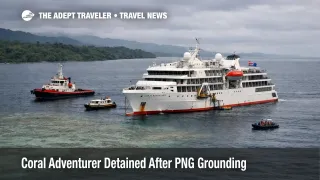
Coral Adventurer detention PNG is the new escalation in an expedition cruise disruption off Lae, Papua New Guinea, after Australian authorities detained the Australian flagged vessel under the Navigation Act following the grounding. Passengers from the cancelled voyage, plus travelers booked on the ship's next departures that rely on tight air positioning through Cairns and Papua New Guinea, are the most exposed. Travelers should treat this as a stop in the ship's recovery timeline, lock down written cancellation documentation, protect return flights, and monitor regulator and operator updates before committing to replacements.
The change that matters for trip planning is that detention is a formal regulatory constraint, not just a logistical delay. The Australian Maritime Safety Authority said it detained Coral Adventurer on December 29, 2025, citing reasonable suspicion about seaworthiness after the grounding, and concerns tied to implementation of the vessel's Safety Management System under the International Safety Management Code. Separately, the Australian Transport Safety Bureau opened an investigation into the grounding, reporting the ship grounded at about 5:25 a.m. local time on December 27, 2025, off the Finschhaffen Coast east of Lae, and that investigators will publish a preliminary report in about two months.
Media reporting through December 30 indicates passengers were moved off the ship and routed toward onward flights, while the vessel awaited inspections and next steps after refloating efforts. The operational reality for travelers is that even if the ship is no longer on the reef, detention can keep it from resuming passenger service until inspections, documentation, and any required corrective actions are completed.
For background on the initial grounding and the immediate repatriation decision tree, see Lae PNG Grounding Hits Coral Adventurer Expedition Cruise.
Who Is Affected
Passengers from the disrupted Papua New Guinea sailing are the first group affected, because cruise cancellation typically forces same week flight changes, missed fixed time events, and added hotel nights in places with limited inventory. Travelers routed via Nadzab Tomodachi International Airport (LAE) and Cairns Airport (CNS) face the most friction because limited frequencies mean disruption driven rebookings can consume remaining seats quickly, especially when multiple parties, including the ship operator, insurers, and airlines, are trying to move people on similar routings.
Travelers booked on the ship's next departures are the second group at risk, even if they are not currently in Papua New Guinea. Expedition cruise schedules are tightly sequenced, and a ship that is detained for inspections can miss its turnaround window, trigger provisioning and fuel delays, and force crew rotations to slip. That cascades into last minute itinerary changes, late embarkation, substituted ports, or full voyage cancellations, and it can also pull capacity out of nearby small ship alternatives that passengers try to switch into.
Travel advisors, and anyone traveling on separate tickets, should treat the detention as a signal that schedule reliability is not yet back. Separate ticket travelers face a compounded risk because a missed cruise embarkation can strand them with limited same day flight options, and with weaker protections than a single, packaged itinerary.
What Travelers Should Do
Start by collecting documentation and stabilizing your transport. Ask Coral Expeditions for a written statement that confirms the voyage cancellation, the reason for disruption, the date and place you were directed to disembark, and what expenses they will, and will not, cover. If you are rebooking flights, keep receipts for hotels, meals, and local transport, and take screenshots of airline schedule changes and rebooking options while inventory is visible.
Use clear decision thresholds for whether to wait or rebook. If you must be home by a fixed date, or if your return involves a long haul connection bank, rebook as soon as you have a confirmed onward routing, because seat inventory from regional gateways can disappear quickly. If you are flexible by 24 to 48 hours and you are protected on a single airline ticket, waiting for airline reaccommodation can be reasonable, but only if you have a realistic hotel plan and you are not relying on a same day cruise, tour, or event on arrival.
Over the next 24 to 72 hours, monitor three streams for real restart signals. First, look for updates from the Australian Maritime Safety Authority on whether the detention remains in place. Second, watch the Australian Transport Safety Bureau's investigation page for confirmed milestones. Third, track the operator's schedule and guest communications for specific sailing by sailing decisions, not general statements. If you are routing through Australia on short notice, confirm you have the right authorization before travel using Australia Entry Requirements For Tourists 2025 2026.
How It Works
Detention is an enforcement tool used when a regulator believes a vessel should not proceed to sea until safety and compliance concerns are addressed. In this case, AMSA said it detained Coral Adventurer under the Navigation Act 2012 based on suspicion the vessel may not be seaworthy after the grounding and that it may be substandard due to Safety Management System implementation concerns. Practically, that means the ship's return to service depends on inspections, documentation, and any corrective actions agreed among the operator, the vessel's classification society, and relevant authorities, and those steps often take longer than passengers expect because they are sequential.
The travel system ripples extend well beyond the ship itself. The first order effect is straightforward, the voyage is interrupted, landings are cancelled, and passengers must be moved from remote coastal waters into the nearest workable aviation and lodging nodes. The second order effects show up fast in aviation and hotels, because Lae and other Papua New Guinea gateways have limited spare capacity, and rebooking waves can consume remaining seats and rooms, raising costs and forcing longer routings via Port Moresby or Australian hubs. A third layer appears in the ship's forward schedule, because a detained vessel can miss its next provisioning and crew change windows, which pushes the disruption into later departures, creates knock on cancellations, and tightens availability across other expedition cruise options in the region.
For travelers, the most important mindset is that "refloated" is not the same as "returned to service." The detention and investigation timelines, plus any environmental or hull assessment requirements, are what will decide when the ship can reliably operate passenger itineraries again.