

Hawaii 11% Cruise Tax Starts Jan 1 After Court Ruling
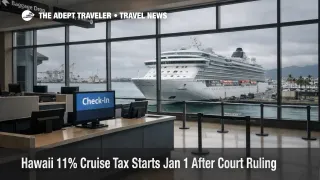
Hawaii's 11% cruise tax will take effect on January 1, 2026 after a federal judge in Honolulu, Hawaii refused to block the law. Cruise passengers on itineraries that call at Hawaiian ports, plus travel advisors pricing those sailings, should expect higher all in fares or a new tax line item tied to the time a ship spends in the islands. For trips that are still flexible, the practical next step is to confirm how your cruise line will collect the charge, then build a cost buffer before you lock in flights, hotels, and shore tours.
The Hawaii 11% cruise tax is now scheduled to start as planned, which means the cost of many Hawaii port calls can rise even as the legal fight continues on appeal.
The ruling came in a lawsuit brought by Cruise Lines International Association (CLIA) and other plaintiffs, with the U.S. federal government supporting the challenge. U.S. District Judge Jill A. Otake denied the request for a preliminary injunction that would have paused enforcement while the case proceeds, and Hawaii's attorney general said the state will keep defending the law.
Who Is Affected
Cruise passengers are most exposed when their voyage includes more days docked at Hawaii ports, because the tax is calculated using the percentage of voyage days a ship is docked in the state compared to the total voyage length. That means a long Pacific itinerary with one Hawaii stop can see a smaller proportional hit than an itinerary that spends several days calling the islands.
The tax applies to "cruise fares," defined in the law as the total amount paid for the cabin plus mandatory fees for shipboard services, facilities, meals, and onboard entertainment, while excluding optional charges like excursions beyond the mandatory amounts. For travelers, that definition matters because it signals which parts of your cruise price are likely to be in the taxable base.
Travel advisors and anyone comparison shopping across sailings should also watch for county level differences. Hawaii's framework allows counties to impose surcharges of up to 3% on top of the state rate, and some counties already levy that surcharge for land based transient accommodations, which could affect how cruise calls in different counties are taxed and displayed.
Shore side businesses that depend on cruise calls, including provisioning and tours, are indirectly affected because higher all in cruise costs can reduce demand, shift spending patterns, or push travelers toward fewer paid activities on port days. That is one reason the case has drawn attention beyond cruise lines themselves.
What Travelers Should Do
First, pull up your cruise booking confirmation and invoice, and look for any Hawaii specific tax or transient accommodations tax line item, plus any notes about taxes being estimated or subject to change. If your sailing includes Hawaii port calls on or after January 1, 2026, ask the cruise line or your advisor whether the tax will be collected at final payment, added later as an adjustment, or baked into a repriced fare for new bookings.
Second, set a buffer that matches your exposure. Because the charge is prorated by days docked in Hawaii, travelers with multiple island calls should assume a larger swing than travelers with a brief stop. If your trip plan includes separate ticket flights, a same day embarkation, or a tight post cruise flight, consider adding an extra night before and after the cruise rather than trying to "save" money with a tight schedule, because disruption costs can easily exceed the tax difference.
Third, decide what would make you rebook versus wait. If a small price increase breaks your budget, the cleanest alternative is often a different itinerary pattern, either fewer Hawaii port days, a different sailing season, or a route that swaps Hawaii for another stop on the same ship repositioning. If you can absorb the cost, the key is to monitor your cruise line's implementation details over the next 24 to 72 hours, including how it appears in price breakdowns and whether any county surcharges are itemized or bundled.
Background
Hawaii's transient accommodations tax is a state levy on the gross rental proceeds derived from furnishing transient accommodations, and Act 96 of 2025 expanded how that framework applies by bringing cruise ships into the same general tax scheme used for hotels and short term rentals. For cruise ships, the statute imposes an 11% tax on gross rental proceeds derived from cruise fares, prorated by the share of voyage days docked at Hawaii ports, and it also subjects cruise operators to related requirements such as a registration fee and certain notice and disclosure rules.
The lawsuit argued that the cruise portion of the law conflicts with constitutional and federal protections related to vessel taxation and maritime commerce, and sought an emergency pause before the January 1, 2026 start date. Judge Otake declined to grant that extraordinary relief, and Hawaii officials say the Green Fee revenue is intended to support environmental stewardship, climate resilience, and sustainable tourism.
Even when a policy change is "only" about taxes, it propagates through the travel system. At the source, cruise lines must update pricing, invoicing, and compliance workflows, and those changes often land unevenly across distribution channels, including direct bookings versus agencies. Next, itinerary economics shift, because port intensive schedules become more expensive than "drive by" calls, which can influence how lines allocate ships, how long they stay in port, and how aggressively they sell shore programs. Downstream, travelers adjust pre cruise and post cruise stays, and that can change hotel demand patterns near the cruise terminal, as well as flight demand into the islands, especially during peak holiday and winter escape periods. For cost context on how currency and pricing changes can stack across a trip, see U.S. Dollar Outlook and Travel Impact for 2025.
For another example of how destination fees can change trip math quickly, see Bucharest Tourist Tax Adds 10 Lei Nightly Fee 2026.
Sources
- 2025-102 COURT DECISION ALLOWS ACT 96 GREEN FEE TO TAKE FULL EFFECT ON JANUARY 1
- Opinion and Order, Cruise Lines International Association Inc. v. Suganuma (Dec. 23, 2025) (PDF)
- Hawaii's new tourist tax survives legal challenge, set to take effect soon
- Federal judge upholds Hawaii's new climate change tax on cruise passengers
- Federal Court Upholds Hawaii Tax on Cruise Passengers