

Crans-Montana Bar Fire Disrupts Resort Stays
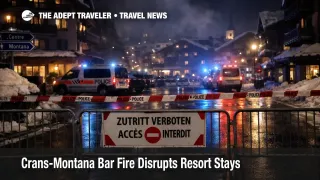
A Crans-Montana bar fire tore through Le Constellation in the Swiss Alps resort overnight, triggering a major emergency response and an active closure zone. Travelers with hotel stays in the resort center, plus anyone arriving for skiing, dining, or New Year week bookings, should expect localized access restrictions and delays. The practical next step is to confirm whether your lodging and transfers route through the cordoned area, then add buffer time or adjust plans if you cannot avoid the impacted streets.
The Crans-Montana bar fire has forced authorities to close off the affected sector, restrict overflights, and keep responders on scene, which can complicate check ins, last mile transport, and on foot access in the immediate vicinity.
Who Is Affected
Visitors staying near the resort center are most likely to feel disruption first, because police have closed the area around the venue to all access while the response and early investigation continue. Even if your hotel is not adjacent, you may still see operational knock ons, such as rerouted shuttles, taxis avoiding the core, and longer walks from drop off points if vehicles are diverted.
Ski travelers arriving on separate tickets, especially those chaining a flight, rail, and a late afternoon transfer, face the highest risk of a timing cascade. When road access tightens, the failure mode is not a resort wide shutdown, it is missed handoffs, such as a delayed shuttle that causes a missed rail connection, or a late arrival that collides with limited evening reception staffing.
Groups with event driven travel, including parties, corporate trips, and tour itineraries anchored to the village nightlife zone, should also expect changes. Closures around the scene can shift demand into a smaller set of open venues, which can create crowding, earlier sell outs, and longer waits, even when ski operations remain normal elsewhere in the resort.
What Travelers Should Do
If you are in Crans-Montana now, follow local instructions, avoid the restricted zone entirely, and do not attempt to walk through barriers to reach restaurants, shortcuts, or hotel entrances. Contact your hotel directly for the current drop off point, parking guidance, and the safest walking route, because access can change as investigators and structural safety teams work the site.
If you are due to arrive on January 1, 2026, through January 3, 2026, set a decision threshold before you start your transfer. If you cannot add at least 60 to 90 minutes of buffer between your last timed connection and your hotel arrival, consider rebooking to arrive earlier in the day, shifting to a nearby base town, or moving your first night to a property outside the center where vehicles can reliably access reception.
Over the next 24 to 72 hours, monitor official updates on the perimeter status, any changes to traffic routing, and whether the no-fly zone affects sightseeing flights, drone activity, or helicopter movements tied to the response. Also watch for hotel communications about revised check in procedures, group meeting point changes, and any temporary service reductions that can occur when staff are directly affected or when supply deliveries cannot enter the center normally.
How It Works
Large resort incidents create disruption through access, not through the ski lift system itself. When authorities establish a cordon, emergency vehicles and investigators need predictable corridors, which can force detours on the roads that normally feed hotel entrances, restaurants, and nightlife venues. That in turn reduces the effective capacity of last mile transport, fewer taxis circulate, shuttles take longer, and private transfers may refuse certain drop offs, which pushes more travelers into a smaller set of accessible staging points.
The ripple can spread outward quickly. If arrivals slow, hotels outside the immediate zone can see short notice demand from guests who need to move nights, which compresses inventory and raises walk in pricing. Rail and airport transfers can become less forgiving because a small delay on the road up the mountain can break a timed connection at the bottom, and missed connections often trigger secondary costs such as unplanned overnights in gateway cities or reissued tickets.
Authorities in Valais have also used special measures to mobilize resources quickly, which is designed to sustain multi day response operations. For travelers, that usually means conditions can remain fluid for several days, even after the immediate danger has passed, because site safety, victim identification, and investigative work require controlled access.
Sources
- Crans-Montana : grave événement dans un bar (Police cantonale valaisanne)
- Crans-Montana : Le Conseil d'Etat déclare la situation particulière (Canton du Valais)
- Dozens killed, 100 injured in fire at Swiss ski resort bar, police say (Reuters)
- Fire at Swiss Alpine resort bar during New Year's celebration leaves dozens feared dead, 100 injured (AP News)
- Several dozen believed killed in fire in Swiss ski resort bar (SWI swissinfo.ch)