

Kansas City Airport Lockdown Lifted, MCI Reopens
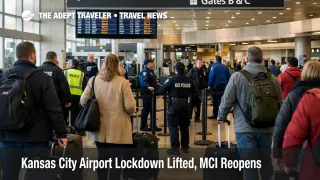
A brief security response at Kansas City International Airport (MCI) forced an evacuation of travelers from part of the terminal on Wednesday morning in Kansas City, Missouri. The Kansas City Aviation Department said officials were alerted to a potential threat in an unsecured area, and Airport Police worked with the FBI to evaluate the situation. Travelers with departures clustered around late morning and early afternoon were most exposed to missed boarding windows because even a short evacuation can pause screening, back up checkpoint queues, and reset the rhythm of gate operations.
In practical terms, the Kansas City airport lockdown ended once authorities determined there was no credible threat, and airport staff moved to restore normal passenger flows. KMBC reported that by about 12:25 p.m. CT on December 31, 2025, the airport had reopened, and operations were returning to normal. KSHB reported that travelers were being let back inside shortly before noon, with airport staff working to minimize disruption once the all clear was given.
Who Is Affected
The most affected travelers are those who were still pre security during the evacuation window, especially anyone traveling without a large time buffer before boarding. When a terminal area is cleared, the immediate failure mode for travelers is not the flight time itself, it is the time required to re enter, re queue, and clear TSA screening after service restarts. That risk is highest for families, travelers with mobility needs, travelers checking bags close to cutoff times, and anyone relying on a single narrow rebooking option later in the day.
Connecting travelers are also exposed, even if their incoming flights landed on time. A pre security disruption can still trigger gate holds, last minute gate changes, or delayed boarding, which then pushes departures into later arrival banks and increases misconnect risk at the next hub. If the disruption hits a peak departure wave, aircraft and crews can become mispositioned by a flight or two, which can quietly degrade the rest of the day's schedule on certain routes.
The incident also landed in a broader New Year's Eve context where other airports reported threats. In West Virginia, WCHS reported that a bomb squad was dispatched to West Virginia International Yeager Airport (CRW) after a suspicious email, the threat was cleared, and airport officials said no flights were impacted. That pattern matters for travelers because it increases the odds of short notice screening slowdowns, additional visible police presence, and conservative operational decisions even when threats are ultimately deemed non credible.
What Travelers Should Do
Travelers departing Kansas City International should treat the next 24 hours as a period where screening lines and gate assignments can change quickly, even after operations resume. The immediate move is to rely on your airline app for boarding time changes, gate changes, and rebooking options, then arrive earlier than you would on a normal day to absorb checkpoint variability and curbside congestion.
Set a decision threshold for rebooking versus waiting. If you are still not through security when your flight begins boarding, or if your airline shows "final call" while you are in a stalled queue, switch from waiting to securing the next viable option, because the best seats on later departures can disappear fast once multiple flights share the same displaced passenger pool. If you are on separate tickets or you have a hard cutoff downstream, like a cruise departure, a tour meet time, or a last long distance connection, treat any disruption window as a reason to move to an earlier flight or add a buffer night rather than gambling on same day recovery.
Over the next 24 to 72 hours, monitor three things: checkpoint throughput, rolling gate changes, and your airline's waiver posture. Even without a long shutdown, short disruptions can produce lagging effects, including long customer service lines, delayed baggage acceptance, and inbound aircraft arriving late because crews and aircraft turns were disrupted earlier. For a similar airport disruption case study in another region, see Belém COP30 Lockdown Slows Flights, Transfers, and for a broader checkpoint capacity context during peak travel, see TSA Record Crowds At US Airports November 30, 2025.
How It Works
Airport disruptions tied to security concerns propagate differently depending on whether the issue is pre security or post security. When the concern is in an unsecured area, the response can include evacuating a specific portion of the terminal, pausing screening, and stopping passenger flow into affected zones while law enforcement searches and clears the area. Once cleared, the airport's challenge is not only reopening doors, it is draining the backlog that formed while screening and check in flows were interrupted.
KSHB's reporting included an aviation security expert explanation that highlights why these incidents can feel disproportionate to travelers. In rare cases where a concern is on the secure side of the checkpoint, the response can escalate to re screening large groups of passengers, which is operationally expensive and time consuming. Even when the event stays pre security, the ripple effects still reach multiple layers of the travel system: checkpoint delays can cause missed departures, missed departures push rebooking demand into later banks, later banks strain available seats and hotel inventory for forced overnights, and late arriving aircraft can disrupt crews and onward rotations on routes with limited daily frequencies.
That is why a brief disruption can create a long tail for traveler experience. The first order effect is a temporary pause in terminal access and screening. The second order effects show up as uneven departure waves, curbside congestion, slower baggage acceptance, and a rebooking scramble that can persist well after the official all clear, especially on holiday travel days when load factors are already high.
Sources
- Kansas City International Airport reopens after FBI, airport police clear potential threat
- Kansas City International Airport police, FBI determine 'no credible threat' to airport
- Kansas City International Airport back open after brief lockdown
- W.Va. International Yeager Airport returns to normal operations following threat