

Mali Burkina Faso Entry Ban for U.S. Citizens
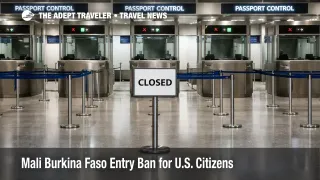
A Mali Burkina Faso entry ban aimed at U.S. citizens is now reshaping travel plans for Bamako, Mali, and Ouagadougou, Burkina Faso, after both governments announced retaliatory measures on December 30 and 31, 2025. U.S. passport holders traveling for tourism, NGO work, journalism, or overland connections in the Sahel face the highest risk of denied boarding or refused entry. Travelers with near term departures should pause travel, push trips to later dates, or reroute through alternate countries until entry rules and exemptions are confirmed in writing.
The change is straightforward for trip planning: the Mali Burkina Faso entry ban means many U.S. citizens should treat both countries as unavailable for routine travel, unless they clearly qualify for a published exemption.
On the U.S. side, the trigger was the Trump administration's expanded entry restrictions announced December 16, 2025, which took effect January 1, 2026, and added Mali and Burkina Faso to the list of countries facing full restrictions and entry limitations, with defined exceptions.
Mali subsequently clarified how its retaliation is applied on the ground. In a follow up notice reported January 2 and updated January 3, 2026, Mali said entry of U.S. citizens is "totally suspended," with exceptions that include U.S. citizens who are permanent residents in Mali, U.S. citizens holding a valid Mali visa, and limited categories whose entry is deemed to serve Mali's interests, including diplomats and athletes.
Burkina Faso's public framing has emphasized visa restrictions and "equivalent" measures under reciprocity, which is operationally enough for airlines and border officials to treat routine U.S. tourist entry as nonviable until detailed guidance is published and stabilized.
Who Is Affected
U.S. citizens holding only a U.S. passport are the core affected group, especially travelers relying on onward connections, tight arrival windows, or separate tickets where a single denied segment collapses the rest of the itinerary. Anyone trying to enter for tourism, most business travel, or overland transits that implicitly require entry clearance should assume high failure risk at check in.
Dual nationals may have options, but only if they can travel on a non U.S. passport that is not covered by the new restrictions, and only if they still meet local visa rules. Even then, carrier document checks can be inconsistent during fast moving policy updates, so travelers should expect to show supporting documentation at multiple points.
Travelers already in region face a different problem set: the main risk becomes being unable to execute a planned border crossing, reposition to an airport, or re enter after a side trip. That matters for NGO rotations, project travel, and long overland itineraries that used Mali or Burkina Faso as a corridor.
This is also layered on top of a high risk security environment. The U.S. Department of State has Mali and Burkina Faso at Level 4, Do Not Travel, which can influence what insurers cover and how assistance providers price evacuation support.
What Travelers Should Do
Travelers with departures in the next 14 days should treat this as a stop travel signal unless they have written confirmation that they qualify for an exemption, and that the airline will board them. Contact your airline first because airline systems often drive the practical outcome at check in, then contact your tour operator, hotel, or local fixer to document what services can be canceled or rebooked.
If you are trying to decide whether to wait or rebook, use a simple threshold: wait only if your trip is flexible and you can absorb a last minute plan change without financial damage. Rebook or cancel if you have nonrefundable components, separate tickets, or any onward travel where a missed first leg triggers cascading losses, because policy updates can land faster than refunds and can leave you paying walk up rates elsewhere.
Over the next 24 to 72 hours, monitor three things: official Mali and Burkina Faso foreign ministry updates, airline travel requirements tools, and U.S. government country pages that reflect whether visas are being issued or suspended. For Mali, the U.S. Department of State country information page already warns that, as of January 1, 2026, Mali has suspended visas to U.S. citizens, and notes that even valid visas may not guarantee entry at the airport.
How It Works
Reciprocal bans propagate through the travel system in a predictable order. First, the rule change hits visa issuance and border clearance, which immediately changes what an airline can accept at check in because carriers are financially liable for transporting inadmissible passengers. That is why many travelers experience a "ban" as denied boarding at the origin airport, even before they ever reach immigration control.
Second, the disruption ripples into network planning. When Mali and Burkina Faso become unusable legs, travelers concentrate onto fewer viable gateways in West Africa, and that pushes demand into limited seat inventories, higher last minute fares, and longer routings that reduce schedule resilience. For overland Sahel itineraries, the effect is harsher because reroutes are not simple airport swaps, they can mean abandoning an entire corridor plan and rebuilding ground transport, lodging, security support, and permits.
Third, insurers, medevac operators, and corporate duty of care vendors react to the new operational reality. Even without new formal exclusions, claims adjusters often require tighter documentation when a traveler proceeds into a destination with a new entry restriction, and evacuation planning can become more expensive when itineraries must route through fewer hubs and fewer reliable exit options.
Until the rules stabilize, the best traveler posture is conservative: assume the Mali Burkina Faso entry ban will be applied broadly at check in and at the border, and only proceed if you can document an exemption, confirm boarding with your carrier, and absorb a rapid reroute without stranding risk.
Sources
- Fact Sheet: President Donald J. Trump Further Restricts and Limits the Entry of Foreign Nationals to Protect the Security of the United States
- Suspension of Visa Issuance to Foreign Nationals to Protect the Security of the United States
- Mali International Travel Information
- Mali and Burkina Faso announce reciprocal travel ban on US
- Burkina Faso imposes visa restrictions on US nationals in tit-for tat move
- Suspension de l'entrée des citoyens américains au Mali : Bamako en précise l'application
- Mali and Burkina Faso impose retaliatory travel ban on US nationals