

Venezuela Brazil Border Closure Hits Overland Travel
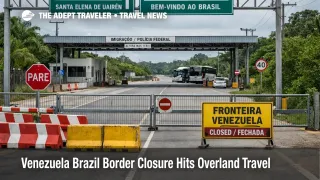
Venezuela temporarily closed its border with Brazil at the main road crossing between Pacaraima, Brazil, and Santa Elena de Uairen, Venezuela, interrupting overland travel and creating fast changing conditions for anyone trying to cross. The shutdown was reported on the Venezuelan side for about five hours before reopening, but Brazilian officials stressed the situation is fluid and that criteria for entry and exit can change at any time. Travelers with overland plans should treat the border corridor as unstable for at least the next several days, build a staging plan on the Brazil side, and be ready to switch to air routes inside Brazil if closures resume.
The closure follows the United States military operation in Venezuela that multiple major outlets report included strikes and the capture of Venezuelan President Nicolas Maduro. While that broader crisis is political, the immediate travel problem is operational, a border gate that can close, reopen, and then tighten again without enough notice for bus schedules, hotel check ins, and onward connections to survive intact.
Who Is Affected
Overland travelers are the first group hit, including anyone driving, taking intercity buses, or using shared transfers between northern Brazil and southeastern Venezuela through the Pacaraima corridor. Even when the gate is technically open, travelers can still be blocked by document checks, exit controls, or sudden restrictions applied to certain nationalities, which means your risk is not just a full closure, it is a slow moving queue that makes arrival times meaningless.
Travelers using Brazil as a repositioning platform are also affected. If you planned to cross overland and then fly onward from Venezuela, a closure can trap you on the wrong side with limited lodging, limited transport options, and rapidly rising last minute prices for any remaining seats out of nearby Brazilian markets. The second order effect is pressure on Brazil domestic flights, frontier hotels, and ground transport, as stranded travelers consolidate into fewer viable routes.
Local logistics in the border corridor can tighten as well. When crossings seize up, fuel deliveries, cash circulation, and basic services can become uneven in smaller towns because supply lines and staffing depend on predictable movement. That does not mean shortages are guaranteed, but it does mean your margin for error drops fast if you arrive without buffer days, without cash, or without confirmed lodging on the Brazil side.
What Travelers Should Do
If you have not started the overland trip yet, treat any crossing attempt as optional only if you can accept being turned back. Build a buffer of at least one to two nights on the Brazil side before any fixed commitments, keep lodging refundable, carry extra cash, and download your documents for offline access because connectivity can be unreliable when everyone is refreshing updates at once. Before repositioning deeper into Brazil, confirm your documentation against Brazil Entry Requirements For Tourists In 2026.
If you are already en route to Pacaraima, use a hard decision threshold. If credible reports or official notices indicate the Venezuelan side is closed, or if queues are not moving, stop short in a larger Brazil market where lodging, ATMs, and transport options are better, rather than rolling the dice on arriving at the gate near nightfall. If you are on a tight timeline, switch early to an air based plan within Brazil instead of waiting for a reopening window that may not align with bus departures and hotel availability.
Over the next 24 to 72 hours, monitor Brazil government statements and security updates that reference the border directly, plus reliable real time reporting from the crossing itself. Watch for two signals, confirmation that the gate is operating normally for your direction of travel, and any mention of restrictions on who can exit or enter, because partial controls can be as disruptive as a full closure. If you see repeated short closures, assume the pattern can continue, and redesign your itinerary around a Brazil only routing until stability returns.
Background
The Brazil Venezuela land connection is highly concentrated, so a single road crossing can function like a choke point for the entire overland market. When the crossing closes, bus operators cannot reliably time departures, and private drivers risk ending up in queues that consume daylight and force unplanned overnight stops. Once travelers start self rerouting, the disruption propagates outward, hotels fill in the nearest safe staging towns, seats tighten on domestic flights within Brazil, and ground transfer availability thins as vehicles and drivers get stuck in the corridor.
On the Brazil side, officials have emphasized monitoring and maintaining situational awareness rather than reporting abnormal movement, but they also acknowledge the information environment is noisy and can shift quickly. That mismatch, an official posture of monitoring paired with on the ground volatility at the gate, is why overland travelers should prioritize flexibility, refundable bookings, and conservative timing until the situation normalizes.
Sources
- Situation in Venezuela, Ministério das Relações Exteriores
- Defense Minister: Brazil-Venezuela border remains calm and open, Agência Brasil
- Venezuela temporarily closes border with Brazil following US strike, Al Jazeera
- Brazil says US crossed 'unacceptable line' on Venezuela as officials track border, Reuters
- Was the US capture of Venezuela's president legal, Reuters