

Atlanta ATL Fog Ground Stop Delays Flights Jan 5
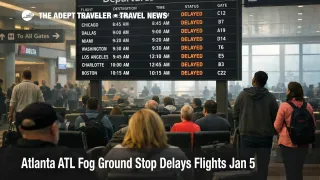
A dense fog event triggered a Federal Aviation Administration ground stop at Hartsfield Jackson Atlanta International Airport (ATL) during the Monday morning push, limiting operations as low cloud ceilings reduced visibility for approaches and spacing. CBS News Atlanta reported the FAA grounded departures from 749 a.m. ET to at least 900 a.m. ET, then extended that window to 10:00 a.m. ET as conditions persisted.
In FAA traffic management terms, a ground stop is a hard constraint that prevents additional departures from feeding a constrained arrival or departure operation until capacity is safe again. CBS reported the stop applied to departures from multiple air traffic control, ATC, centers across the Southeast, Midwest, and the East Coast, which is why travelers far from Georgia can still see "held for ATC" delays when their flight's destination is Atlanta.
FAA airport status data for ATL also reflected fog driven limits beyond the initial stop window, listing "WX: Low Ceilings" with weather noted as fog, and showing a departure delay program with a published end time later in the morning. Separately, the National Weather Service office serving north and central Georgia flagged a dense fog advisory with visibility of one quarter mile or less, reinforcing that this was a visibility problem, not simply routine low clouds.
Who Is Affected
Travelers connecting through Atlanta are the largest exposure group, because the airport's morning banks push large numbers of passengers onto onward flights across the Southeast, the Midwest, and transcontinental routes. When arrivals are delayed or metered, gates stay occupied longer, the outbound aircraft for your next leg may not be in position, and connection windows compress quickly, even if your second flight still shows "on time" for the moment.
Origin passengers departing Atlanta this morning are also vulnerable, especially those on the first wave of departures after the stop lifts. Once a ground stop ends, the system does not instantly return to normal, because aircraft are out of sequence, departure queues have rebuilt, and crews and gates are being reassigned in real time. That reset period is where you can see rolling delays, gate holds, and last minute aircraft swaps that break seat maps and boarding times.
A third group to watch is anyone flying into Atlanta on a separate ticket connection, or anyone with a hard arrival deadline such as a same day cruise embarkation, a wedding, or a nonrefundable tour pickup. If your inbound to ATL is delayed, you can miss the onward segment with no protection, and by the time you rebook, the best same day inventory may already be gone because Atlanta disruption gets consumed by rebooking demand fast.
What Travelers Should Do
Start with immediate actions that tell you whether your plan is still viable. Check your flight status, then check whether your aircraft is already in position by looking at the inbound leg that is supposed to operate your departure. If your itinerary connects in Atlanta, pull up the connection now, note the minimum connection time you can personally tolerate, and identify at least one alternate routing you would accept if your current connection starts shrinking.
Use clear decision thresholds for rebooking versus waiting, because the worst outcome is waiting until the rebooking queue is long and options are thin. Rebook early if your flight is canceled, if your connection drops under 60 minutes and you have a high consequence arrival deadline, or if your itinerary includes the last flight of the day to your destination. Waiting is rational when you have multiple later protected options on the same ticket, your destination has frequent service, and you can absorb a two to four hour slip without paying for a new hotel night or missing a key commitment.
Monitor the right signals over the next 24 to 72 hours, because Atlanta fog can clear while network disruption lingers. Watch for FAA status improvements at ATL, including the removal of active delay language and improving published delay ranges, then watch whether your airline starts canceling later flights, which can indicate crew legality problems and aircraft mispositioning from the morning disruption. If you must travel today, aim for later departures once the inbound aircraft stream is landing consistently, and keep notifications on for gate changes, because that is how recovery reassignments show up first.
Background
Fog and low ceilings disrupt aviation through capacity, not drama. When visibility drops, ATC increases spacing between aircraft, arrival rates fall, and the airport's ability to accept and depart aircraft per hour tightens. A ground stop is one of the tools used to keep demand from overwhelming reduced capacity, and it often pushes the delay burden back to origin airports, which is safer and more fuel efficient than extended airborne holding, but more confusing for travelers who see clear skies at their departure gate.
The travel system ripple starts at the source, Atlanta's delayed arrivals and departures. The second layer hits airline networks, because aircraft that were supposed to arrive, turn, and depart again miss those turns, which pushes delays into afternoon banks in other cities, not just in Georgia. The third layer is crews, because duty time limits can turn an early delay into a late day cancellation if a crew runs out of legal working time before the last rotation is complete. Finally, traveler behavior amplifies the pain, as large numbers of people compete for the same reroutes, nearby hotels, rental cars, and remaining seats.
For broader same week context on how FAA programs can shift delays to the origin and compress rebooking inventory, see Flight Delays and Airport Impacts: January 2, 2026. For deeper system context on why localized ATC constraints can cascade nationally, reference U.S. Air Traffic Control Privatization: Reality Check.