

Hawaiian Hawaii Airport Renovations Through 2029
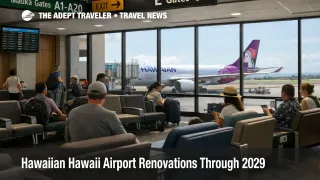
Hawaiian Airlines has announced a five year, more than $600 million plan to upgrade its on the ground experience across Hawaii and refresh key parts of its long haul product. Travelers flying to, from, or within the islands, especially those using Daniel K. Inouye International Airport (HNL) and the Neighbor Island gateways, are the most directly affected by the construction timeline and the phased rollout of new cabins and digital tools. For now, the practical move is to plan for occasional gate and lobby shifts, and to watch for the spring 2026 app changes and the late April 2026 systems cutover that should make self service and partner bookings smoother.
The centerpiece on the airport side is a multi year renovation program that Hawaiian says will run from 2026 through 2029 at its core Hawaii stations, targeting brighter, more open lobby and gate areas, better seating, and more power charging. In parallel, the airline is tying near term digital upgrades to a larger integration milestone inside Alaska Air Group, the move to a shared passenger service system and Hawaiian's planned oneworld entry in late April 2026.
Nut graf: Hawaiian Airlines Hawaii airport renovations are a long runway plan that changes how airport time, lounge access, and cabin expectations should be managed for trips booked from 2026 through 2029.
Who Is Affected
If you connect through Honolulu, you are in the highest impact group because Hawaiian is renovating the spaces it controls in the terminal flow while also building a new 10,600 square foot premium lounge at the entrance to the Mauka Concourse in Terminal 1. Hawaiian has described the lounge as its largest Honolulu club, with an opening target by the end of 2027, which matters for premium cabin travelers and top tier elites who plan preflight time around lounge availability.
Neighbor Island travelers will see the most day to day variability during renovation phases at Lihue Airport (LIH), Kahului Airport (OGG), Ellison Onizuka Kona International Airport at Keahole (KOA), and Hilo International Airport (ITO). Even when work is "just" lobby and gate refreshes, the ripple can be real: temporary seating moves, shifted boarding doors, longer walks to a working power outlet, and more crowding at peak banks when multiple flights are boarding close together.
Long haul flyers, especially on transpacific routes still operated by the Airbus A330 fleet, are also in scope, but later. Hawaiian says A330 interior upgrades begin in 2028, adding premium economy and new first class suites, plus refreshed lighting and entertainment. The airline has also tied the refresh to fast, free Starlink Wi Fi and Bluetooth enabled inflight entertainment, which would be a meaningful leap for anyone booking work heavy trips where connectivity changes what you can realistically do in flight.
Finally, loyalty and partner focused travelers are affected sooner, because Hawaiian is positioning spring 2026 app and website updates as the front end for flight changes and partner award redemptions that become more fully functional after the late April 2026 systems alignment and oneworld move.
What Travelers Should Do
If you are traveling in 2026, treat the airport work like a "soft disruption" that can still break tight plans. Arrive with extra time at Honolulu and the Neighbor Island airports, assume your usual gate seating and charging routine might not be there, and keep a portable charger in your personal item so you are not dependent on finding an outlet in a temporarily rearranged gate area. If your trip includes a same day interisland connection, or a cruise embarkation out of Honolulu, build a buffer that can absorb a gate change plus a longer walk without turning into a missed connection.
For trips you are booking into 2028 and 2029, separate the fare decision from the product decision. If you need the lowest fare and you can tolerate today's A330 cabin variability, booking earlier can still make sense. If you are specifically chasing premium economy or new suite layouts, consider holding off on nonrefundable premium purchases until Hawaiian publishes the post retrofit seat maps and begins assigning the upgraded aircraft consistently on your route, because "starts in 2028" often means a mixed fleet experience for a while.
Over the next 24 to 72 hours, watch for Hawaiian's initial rollout details on the spring 2026 app and website update, because early releases often come with known limitations and phased features. Also keep an eye on carrier communications about the late April 2026 passenger service system cutover, since that is when itinerary displays, flight designators, and self service tools can change quickly, even if your departure time does not.
How It Works
Airport renovations sound cosmetic, but they propagate through the system in predictable ways. The first order effect is physical: when a lobby entrance, a gate waiting area, or a boarding door zone is under active work, passenger flow compresses into whatever space is open. That increases perceived crowding, makes boarding announcements harder to hear, and can slow the queue, especially on narrowbody turns where the schedule assumes a fast board and a quick push. In Honolulu, that matters even more because the airport is both a destination and a connecting hub, so missed connection risk rises when a late inbound meets a more constrained gate area and a longer walk to the next departure.
The second order ripple hits at least two other layers. One is connections and aircraft turns: if gate areas are more crowded, and boarding runs a few minutes late more often, the schedule can lose its recovery margin, which tends to show up later in the day as mispositioned aircraft and tighter interisland banks. Another is the ground side travel stack: when travelers miss an interisland flight, hotel inventory near the airport tightens, rental car pickup windows get missed, and cruise and tour operators see more last minute rebooking pressure because the entire day's timing shifts. These are not guaranteed outcomes, but they are the standard failure modes of busy terminals during phased construction.
On the aircraft side, retrofits create their own operational ripple. Pulling widebodies for interior work reduces scheduling flexibility, and during a mixed fleet period, the onboard experience can vary flight to flight on the same route. That is why published start dates matter less than route level consistency, and why travelers who care about premium economy, suites, or upgraded Wi Fi should track aircraft assignments close to departure as the 2028 program ramps.
Hawaiian is also sequencing digital changes ahead of the bigger integration milestone. The company has tied full self service, including partner award tools, to the late April 2026 move to a single passenger service system and Hawaiian's oneworld entry. That aligns with Alaska Air Group's broader integration timeline, which has already included the October 29, 2025 single operating certificate milestone. For deeper context on how those backend steps show up on tickets and reservations, see Alaska, Hawaiian Earn Single Operating Certificate and Alaska, Hawaiian debut Atmos Rewards with free Wi-Fi.
Sources
- Hawaiian Airlines, a part of Alaska Airlines, announces Kahu'ewai Hawai'i Investment Plan of more than $600M over five years
- Hawaiian Airlines reveals first look at future premium lounge in Honolulu
- Alaska Airlines and Hawaiian Airlines reach major integration milestone: a single operating certificate
- Alaska Airlines completes acquisition of Hawaiian Airlines
- Hawaiian Airlines to invest $600m in airport modernisation and Airbus A330 cabin upgrades