

U.S. International Arrivals Declined Sep, Oct, Nov 2025
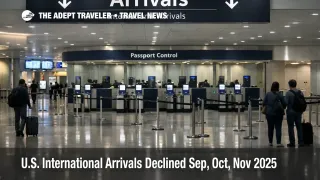
International visitation to the United States softened late in 2025 after a period of steady post pandemic rebuilding. The pattern was most visible in overseas arrivals, which multiple NTTO data releases and industry reporting show falling year over year across September 2025, October 2025, and November 2025. For travelers, the practical takeaway is not panic, it is planning, because demand shifts can change flight schedules, entry line expectations, and the price you pay for limited nonstop capacity.
The U.S. international arrivals decline matters because inbound travel is a system, not a single metric. When fewer visitors arrive from key long haul markets, airlines often respond by protecting high yielding trunk routes first and trimming marginal seasonal frequencies next. That pushes more travelers into connections, concentrates loads into fewer banks, and raises the odds that a single disruption creates broader misconnects. At the destination end, softer inbound demand can reduce group blocks, tours, and shoulder season hotel compression in some gateway markets, even while domestic demand keeps many leisure areas busy.
Industry reporting citing NTTO data described the steepest single month drop in September 2025, then smaller declines in October 2025 and November 2025. The same reporting said that total international visitor arrivals in October 2025, including Canada and Mexico, totaled 5,846,506, down year over year, and still short of pre pandemic volume. That combination, softer overseas volume plus a still incomplete recovery versus 2019, is the key signal that the inbound rebound was no longer uniformly upward by late 2025.
Who Is Affected
Travelers coming from overseas markets with the largest year over year declines are the most likely to notice knock on effects, especially if they depend on limited nonstop lift into a single U.S. gateway. If a route is marginal in winter, or relies heavily on inbound leisure demand, it is more exposed to schedule trims, aircraft swaps, and tighter rebooking inventory.
Travelers from markets that remained up year over year in late 2025 are not insulated, because connectivity is shared. A strong market can still be disrupted if airlines reduce overall transatlantic or transpacific connectivity, or if connection banks tighten at hubs. The impact is usually felt as fewer convenient departure times, longer layovers, and higher prices for short notice changes.
U.S. destinations that rely on overseas visitation, particularly major gateways and iconic long haul leisure circuits, are more exposed than purely domestic drive markets. Inbound softness typically hits first in group tours, premium FIT itineraries, and long lead packages, then shows up later in ADR pressure during shoulder periods. Tour operators, DMCs, and attractions that forecast staffing around international peaks can see volatility even when domestic travel remains strong.
What Travelers Should Do
If you are traveling to the United States in the next 30 to 90 days, build buffers you can actually use. Confirm your entry documents early, avoid tight same day domestic connections after an international arrival, and book accommodations that allow late arrival or flexible changes, especially in gateway cities where flight schedules can be adjusted with limited notice.
If your itinerary depends on a single nonstop route, set a clear decision threshold for when you will reroute or rebook. If your airline cuts frequency, or pushes you onto a connection that risks an onward cruise embarkation, a rail transfer, or a prepaid tour start, it is usually better to rebook proactively while alternative inventory exists, rather than wait until the week of departure when options narrow.
Over the next 24 to 72 hours, monitor what actually moves markets: airline schedule change emails, waiver language during irregular operations, and official updates on entry procedures. Also watch exchange rates and destination pricing, because a strong dollar can amplify the perception that the trip is expensive, and price sensitivity can feed back into capacity decisions on the margins.
Background
NTTO arrival data is built from official U.S. entry records and is commonly used across the industry as the baseline for inbound performance tracking. The key distinction for travelers is that "total international arrivals" includes Canada and Mexico, while "overseas" isolates long haul markets that typically depend on airlift, visas, and longer stays. Those components behave differently, and that difference is why a dip in overseas visitation can matter even when border regions, or domestic demand inside the United States, remain strong.
The late 2025 slowdown narrative also sits alongside a second, seemingly contradictory reality: domestic travel demand stayed resilient in 2025 forecasts. That matters for traveler experience because domestic strength can keep hotels full and prices elevated even as inbound demand softens, especially in leisure heavy destinations. In other words, a decline in international arrivals does not automatically mean cheaper trips, it more often means uneven pricing and uneven service levels, with some gateways feeling softer while many domestic leisure corridors remain tight.
Several external forecasts and industry analyses in 2025 also pointed to macro factors that can discourage inbound travel, including currency effects, policy uncertainty, and perceived border friction. Whether or not any single factor dominates, the operational result is the same for travelers: a more fragmented inbound market where your origin, your airline, and your gateway can change the risk profile of the same U.S. itinerary.
Sources
- US Tourism Recovery Slows as International Arrivals Plummet in Late 2025
- Overseas Visitation to the United States Down 3.5 Percent Year Over Year in November 2025
- I-94 Arrivals Program
- Travel Forecasts
- U.S. Travel Forecast 2025: Modest Growth but Decline in International Visitors Threatens Economy
- Foreign travel spending in US to decline 7% in 2025, report says
- Anger against Trump is forecast to cost the US international visitors