

Mayon Volcano Albay Alert Level 3 Limits Access
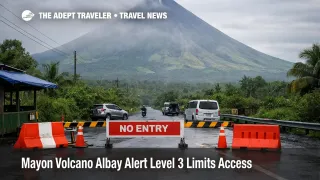
Authorities raised the alert level at Mayon Volcano in Albay, Philippines, and evacuations began as officials expanded enforcement around the volcano's no entry areas. Travelers are most affected if their plans include Mayon viewpoints, slope based activities, or road transfers that pass near the restricted perimeter. The practical move is to treat Mayon access as unstable for the next several days, keep your lodging and transport flexible, and be ready to shift the Albay portion of a Luzon itinerary to safer, lower risk stops. Even if you are not trying to hike, checkpoints and evacuation logistics can still slow local mobility.
The Mayon Volcano alert Albay change to Alert Level 3 is a meaningful escalation because it signals higher volcanic unrest and a greater chance of hazardous eruptive activity, which is why authorities are pushing people out of the designated danger zone and limiting access.
Alert Level 3 does not mean every traveler in the Bicol region must cancel, but it does mean the "normal" tourist pattern around Mayon can break quickly. When restrictions tighten, the first order impact is straightforward, roads and entry points closest to the volcano are controlled, and anything marketed as a close up volcano experience may be suspended or relocated. The second order effects are what surprise visitors, delayed transfers can break hotel check in windows, day tours can be canceled after you have already repositioned, and last minute demand can jump for seats and rooms farther from the volcano as both residents and visitors move away from the hazard area.
Who Is Affected
Travelers staying in or transiting the Legazpi area are the most exposed, especially anyone booking sightseeing that depends on being close to the volcano, or anyone building tight same day sequences that combine a tour, a long road transfer, and a fixed check in time. The risk profile rises if you are on separate tickets for domestic flights and onward connections, because a short delay can turn into a missed last flight, and reaccommodation options thin out fast in regional markets.
Visitors arriving through Bicol International Airport (DRP) should plan for the possibility of operational slowdowns if ash conditions change or if authorities issue aviation warnings tied to volcanic activity. Most of the time, the disruption is not a full shutdown, it is short notice retiming, longer ground holds, and a messy knock on effect for rental car pickup, prebooked drivers, and onward coach departures.
Travel advisors should flag multi stop Luzon itineraries that treat Albay as a fixed day trip anchor. Under an elevated alert, the more resilient structure is to keep Albay as a flexible buffer stop, then commit to longer, harder to change segments only after conditions stabilize. If you have already experienced volcanic disruption planning elsewhere, the logic is similar to ash driven aviation uncertainty, as outlined in Etna Ash Near Catania Airport Could Disrupt Flights, even though the local rules and geography are different.
What Travelers Should Do
If you are in Albay now or arriving within 24 hours, prioritize personal safety and mobility over itinerary completeness. Stay fully outside the Permanent Danger Zone, avoid any "close to the crater" offers, confirm that your hotel remains accessible, and add time buffers for every road move, including airport pickups. If you have a must hit commitment, such as an international departure later in the trip, reposition earlier in the day so you are not relying on a late afternoon transfer that can be derailed by checkpoint changes.
If your Albay segment is still ahead of you, set decision thresholds before you travel. If official bulletins continue to report pyroclastic density currents, rapid dome collapse activity, or an expanding danger zone, rebook the Mayon portion to a different date, or swap it for a lower risk destination rather than waiting until the night before. If you cannot change dates, switch to refundable lodging, avoid prepaid tours that depend on restricted access, and treat any same day hop from DRP as higher risk for missed connections than the timetable suggests.
Over the next 24 to 72 hours, monitor the alert level, any changes to the danger zone guidance, wind direction notes tied to ashfall potential, and local government evacuation updates. Travelers should also watch rainfall forecasts, because heavy rain can raise lahar and sediment laden streamflow risk in channels draining the volcano, which can trigger additional road impacts even when skies look clear in town. The practical signal for escalating disruption is not a dramatic photo, it is official language that shifts from "possible" to "expected," plus evidence that evacuations and access enforcement are expanding beyond the core perimeter.
Background
Mayon is monitored using multiple streams of data, including visual observations, seismic records, gas measurements, and ground deformation, and those monitoring results drive public alert levels and operational guidance. When the alert rises to Level 3, authorities are effectively telling travelers that hazardous phenomena are more likely, and that strict perimeter controls are warranted even if a major explosive eruption is not yet underway.
In travel terms, the disruption propagates in layers. First, local enforcement changes access, roads near the volcano see checkpoints, detours, and evacuation traffic, and operators suspend activities that put guests in restricted sectors. Next, the volatility pushes second order ripples into the visitor economy, hotels deal with cancellations and relocations, drivers and coaches face longer runtimes, and day tours lose viability because one broken transfer can wipe out an entire schedule. Finally, if ash output increases or wind carries ash toward aviation corridors, the system can jump from local road disruption to regional flight friction, as airlines and aviation authorities take conservative steps to protect aircraft and manage visibility and contamination risks.
Sources
- PHIVOLCS Raises Alert Level At Restive Mayon Volcano (Reuters)
- Philippines Evacuates 3,000 Villagers After Volcano Activity Raises Alert Level (AP News)
- Volcano Alert Status, Mayon Alert Level 3 Since January 6, 2026 (HazardHunterPH)
- DSWD DROMIC Report #1 on the Mayon Volcano Seismic Activities as of 06 January 2026, 6PM (DSWD)
- Albay Begins Evacuation as Mayon Raised to Alert Level 3 (GMA Regional TV)