

Everett Encore Hotels, MBTA Rail Stop Plan Near Boston
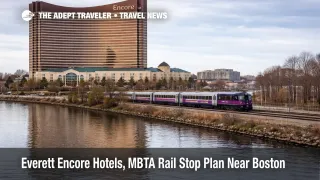
Wynn Resorts and the City of Everett, Massachusetts signed a memorandum of agreement that clears the way for up to two new, non-gaming hotels on Wynn owned property along Lower Broadway near Encore Boston Harbor. Travelers who stay in the casino district for events, concerts, and Boston area trips could eventually see more lodging supply nearby, plus a new transit option if a proposed MBTA Commuter Rail stop moves forward. For now, plans should be treated as conditional on local and state approvals, and travelers should keep building extra time into road based transfers in and out of the Lower Broadway corridor.
The Everett Encore hotels rail stop plan matters because it combines hotel capacity growth with a potential change in how visitors reach Everett, shifting some demand from cars and rideshares to rail if the station becomes real.
Everett's announcement frames the deal as a development and mitigation framework, not a change to the city's existing host community agreement with Wynn. The city says the hotels would generate ongoing revenue through property taxes, hotel room occupancy taxes, and meals taxes, and it also highlights traffic mitigation, safety improvements, and environmental remediation requirements tied to any future buildout.
Who Is Affected
Leisure travelers are the most immediate audience, especially those who prefer staying outside downtown Boston when hotel rates spike around conventions, college events, and summer weekends. More hotel rooms in Everett could widen the set of viable "stay near Boston" options for travelers who are comfortable trading a short urban commute for potential savings, or for those whose plans are already centered on Encore Boston Harbor.
Business travelers and meeting planners are also directly affected. The city's framing emphasizes added lodging and event capacity without expanding gaming, which signals that the new properties are intended to capture conferences and group business that might otherwise stay downtown or in Cambridge.
Transit reliant travelers should watch the commuter rail piece carefully, but should not assume it is happening until the Massachusetts Bay Transportation Authority, MBTA, and local permitting align. Under the agreement, Wynn would fund up to $25 million toward required studies and potential construction for a full service, full time commuter rail stop adjacent to Encore Boston Harbor, subject to MBTA approvals and an agreed project scope.
If you fly into Boston Logan International Airport (BOS) and plan to stay in Everett, the near term reality remains that your trip will likely be road based, using rideshare, taxi, rental car, or hotel shuttles. The development conversation is also intertwined with broader growth in the same corridor, including a proposed stadium nearby, which is why local officials repeatedly point back to traffic and access constraints.
What Travelers Should Do
If you are booking Everett for 2026 or 2027 travel, plan as if nothing changes in transit access and assume the Lower Broadway area stays car heavy at peak times. Build buffer into airport and station transfers, avoid stacking tight dinner reservations against arrival windows, and choose refundable hotel rates when your schedule depends on reliable road conditions.
If you are looking at 2028 and beyond, treat early completion timelines as best case rather than a promise. A practical threshold is permitting clarity: wait to assume new hotel inventory or a commuter rail stop will exist until you see Planning Board approvals for the hotel sites and a public, scoped station plan that the MBTA is actively advancing.
Over the next 24 to 72 hours, watch for specifics that translate into traveler decisions, including where the station would be located, what "full time" service would mean in practice, and whether the city publishes a clear sequence of approvals and milestones. Early reports also describe optimistic timing, with construction discussed as soon as spring 2026 and openings as early as 2028, but those estimates can move quickly as design, financing, and agency signoffs firm up or slip.
Background
This is a classic travel system ripple story, where a local land use agreement can change traveler behavior long before a building opens. The first order effect is at the source: two non-gaming hotels and added meeting space would increase the number of visitors arriving into Everett's Lower Broadway district, which can increase localized congestion on the same roads that feed the casino, nearby neighborhoods, and any future stadium traffic. Everett's own announcement emphasizes transportation infrastructure and traffic mitigation as part of the framework, which is a signal that access constraints are central, not an afterthought.
The second order ripple shows up across two other layers. First, Boston area lodging dynamics can shift when a large, adjacent market adds rooms. If Everett adds meaningful inventory, it can reduce some peak pressure on downtown Boston, or it can simply expand total demand if the corridor becomes a more convenient event hub. Second, mode choice and transfer patterns can change if the MBTA station becomes real. WBUR's reporting notes that the Newburyport Rockport Line runs behind Encore Boston Harbor between North Station and a stop in Chelsea, and that the precise location of any new Everett stop would influence pedestrian flows and what visitors pass on the way to major venues.
Local politics also matter for travel planning because they influence pace and certainty. The agreement was signed in the final hours of Mayor Carlo DeMaria's administration, and incoming Mayor Robert Van Campen has publicly said the project will move forward under his administration while also flagging traffic and feasibility concerns, which increases the odds of design iteration before anything is built.
Sources
- Mayor DeMaria Finalizes Agreement with Wynn for New Hotels and Commuter Rail Stop - Everett, MA - Official Website
- Wynn Resorts, Everett reach deal on hotel and commuter rail development | WBUR News
- Encore Boston Harbor casino owner reaches hotel expansion deal with Everett - CBS Boston
- Everett reaches deal with Encore Boston Harbor on new hotels and train stop - NBC Boston