

Schiphol Terminal 2 Power Outage Delays Flights
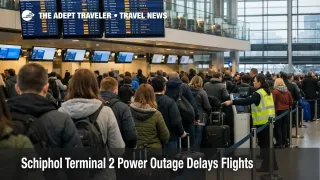
A brief power outage in Terminal 2 at Amsterdam Airport Schiphol (AMS) interrupted normal terminal processing on Thursday morning, January 8, 2026, and quickly turned into long queues even after power was restored. Departing passengers were the most exposed because the outage briefly cut lighting and interrupted check in, delaying the start of normal throughput during a recovery morning. If you are traveling through AMS in the next 48 hours, expect slower terminal processing, protect tight connections, and be ready to rebook using airline apps rather than relying on in person help desks.
The outage began before 800 a.m. local time (Amsterdam time) and lasted until about 930 a.m., with check in returning to normal after the fix. KLM separately said the power issue was resolved, but queues were still long, which matters because even a short interruption can keep a terminal behind schedule for multiple departure waves.
Schiphol also warned later on January 8, 2026, that the terminal was busier than usual after several days of wintry disruption, and advised travelers to check the latest flight information and follow airline guidance rather than arriving extremely early.
Who Is Affected
Departing passengers who need to use Terminal 2 processing steps at AMS are the first group at risk, especially anyone whose itinerary depends on a short connection window or a same day onward flight that cannot be easily replaced. Even when the departure board looks stable, terminal delays can create missed cutoffs for bag drop, security flow, and boarding, which can turn an operating flight into a missed flight.
Connecting passengers are the next group, because Schiphol's role as a hub means delays do not stay local. When an outbound bank leaves late, inbound aircraft that were supposed to turn quickly may miss their next slot, and crews can fall out of position, pushing disruption into later waves across Europe.
Travelers already recovering from earlier cancellations this week face the highest risk of compounding failures, since rebooking demand and baggage reroutes tend to keep terminals crowded even after the original trigger ends. That matters at AMS right now because KLM has been running extended disruption policies tied to winter weather, and it has warned that missed flights can occur during long waits, with self service rebooking as the primary path for many passengers.
For the broader context of why this hub has been fragile all week, see Deicing Fluid Shortage at Schiphol, KLM Cuts Flights and Storm Goretti Cuts Schiphol Flights, Paris Caps Departures.
What Travelers Should Do
If you are traveling through AMS through Saturday, January 10, 2026, treat terminal time as a constraint, not a rounding error. Show up with a bigger buffer than you would on a normal day, keep your airline app open for gate and timing changes, and avoid adding extra friction like checked bags if you have any flexibility, because rebooking and recovery operations can also slow baggage delivery.
Use a decision threshold for rebooking versus waiting, based on how much schedule slack you actually have. If you have a protected connection on one ticket, it can be rational to wait when your airline has confirmed an onward plan, but if you are on separate tickets, or you have a hard commitment such as an onward long haul departure, a cruise embarkation, or a prepaid tour start, you should favor proactively moving to a later departure or a different routing once your usable buffer drops below about 3 hours.
Over the next 24 to 72 hours, monitor the signals that predict whether the airport is truly recovering, not just your single flight number. Check Schiphol's current messages for terminal crowding guidance, watch your airline's travel alerts for waiver windows and self service rebooking rules, and look for signs of baggage backlogs and aircraft rotation delays, which are often what keep disruption alive after the original incident ends.
How It Works
A terminal power outage is disruptive because it can remove multiple layers of airport throughput at once, including basic visibility, check in systems, and the ability to process passengers at a steady rate. Even when power returns quickly, the lost time creates a surge effect, where too many passengers arrive at the same downstream chokepoints at once, and the terminal spends hours unwinding the queue rather than running on schedule.
At a hub like AMS, that first order terminal slowdown can propagate into second order network disruption. Late departures change aircraft rotations, which can pull capacity away from later flights when the same aircraft is scheduled to operate multiple legs in one day, and they can also create crew legality problems that force cancellations that look unrelated to the original outage. When the hub is already strained by winter weather cancellations, the system has less spare capacity to absorb another hit, and rebooking demand spills into other hubs and surface transport options, tightening hotel inventory and raising the odds of overnight displacement.