

PortMiami Terminal G Cruise Terminal Breaks Ground
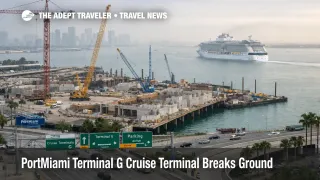
Construction is now underway on Cruise Terminal G at PortMiami in Miami, Florida, following an official groundbreaking ceremony held on January 8, 2026. The new terminal is being developed for Royal Caribbean Group brands, including Royal Caribbean International, Celebrity Cruises, and Silversea, with a stated goal of LEED certification and a design capacity of up to 7,000 passengers. For travelers, the practical takeaway is that PortMiami is building more capacity and more structured ground access, which should matter most on high volume turnaround days when traffic, parking, and pickup timing can make or break a smooth embarkation.
The change is less about an immediate disruption and more about how PortMiami is preparing for larger ships and higher passenger volumes over the next two years. According to the partners' announcement, Terminal G is planned as a single berth facility, paired with a multi level parking garage and a ground level intermodal component intended to organize drop offs, pickups, and other ground transportation flows in one connected complex.
The nut graf: PortMiami Terminal G cruise terminal construction has started, and the project is intended to increase passenger handling capacity and streamline ground access ahead of a late 2027 completion target.
Who Is Affected
Cruisers departing from, or arriving to, PortMiami are the core audience for this change, especially guests sailing on Royal Caribbean International, Celebrity Cruises, or Silversea itineraries that use Miami as a turnaround port. While terminal assignments can change by sailing, the operator perspective is that a dedicated, high capacity terminal should reduce chokepoints that show up when multiple ships clear customs, collect bags, and release thousands of guests into rideshare and taxi queues within a narrow time window.
Travel advisors and groups should also treat this as a planning variable for late 2027 and beyond, particularly for large ship sailings that can strain curb space and parking supply. The partners specifically referenced support infrastructure for larger ships, including Icon class vessels, which is a useful clue about the kinds of passenger surges the terminal is designed to absorb.
The knock on effects extend beyond the port fence. When debarkation runs late, travelers can miss afternoon flights out of Miami International Airport (MIA), and hotels near Downtown Miami and Miami Beach can see last minute demand from guests who choose to overnight rather than gamble on a tight same day connection. If a new terminal compresses processing time and reduces curb chaos, that can improve the reliability of airport transfers, reduce the need for buffer hotel nights, and lower the stress level on private shuttles and car services that have to time pickups precisely. At the same time, an active construction zone can introduce short term traffic friction, so travelers should expect that the approach roads and staging patterns may shift intermittently as the build progresses.
What Travelers Should Do
In the near term, travelers sailing in 2026, or early 2027, should not assume their embarkation process changes just because Terminal G broke ground. Instead, they should plan around normal PortMiami realities: arrive earlier than the minimum check in window, keep transfers flexible, and recheck terminal assignment and driving directions a few days before departure in case traffic routing or staging rules change during construction.
For late 2027 sailings that might plausibly use the new facility, the decision threshold is timing certainty. If the cruise is a once in a decade trip with nonrefundable flights, a prepaid hotel, or same day international connections, it is rational to build in an extra buffer night in Miami until the terminal's opening schedule is clearer, and until your cruise line confirms the exact terminal and recommended arrival pattern for that sailing. If the trip is flexible, it is reasonable to wait for updated port and cruise line guidance before locking in paid parking, a fixed time car service, or a tight airport transfer plan.
Over the next 24 to 72 hours, what matters most is not the groundbreaking itself but the follow through in official channels. Travelers should monitor PortMiami notices, Miami Dade County updates, and cruise line emails for any near term traffic advisories, temporary access changes, or terminal reassignment messages that could affect the day of travel. Those are the items that change the real world experience long before a new building opens.
How It Works
PortMiami operates multiple cruise terminals, and ships are assigned to specific facilities based on schedule, berth needs, security requirements, and passenger handling logistics. A terminal built around a single berth design can focus its curb layout, baggage handling, security screening, and vertical circulation on one ship's peak flows, rather than trying to split attention across multiple simultaneous turnarounds. That is especially relevant in Miami, where the biggest pain point on heavy cruise mornings is often not the ship, it is the surge of vehicles, luggage, and people hitting the same roadway network at the same time.
The Terminal G plan pairs the building with two features that directly target those pinch points. First is the multi level parking garage, which can reduce hunting for offsite parking and can shorten the time between car door and terminal doors. Second is the ground level intermodal element, which is meant to consolidate and organize different ground transport modes, for example private pickups, shuttles, and other services, into clearer lanes and staging zones. The partners also positioned the project as a sustainability and efficiency play, citing a LEED certification target and energy efficiency as part of the design and construction approach.
The public partners described the project as a $345.00 million (USD) investment with a completion target in late 2027. For travelers, that timeline is the key planning anchor: 2026 sailings are primarily about staying alert for construction related access changes, while late 2027 and later sailings are where the new terminal's capacity and ground transport design should start to change the on the ground experience.
Sources
- Mayor Levine Cava, Royal Caribbean Group, and partners celebrate groundbreaking of new Cruise Terminal G at PortMiami
- Mayor Levine Cava, Royal Caribbean Group, and partners celebrate groundbreaking of new Cruise Terminal G at PortMiami
- Miami-Dade Mayor and Royal Caribbean Group to celebrate groundbreaking of new Cruise Terminal G at PortMiami
- PortMiami, Cruise Terminal G Program - Lemartec
- PortMiami, Royal Caribbean break ground for $345m Terminal G