

Cuba Dengue, Chikungunya Outbreak Travel Risk
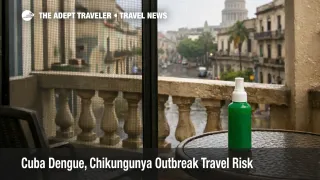
Cuba is dealing with a fast moving wave of mosquito borne illness, with dengue and chikungunya cited as leading drivers in official and outside reporting. Travelers are affected because the odds of getting sick rise at the same time that reliable, rapid care can be harder to access during a surge. The practical next step is to treat bite prevention and trip flexibility as core planning items, and to consider postponing optional travel if you cannot reduce exposure or tolerate disruption.
The best supported view of the current situation is not a single "mystery virus," it is overlapping circulation in the same mosquito system. Cuba's health ministry has acknowledged deaths tied to dengue and chikungunya and described widespread national impact, while reporting has also pointed to undercount risk and strained response capacity.
For travelers, the key operational change is that everyday settings become the risk surface. Aedes mosquitoes breed in and around standing water, and reporting from Cuba during the surge has described conditions that can increase bite exposure, including sanitation shortfalls, limited fumigation resources, and infrastructure problems like water leaks.
Who Is Affected
Any traveler spending time outdoors, using open air transport, or staying in lodging without consistent air conditioning or intact window screens should assume higher exposure odds than in a normal travel season. That is especially true for travelers building itineraries around walking neighborhoods, patio dining, beach towns, and day trips where long sleeves and repellent discipline tend to slip.
Travelers at higher medical downside include older adults and anyone with chronic conditions, because chikungunya can be more severe in some groups, and because dengue can escalate in a subset of cases that need careful monitoring and supportive care. The CDC's chikungunya notice for Cuba emphasizes enhanced precautions, and its clinical guidance highlights that older adults are among the groups at risk for more severe outcomes.
Pregnant travelers also face a harder risk tradeoff. The CDC's vaccine guidance for chikungunya includes pregnancy specific precautions and notes that decisions should be individualized based on exposure risk during an outbreak.
Finally, travelers on tight schedules are exposed to a different kind of risk, process friction. Canada's Cuba advisory warns that travelers may be subject to medical screening when entering or exiting Cuba, or even when reporting for domestic flights, and it notes that medical observation quarantine of up to seven days is possible in some situations. That turns "I can power through" into a connection and rebooking problem.
What Travelers Should Do
If the trip is optional, the cleanest risk reduction is to defer travel until the outbreak picture is clearly improving. If travel is non optional, upgrade the plan now by choosing lodging with reliable air conditioning and intact screens, building in buffer days, and avoiding separate tickets or same day, must make connections on the way home.
Make vaccine decisions early with a travel medicine clinician, not a week before departure. The CDC notes two chikungunya vaccines are available in the United States, and it highlights important nuance for older adults and for the live attenuated option, including age based precautions and risk benefit counseling. Do not assume dengue vaccination is a simple add on, because the CDC notes there is no dengue vaccine approved for U.S. travelers who are visiting but not living in dengue endemic areas.
Treat insurance and self support as part of health planning. Bring routine medications and key supplies, confirm coverage for medical care and trip interruption, and decide in advance what symptoms or fever duration would trigger a care visit, a hotel isolation day, or a rebooking decision. This matters more when reporting indicates the local system is operating under added strain during the surge.
How It Works
Dengue and chikungunya are both spread primarily by Aedes mosquitoes, which tend to bite during daytime and thrive near people. When conditions support breeding, the same neighborhoods and lodging corridors can drive parallel transmission of multiple viruses, which is why travelers can see overlapping risk rather than a single, neatly bounded outbreak.
The travel system ripple starts locally. More illness means more clinic demand, more medication demand, and more pressure on diagnostic capacity, all of which can extend wait times and increase uncertainty for visitors trying to get timely care. Reporting from Cuba during the surge has described constraints that complicate response, including resource shortages and inconsistent infrastructure, which can make "get evaluated quickly" a less dependable backstop than travelers assume.
Second order effects reach transportation and bookings. Sick travelers often extend stays, which can tighten hotel availability in high demand zones, and can change tour participation patterns, especially for excursions that involve heat, walking, or long coach days. At the airport layer, the possibility of screening or medical observation, even if uncommon, forces a different buffer strategy for returns and for domestic repositioning flights. That is why this story is not only about infection probability, it is also about schedule resilience.
Vaccine decision making also has a system effect. The CDC's chikungunya vaccine guidance explicitly frames vaccination as appropriate for some travelers in outbreak settings, but it also highlights that the decision depends on exposure risk, trip duration, age, and medical conditions, and it flags older age as a precaution for the live attenuated option. In practice, that means many travelers will land on a plan built around bite prevention plus flexible logistics, rather than assuming a single shot solves the trip risk.