

Tulum Ruins Entrance Fee Doubles for 2026 Visitors
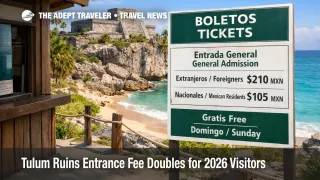
Entrance to two of the Riviera Maya's biggest archaeological day trips now costs more. INAH's 2026 tariff schedule lists a 210 peso admission for foreign visitors at both the Tulum archaeological zone and the Cobá archaeological zone, with 105 pesos for Mexican nationals and foreign residents in Mexico. That new base price is roughly double what many travelers were paying for the INAH portion in 2025, and it took effect at the start of 2026. Travelers planning a self guided visit should budget for the updated admission, confirm which fees are bundled into their ticket, and bring the right identification to claim any applicable discounts.
The change matters because the Tulum ruins entrance fee is only one moving part in a wider access system. At Tulum, INAH also lists separate charges from other entities tied to access and conservation, which means the total you pay at the site can be higher than the INAH line item depending on how you enter and what areas your ticket covers. INAH and Mexico's culture authorities have also been working through ticketing changes connected to the Parque del Jaguar access point and bundled sales that combine multiple tickets at one location, which can affect what you see at the window versus what a tour operator pre pays.
Who Is Affected
Independent travelers are the most exposed because they usually pay at the gate, and they feel any fee change immediately. This includes visitors staying in Tulum, day trippers arriving from Cancún and Playa del Carmen, and travelers using rental cars or private drivers who are stacking multiple stops in one day.
Tour guests are also affected, but the friction looks different. Some operators bundle entrance fees, while others keep tour prices low and collect admissions in cash or by card on arrival. A higher INAH admission can show up as a higher tour price, a larger on site collection, or a tighter schedule if the operator has to manage multiple payment points and receipts.
Travelers trying to optimize cost and timing, especially families and long stay visitors, should pay the closest attention to exemptions and residency based pricing. INAH maintains a set of free entry rules and exemptions, including Sunday free admission for Mexican nationals and foreign residents in Mexico with proof, plus exemptions for specific groups with valid identification. Those rules can change the economics of when to visit, not just where to go.
What Travelers Should Do
First, price your visit as a total, not as a single line item. For Tulum, confirm whether your planned route requires separate charges beyond the INAH admission, and whether you are buying a bundled ticket through an official point of sale. If you are on a tour, ask one direct question before you go, whether entrance fees are included, and if not, exactly how much will be collected on site and in what form.
Second, set a clear decision threshold for your itinerary. If your plan was to do both Tulum and Cobá in one day, it may be smarter to pick one anchor site and protect the rest of the day for cenotes, beaches, or a town stop, especially if higher admissions and additional fee points increase queue time. If you are eligible for Sunday free admission as a Mexican national or a foreign resident in Mexico, moving your visit to Sunday can be the single biggest lever to reduce cost, but only if you can tolerate heavier crowds.
Third, monitor official ticketing guidance over the next 24 to 72 hours as you lock plans. Watch for updates on official points of sale and any operational notes tied to Parque del Jaguar access at Tulum, because those details can change how many lines you stand in and which ticket you need first. Also keep an eye on your operator's messaging, since some companies adjust meeting times and inclusions quickly after a fee change to avoid day of travel delays.
Background
INAH manages a nationwide network of sites, and the 2026 update is not limited to Quintana Roo. INAH and Mexican outlets describing the new schedule say updated tariffs apply across hundreds of cultural assets, including archaeological zones, museums, and a paleontological site, with pricing organized into categories based on prominence and visitation. Under the published 2026 category framework, Category I sites like Tulum and Cobá are priced at 105 pesos for Mexican nationals and foreign residents in Mexico, and 210 pesos for foreign visitors, while lower categories use lower price points.
For travelers, the practical takeaway is that Mexico's big headline sites now have a clearer two tier structure, and you should not assume every archaeological zone costs the same. Category based pricing means a day trip plan that mixes one flagship site with one or two smaller sites may have a very different total cost than an itinerary that stacks multiple top tier sites. It also means a tour operator who pre prices admissions across several stops may need to re cost packages more often, especially when Category I rates move.
Tulum has an extra wrinkle because access and conservation fees can be shared across agencies and managed through multiple ticket products. INAH has explained that, since August 2025, visitors arriving via Parque del Jaguar access have been able to purchase bundled tickets that combine entry to the Tulum archaeological zone with other access components, with the goal of reducing wait times and centralizing sales while preserving INAH's role and existing exemptions. Separately, INAH's own site listing for Tulum shows "other charges" associated with access, which is why two travelers can both be "going to Tulum," yet pay different totals depending on eligibility, entry path, and which areas their ticket includes.
Local context matters, too. The fee increase lands during a period when multiple outlets have described a tourism soft patch in Tulum, including reporting on sharp hotel occupancy declines in 2025. Some local reporting has also characterized Tulum as one of the destinations most affected by the slowdown. For travelers, that combination can cut both ways, higher admission at the ruins, but potentially more negotiating power on lodging and tours outside peak dates.
Sources
- Tulum
- Zona Arqueológica de Cobá
- Venta de boletos en el Parque del Jaguar no suplanta funciones del INAH
- INAH actualiza tarifas 2026: así quedan los precios de museos y zonas arqueológicas
- Red de zonas arqueológicas del INAH
- A drop in Tulum hotel occupancy has its tourism sector worried
- INAH doubles Tulum admission fees during troubled tourist times
- US dollar to Mexican pesos exchange rate history