

Rotterdam Norovirus Outbreak Disrupts Cruise Routines
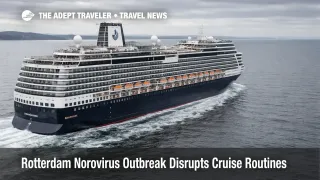
A gastrointestinal illness outbreak consistent with norovirus was reported on Holland America Line's Rotterdam, prompting standard outbreak controls monitored by the U.S. Centers for Disease Control and Prevention, CDC. Passengers and crew on the affected sailing, plus travelers about to embark on the ship's next cruise, are the groups most likely to feel the impact through tightened hygiene rules and possible activity restrictions. Travelers should watch for ship notices, report symptoms early, and add buffer to flights, transfers, and hotel plans on both ends of the cruise.
The Rotterdam norovirus outbreak matters because CDC reporting is tied to clear thresholds that can trigger more aggressive mitigation steps, and those steps can reshape day to day life on board, plus the timing of embarkation and disembarkation.
CDC's Vessel Sanitation Program reported 81 of 2,593 passengers, 3.1 percent, and 8 of 1,005 crew, 0.8 percent, reported illness on the December 28, 2025, to January 9, 2026 voyage, with vomiting and diarrhea as predominant symptoms. The outbreak was reported to CDC on January 8, 2026, and CDC listed norovirus as the causative agent. Holland America Line's reported response actions included increased cleaning and disinfection, stool specimen collection for testing, isolation of ill passengers and crew, and consultation with CDC on sanitation procedures and illness reporting, while CDC remotely monitored the response.
Who Is Affected
Current passengers are affected first because illness controls usually concentrate on the highest risk transmission pathways, shared dining patterns, shared restrooms, elevator touch points, and activity spaces where people cluster. Even if you do not get sick, higher cleaning cadence and more structured flows can create friction around meal times, events, and service speed, especially when crew are managing both guest needs and infection control.
Travelers boarding the next voyage can be affected by second order operational ripple. CDC notes it can ask cruise lines to delay bringing passengers on board for the next voyage, and it can require terminal cleaning procedures when needed, which is why tight same day flights and transfers are the most exposed plans even if you never step into a cabin. When embarkation compresses, lines build, rideshare windows get missed, and prebooked shuttles can cascade into hotel night changes.
Shore excursion planning can also be impacted in a practical way. If you are symptomatic, or within a ship directed isolation window, you may be restricted from tours, tenders, or group activities, and that can force last minute changes to private guides, refundable tickets, and port transportation. The knock on effect often shows up as higher demand for medical consults, more calls to guest services, and longer resolution queues for rebookings, refunds, and accommodation requests.
What Travelers Should Do
If you are on board now, treat any vomiting or diarrhea as a reportable event, call the medical center promptly, and follow isolation instructions, even if you feel you can push through. Pack, or buy on board, basic hydration supplies, and plan to spend more time in your cabin than you expected if the ship tightens controls. If you are traveling to join the ship, protect your itinerary with extra transfer time, same day hotel flexibility, and flight options that do not require a single narrow embarkation window.
If you are deciding whether to board, use clear thresholds instead of hope. If you, a cabin mate, or a close contact has had symptoms in the last 48 hours, boarding is a high risk choice because norovirus can spread fast in close quarters, and you may end up confined to your cabin for part of the voyage. If you are in a higher risk group, older adult, immunocompromised, or traveling with complex medical needs, prioritize itineraries where you can delay departure or switch to a later sailing without punishing change fees.
Over the next 24 to 72 hours, monitor three signals. First, whether CDC updates the reported counts and whether the cruise line communicates additional controls beyond enhanced cleaning and isolation. Second, whether terminal processes change for the next sailing, including staggered arrival windows or slowed boarding for sanitation, since that directly affects flights and ground transfers. Third, your own cabin and close contact symptom status, because early reporting and strict handwashing remain the most practical tools to reduce spread in a ship environment.
Background
CDC's Vessel Sanitation Program investigates acute gastroenteritis outbreaks when 3 percent or more of a ship's passengers or crew report being sick, and it focuses on ships sailing in the United States, or within 15 days of arriving at a U.S. port. That threshold matters for travelers because it is the switch that can elevate a situation from routine illness management into a more structured outbreak response, including CDC review of sanitation procedures and, in some cases, requests that impact the next voyage's boarding flow.
Norovirus typically causes vomiting and diarrhea, with symptoms often beginning 12 to 48 hours after exposure, and most people recover within 1 to 3 days, although dehydration risk is higher for older adults and people with underlying conditions. Prevention on trips is not glamorous, but it is effective, wash hands with soap and water because hand sanitizer alone does not work well against norovirus, and limit exposure to shared touch points when the ship is in outbreak mode.
If you want a recent comparison point for how CDC tracked a similar onboard illness event, see CDC notes norovirus on Serenade of the Seas, which can help travelers calibrate how quickly routine changes can appear once reporting thresholds are met.