

Mayaguana Bahamas Cruise Port Project Announced
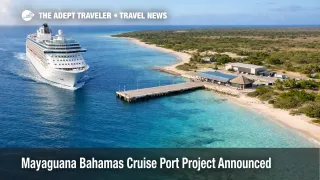
The Government of The Bahamas says it has entered a Public Private Partnership to advance a new port development on Mayaguana in the South East Bahamas. The travelers most likely to feel this first are cruisers booking Bahamas and Turks and Caicos region itineraries, plus independent visitors who use the island's limited air links and lodging base. The practical next step is to treat this as a long range itinerary signal, not a book now certainty, and to plan with flexible cancellation terms until a construction schedule, and first ship calls, are published.
In plain terms, the Mayaguana cruise port project is a three phase plan that would add a purpose built cruise terminal to an island that is currently marketed for solitude, fishing, reefs, and low density travel. The government statement did not publish target completion dates for any phase, and it framed the near term as planning work, assessments, approvals, and consultation.
Who Is Affected
Cruisers are affected most directly, because a cruise terminal phase is explicitly part of the project plan. If cruise lines eventually add Mayaguana as a call, travelers could see new itinerary patterns that trade a high intensity port day, like Nassau, for a quieter out island day with fewer built attractions but more nature forward options. That matters for families and groups, because the "right" cabin location, dining times, and shore planning often depend on whether a port day is independently walkable, excursion dependent, or mostly beach time.
Independent travelers to Mayaguana are affected in a different way. The Bahamas tourism site positions Mayaguana as the least developed of the islands, with rustic accommodations and highlights like Horse Pond Beach, offshore reefs, and an endemic rock iguana, and it notes the island's air access via Mayaguana Airport (MYG), near Abraham's Bay. If construction activity ramps up, the island's limited rooms, rental vehicles, and local guide capacity can get absorbed quickly by workers, project logistics, and early visitor demand tied to curiosity travel.
Local residents, and local businesses, are central to the structure of the deal. The Office of the Prime Minister says ownership is planned to be shared between the Government of The Bahamas, the Mayaguana Island Development Fund, and Global Lead Consultant Group Limited, and that Mayaguana Port Group, Ltd. will operate the port. The same statement says partners intend to engage the community on the use of the fund, and it cites a preliminary estimate of about 2,000 full time jobs over the life of the project.
What Travelers Should Do
If you are booking a cruise for late 2026, 2027, or beyond, treat Mayaguana as a potential new call that could appear in itinerary revisions, not as a guaranteed stop. Choose fares that let you reprice or rebook without punishing fees, and avoid locking in non refundable third party excursions that assume a specific port mix until the cruise line publishes its final schedule.
If you already have a Bahamas itinerary and you are hoping Mayaguana gets added, set a decision threshold for what would make you switch sailings. A good trigger is when the cruise line publishes port call dates and a clear description of pier versus tender operations, because that determines mobility limits, time ashore, and whether the day will feel like a beach drop, or a structured terminal experience.
Over the next 24 to 72 hours, monitor official updates for any new milestones that convert this from concept to calendar, such as environmental assessment notices, permitting steps, or operator announcements that include a construction sequence and targeted opening windows. Also watch how the broader Bahamas cruise infrastructure is evolving, because new capacity elsewhere can shape where cruise lines "need" another stop, for example Nassau Cruise Port's sixth anniversary brings big upgrades and First Holiday Season At Celebration Key Bahamas Port.
How It Works
The government's outline breaks the project into three distinct phases, which is a clue to how long it can take before cruise travelers see a true, repeatable port day. Phase 1 is described as a temporary marine offloading facility and a deep water port, which typically supports construction logistics first, moving heavy materials and equipment that are difficult to handle through small existing docks. Phase 2 is the cruise ship terminal construction, the part that most directly changes passenger experience, because it determines customs handling if needed, security flow, mobility access, shade, restrooms, and the basic "arrival" system that makes a call feel reliable. Phase 3 adds a deep water transshipment port and terminal for larger vessels, plus adjacent land development and handling components, which signals an ambition beyond cruising into cargo logistics tied to regional shipping lanes.
For travelers, the first order effects show up at the source, which is the island itself. A remote destination with limited services can feel magical when it is intentionally quiet, but it can feel constrained when visitor volume spikes without parallel growth in transport, utilities, and trained tour supply. The Bahamas tourism site emphasizes nature assets, low development, and small community scale, which suggests early cruise experiences, if they happen before Phase 2 is complete, could be excursion limited and weather sensitive.
The second order ripple is itinerary math across the wider cruise system. Cruise lines build Caribbean weeks around fuel, time at sea, and passenger preference patterns, and a new stop in the Southeast Bahamas can become a substitute for a repeated private island day, or a way to diversify a route that otherwise relies on Nassau. That can also affect air travel and pre cruise planning indirectly, because shifts in port day sequencing can change embarkation day demands, hotel night choices, and the perceived value of specific sailings, especially when cruise lines are already investing in Bahamas experiences and port flows elsewhere.
A separate ripple is information risk. Because no timeline has been published, this story is currently more about future optionality than immediate disruption. That creates a common planning trap where travelers over index on a new destination before it is operationally ready. The safest approach is to wait for hard dates, and to prioritize flexibility, until the project moves from announcement to a published construction schedule, and then to confirmed cruise line calls.