

Havana U.S. Embassy Visa Shutdown January 16, 2026
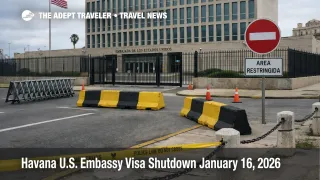
The U.S. Embassy in Havana said it will provide no visa services on Friday, January 16, 2026, in Havana, Cuba, canceling scheduled consular visa processing at the embassy. Cuba based travelers and visitors who planned visa interviews, document review, or passport pickup are the most directly affected, especially anyone whose onward travel depends on a stamped passport returning on time. Travelers should assume same day fixes will not be available, avoid unnecessary trips toward the embassy area, and shift plans until they receive rescheduling instructions through official channels.
The Havana embassy visa shutdown matters because it interrupts the final step of many time sensitive itineraries, where a passport is physically held for processing and cannot be used for flights, cruise departures, or border crossings. Even a one day service pause can create multi day knock on effects when appointment calendars are already constrained and the next available slots cluster weeks out.
Who Is Affected
Applicants with Friday appointments are the core impact group, including anyone scheduled for an interview, document review, or passport collection at the U.S. Embassy in Havana. If you traveled in from outside Havana for an appointment, the disruption can also force last minute hotel extensions, rebooked ground transport, and reissued domestic tickets inside Cuba while you wait for a new slot.
Travelers whose passports are already in the embassy process chain face the highest planning risk. If you were counting on passport pickup on January 16, 2026, to make a flight date shortly after, treat that travel as at risk until you have the passport physically back in hand. If your trip uses separate tickets or nonrefundable segments, you should assume you may need to move those pieces rather than trying to compress everything into the first day services reopen.
U.S. citizens in Cuba should also note that the embassy signaled limited operations tied to restricted access and demonstrations near the embassy area. Even when the issue is visa services, this kind of access constraint can also disrupt routine in person consular tasks, and it can create localized traffic and pickup challenges around the perimeter.
What Travelers Should Do
Start by stopping any new nonrefundable commitments that depend on an interview date or passport pickup on January 16, 2026. If you have onward flights, lodging, or event tickets that hinge on your passport being returned that day, shift them now rather than waiting for a same day reschedule, because the backlog typically compresses into fewer future slots.
Use your appointment confirmation details to follow the embassy's rescheduling instructions as they are issued, and watch the same official channels where the closure notice appeared. If you are working with an agent or a petitioner, align on a single point of contact so you do not miss time sensitive messages or duplicate actions that can slow a reschedule.
Over the next 24 to 72 hours, monitor for any reopening notice, updated access guidance near the embassy, and any indication that services will resume on a reduced schedule. If your travel is optional and you cannot tolerate uncertainty, move it to a later week once you have a confirmed new appointment or your passport has been collected, then rebuild the rest of the itinerary around that fixed point.
Background
U.S. visa processing at an embassy is a tightly sequenced, in person workflow, and it fails in predictable ways when facilities close even briefly. Interview slots and document review windows are limited by staffing, security screening throughput, and the number of applicants who can physically move through the consular section each day. When a full service day is removed, the system does not just lose that day's volume, it also pushes applicants into a smaller set of future appointments, which increases competition for the next available slots and raises the odds that rebookings land weeks later than planned.
The first order effect is straightforward, missed interviews, missed document reviews, and delayed passport handoffs, which can immediately break travel that depends on passport possession. The second order ripple typically shows up as compressed calendars and cascading reschedules, where applicants who were supposed to clear the system earlier now overlap with later cohorts, thinning availability for everyone. As that happens, travelers often extend stays in Havana, Cuba, or add extra trips into the city, which raises lodging demand in short bursts and increases ground transport friction around the consular district, especially when access is restricted for demonstrations or security perimeters.