

Jamaica Travel Advisory Level 2 After Hurricane Melissa
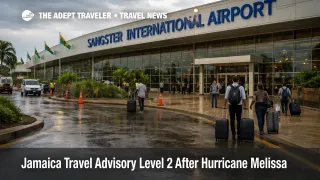
The U.S. State Department lowered its advisory for Jamaica to Level 2 on January 17, 2026, shifting the message from emergency disruption back toward normal travel planning with standard caution. The change matters most for U.S. travelers weighing winter and spring trips, cruise add on stays, and short lead airfare into the island's main arrival corridors. Travelers should treat the downgrade as a green light to plan, but not as proof that every resort, road, and service has fully normalized, and they should verify operational details before locking in nonrefundable costs.
The Jamaica travel advisory level 2 after Hurricane Melissa update is a signal that the acute crisis phase has passed, but it does not erase the practical travel friction that can linger after a Category 5 strike. Jamaica's recovery still includes phased hotel reopenings, infrastructure repairs, and spotty service constraints in some areas even as airports and tourism systems stabilize.
Hurricane Melissa reached Category 5 strength and struck Jamaica on October 28, 2025, with National Hurricane Center advisories showing extreme intensity as the storm approached the island. Early impacts included the closure of Norman Manley International Airport (KIN) and Sangster International Airport (MBJ) during the worst of the storm, alongside widespread power, water, and road disruption. Jamaica's tourism ministry later described a rapid, coordinated repatriation of roughly 25,000 tourists within a week after the hurricane, an operation that relied on hotels, transport providers, airport staff, and security coordination to move people safely.
Who Is Affected
U.S. leisure travelers are the primary audience for the advisory change, especially travelers booking packaged resort stays, weddings, group trips, and multi stop itineraries that rely on predictable transfers. Business travelers and conference groups also benefit because Level 2 can reduce friction in corporate approvals and duty of care workflows, although company rules vary and some employers may still require added documentation for post disaster destinations.
Air travelers connecting through major U.S. gateways into Jamaica are affected in a different way, because advisory level changes can influence demand patterns, airline load factors, and how carriers evaluate seasonal capacity, even when flights are already operating. That is most visible in Montego Bay, Jamaica resort corridors where the post storm hotel inventory mix can shift demand between nonstop and connecting itineraries, and between short stays and longer resort weeks.
Cruise passengers and tour operators are a third group to watch because a downgrade can increase shore excursion demand and overnight add ons, which puts pressure on ground transport fleets and guides that may still be rebuilding staffing, vehicles, and supplier relationships. That pressure tends to show up first as limited premium transfer availability, fewer private tour slots, and tighter timing around airport pickups when roads or detours remain in play.
What Travelers Should Do
Travelers with upcoming trips should confirm three things in writing, that their specific hotel is open for their dates, that the amenities they care about are operating, and that airport transfers are running on a realistic schedule for their arrival window. If you are relying on a third party transfer, ask for the pickup plan and a backup contact method, because post storm restoration periods can still produce localized telecom gaps and detours.
Set a decision threshold for whether to rebook or wait. If your trip depends on a specific room category, a specific resort zone, or same day timing for weddings, tours, or cruise connections, treat any uncertainty as a reason to move plans now rather than hoping conditions improve at the last minute. If your trip is flexible and far enough out, you can hold, but only if you keep a refundable backup option and you track whether your hotel is issuing operational updates, not marketing language.
Over the next 24 to 72 hours, monitor the State Department page for any advisory notes tied to localized security conditions, monitor your airline for schedule changes, and monitor your hotel's direct guest communications for status updates that mention power, water, beach access, and on site construction. Also watch ground truth signals such as transfer operator confirmations and excursion inventories, because they often reveal capacity constraints before they appear in official statements.
Background
A U.S. travel advisory is not a weather forecast or a hotel status report, it is a risk communication tool that can change traveler behavior and supplier planning. In the wake of a major hurricane, advisory levels can influence everything from travel insurance coverage interpretations to corporate approval pipelines and airline revenue management assumptions. Even a downgrade can produce short term demand spikes, and those spikes can collide with the reality that tourism capacity returns in phases, not all at once.
Hurricane Melissa's operational shock was not limited to wind damage at the point of impact. It propagated through airport closures, road blockages, utility outages, and supply chain disruption for hotels and restaurants, and then into second order effects like missed connections, shortened stays, and uneven staffing as workers dealt with housing damage and family displacement. When hotels reopen in stages, they often do so with constrained room inventory and limited dining or activities, which can shift guest behavior, put pressure on a smaller set of open venues, and increase the importance of accurate pre arrival communication.
On the economic side, Jamaican officials and international agencies have described losses and reconstruction needs at a scale that helps explain why some services normalize quickly while others lag. Reuters reported Jamaican government estimates of damage roughly equivalent to 28 percent to 32 percent of GDP, and Jamaica later secured a multiyear international support package aimed at rebuilding. Those macro realities matter to travelers because they shape how fast infrastructure repairs, staffing recovery, and public services can return to steady state across the whole island, not just in the most visited corridors.
Sources
- Jamaica Travel Advisory
- Travel Advisory Update, U.S. Embassy Kingston
- Hurricane Melissa Advisory Number 24, National Hurricane Center
- UPDATE | Jamaica's international airports closed as Hurricane Melissa lashes eastern Jamaica
- Minister Bartlett Commends United Response Behind Swift Post-Hurricane Repatriation of 25,000 Tourists
- Tropical Cyclone Melissa Wind and Storm Surge Final Event Briefing, Jamaica
- Death toll from Hurricane Melissa rises to 45 in Jamaica, with 15 others still missing
- Hurricane Melissa cost Jamaica around 30% of GDP, PM estimates
- Jamaica Secures a Package of US$6.7 Billion Over Three Years in International Support for Recovery and Reconstruction After Hurricane Melissa